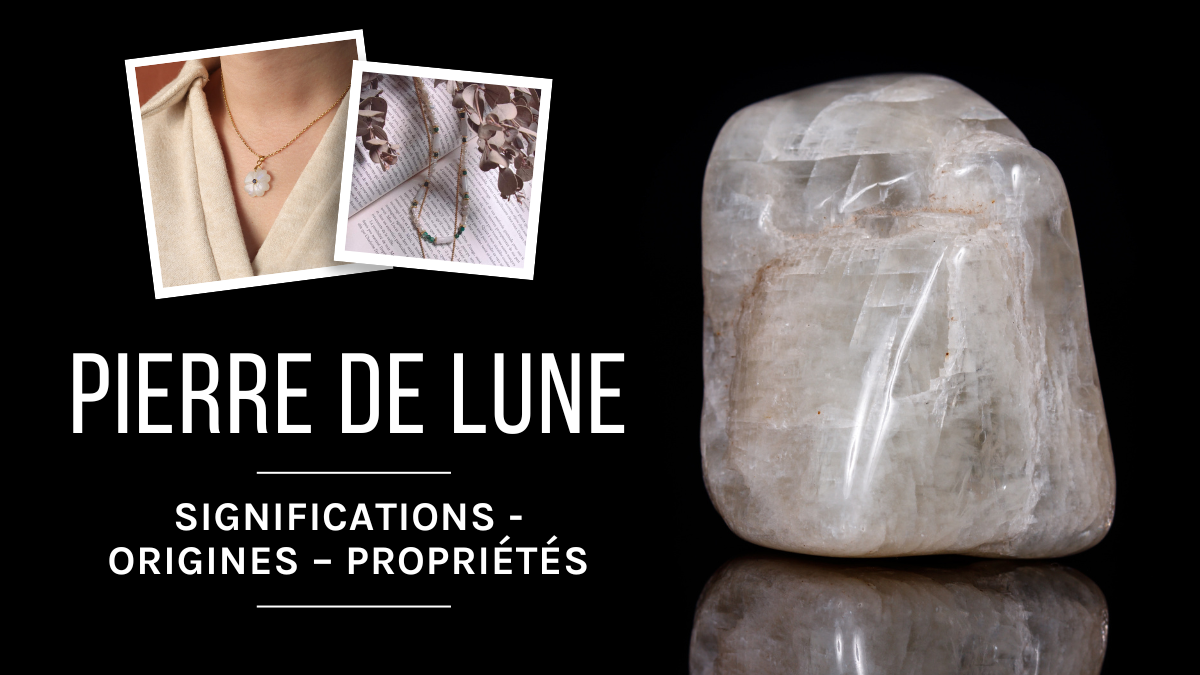
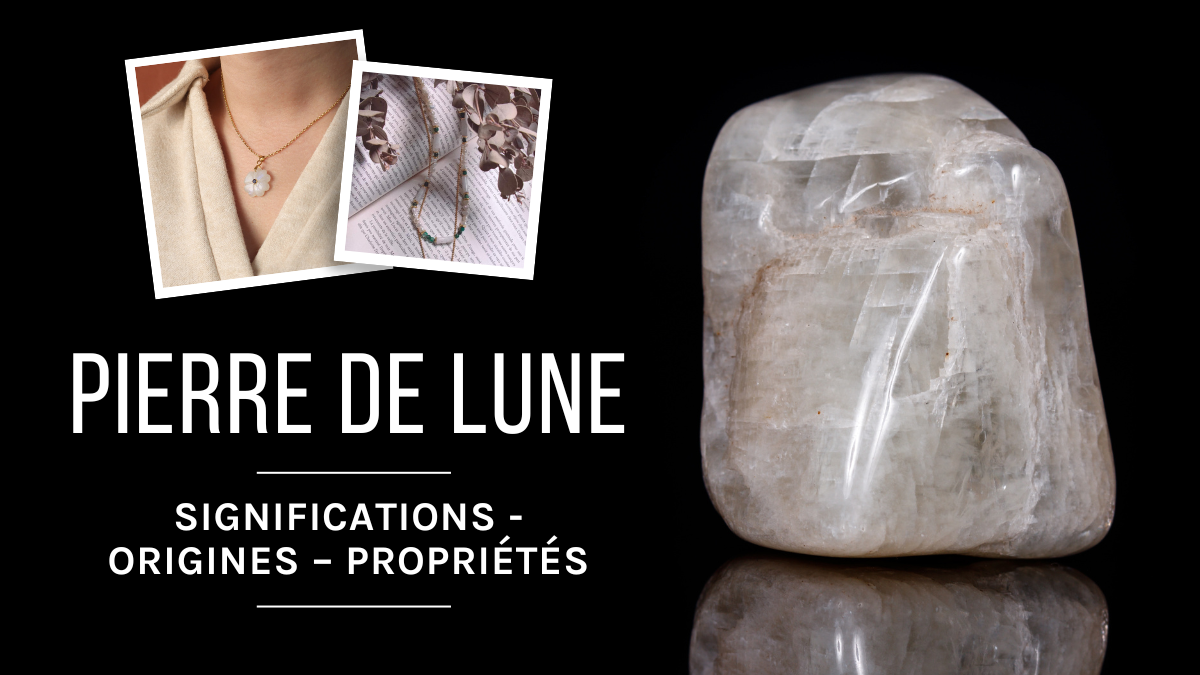
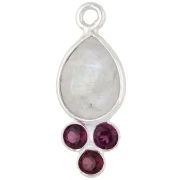
What is a moonstone?
Moonstone has fascinated and captivated people since the dawn of time. In fact, it is said to have the same influence on nature and people as that exerted by the lunar cycles...
What is the significance of moonstone?
Moonstone is a gemstone (formerly classified in the old category of“semi-precious stones”), which owes its name to its resemblance to Earth’s natural satellite: the name comes from the Sanskrit words “kanta,” meaning “beloved,” and “chandra,” meaning “moon.”
It is sometimes found under the English name “moonstone, ” but it is also called adularia or hecatolite in reference to Hecate, one of the three Greek goddesses of the moon.
The origin of moonstone?
This gemstone was already highly prized by our ancestors. The Romans associated it with their goddesses, particularly Diana, goddess of the hunt and the moon. They believed the stone was created from solidified moonbeams.
A feminine stone, moonstone was worn by Greek and Eastern women who believed it had the power to influence fertility.
Among the Egyptians, moonstone jewelry was worn as talismans by travelers to ward off nighttime dangers.
Even today, it remains a sacred stone in India.
In the 19th century, moonstone inspired Art Nouveau artists. They used it to create sumptuous jewelry and decorative objects.
A fun little fact: in honor of man’s first steps on the Moon in 1969, the state of Florida in the United States designated it as its official state gemstone.
What are the properties of moonstone?
Moonstone belongs to the feldspar family. Its hardness ranges from 6 to 6.5 on the Mohs scale, and its density is approximately between 2.55 and 2.65.
What color is moonstone?
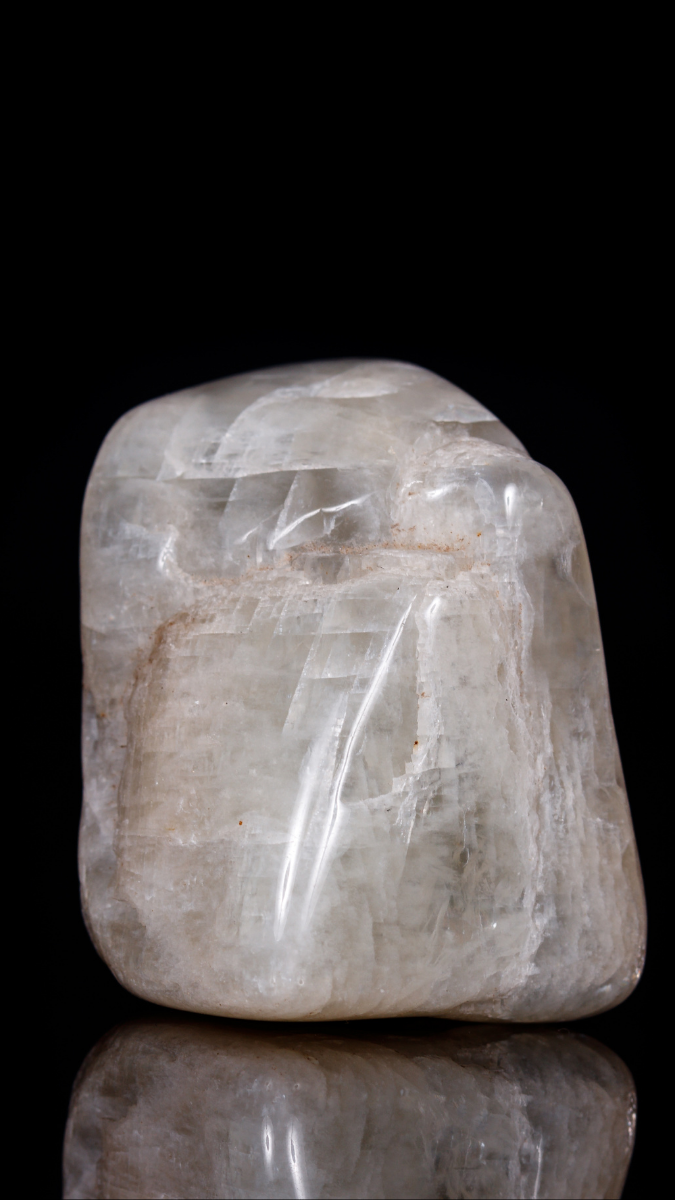
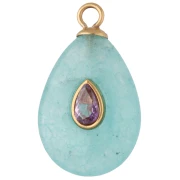
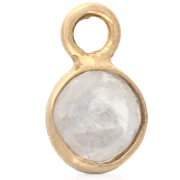
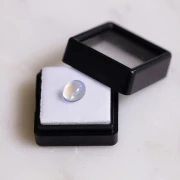
Its color is quite distinctive, as it is colorless with white, bluish, or even yellowish sheens. There is a variety of moonstone known as “peach,” whose color ranges from brown to orange.
Transparent to translucent, it has a vitreous luster.
It is characterized by an optical phenomenon called adularescence. This creates the impression that silvery-gray reflections glide across the stone’s surface as the light moves.
It is sometimes mistaken for glass or pale blue chalcedony.
Have you ever heard of rainbow moonstone? Don’t fall for the trick—it’s not a real moonstone. In reality, it’s labradorite.


Where can you find a moonstone?
Moonstone deposits are found in Australia, Burma, Brazil, the United States, India, Madagascar, Sri Lanka, and Tanzania.
What are the benefits of moonstone?
In crystal healing, moonstone is a stone of tolerance and a symbol of harmony. Associated with femininity, gentleness, and intuition, moonstone is said to foster sensitivity and creativity.
When connected to the second chakra (the sacral chakra, located below the navel), it is said to promote openness toward others and eliminate unnecessary fears. It is also said to help open the Third Eye chakra to develop clairvoyance.
Please note: Our gemstones are not sold for use in crystal healing. Natural stones are in no way a substitute for medical expertise or medical treatment.
How do you recharge moonstone?
In crystal healing, moonstone must be purified and recharged regularly to dispel any negative energies it may have absorbed.
To cleanse it, simply soak it in a bowl of spring water—but never use tap water.
To purify it, expose your gemstone to the moon’s rays for a few hours. This is especially effective on full moon nights, preferably by placing it on a pile of quartz.
How should you wear moonstone?
The cool tones of 925 Sterling Silver or stainless steel jewelry findings will highlight the softness of its white color with silvery highlights. The warm tones of gold-colored jewelry findings, such as Gold Filled or gold-plated, will contrast beautifully with its understated color.
In crystal healing, it is said that combining moonstone with spiritual stones such as amethyst, labradorite, aquamarine, rose quartz, and rock crystal enhances its properties.
However, it is not recommended to pair it with energizing stones such as garnet, red jasper, malachite, tiger’s eye, obsidian, black tourmaline, or turquoise, as it would lose all its benefits.