Average Grades
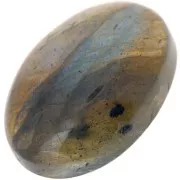

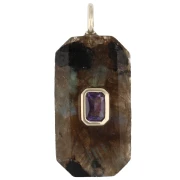
Para que sirve ??? Yo quiero utilizar una puedo mi signo es cáncer ♋️
1 Answer
Show answers

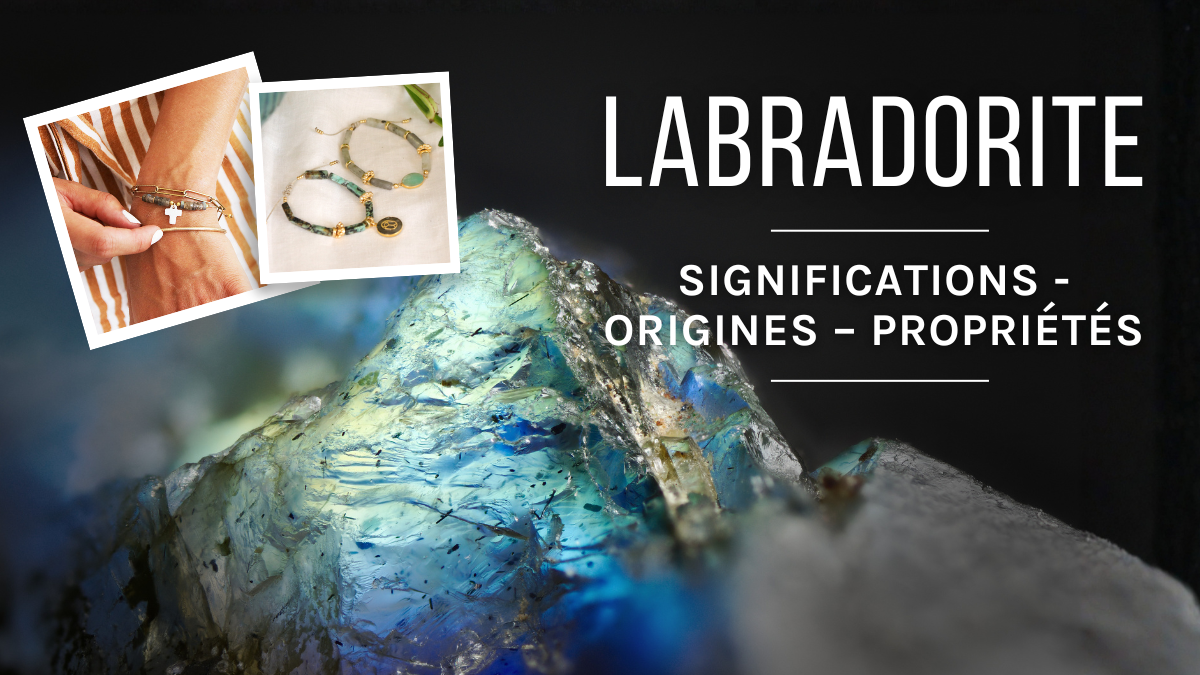
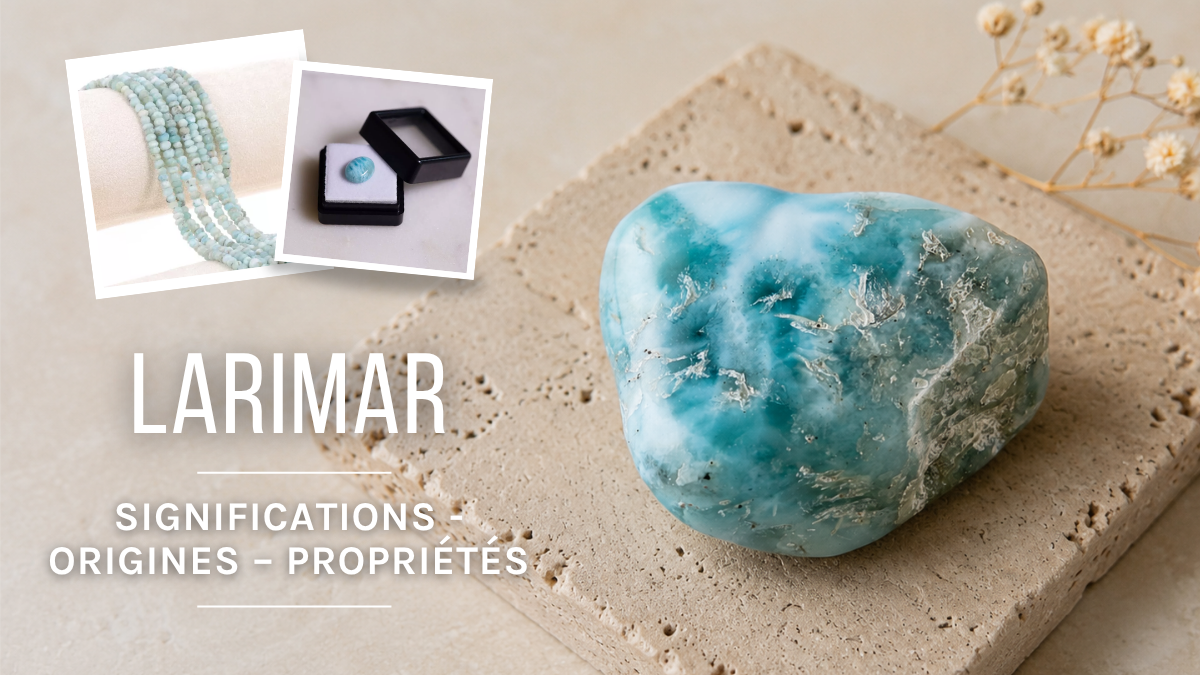
Labradorite is a gemstone prized for its blue-green color and unique metallic reflections. It comes mainly from Canada, Russia and Madagascar, and is often used in jewelry for its captivating brilliance. Its beauty and symbolism make it an ideal choice for elegant jewelry.
Labradorite is a semi-precious stone that is very popular around the world and highly prized in the jewelry industry. Its captivating color and the legend surrounding it make it a magical and mysterious stone.
This natural stone, formerly known as a semiprecious stone, owes its name to the Labrador region of Canada, where it was discovered in 1770 by missionaries. It was already known to the Scandinavian peoples and the Inuit, who used it as an ornament and as an elixir.
Did you know that labradorite has a mythical origin? Among the Inuit, a legend tells that the northern lights were trapped inside rocks in Labrador. A warrior shattered them with his spear and set the celestial lights free. These lights ascended to the heavens and gave rise to the Northern Lights, but a few remained on Earth to give birth to labradorite.
During the 19th century, leading jewelers used this gemstone to create jewelry inspired by Antiquity or Ancient Egypt. Lower-quality labradorite was used to adorn buildings.
Labradorite is a gemstone belonging to the feldspar family. Its hardness ranges from 6 to 6.5 onthe Mohs scale, and its density ranges from 2.55 to 2.65.


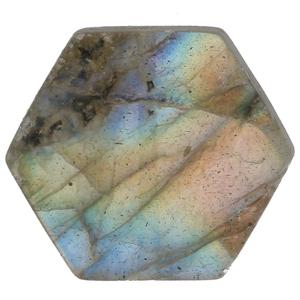
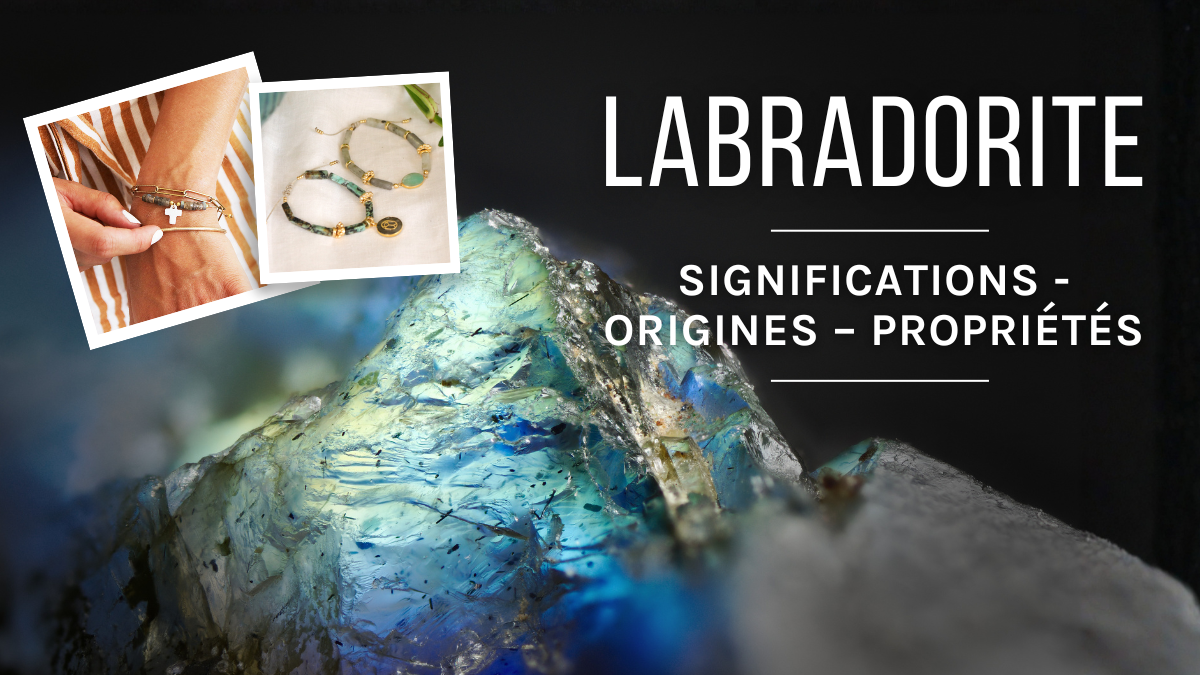
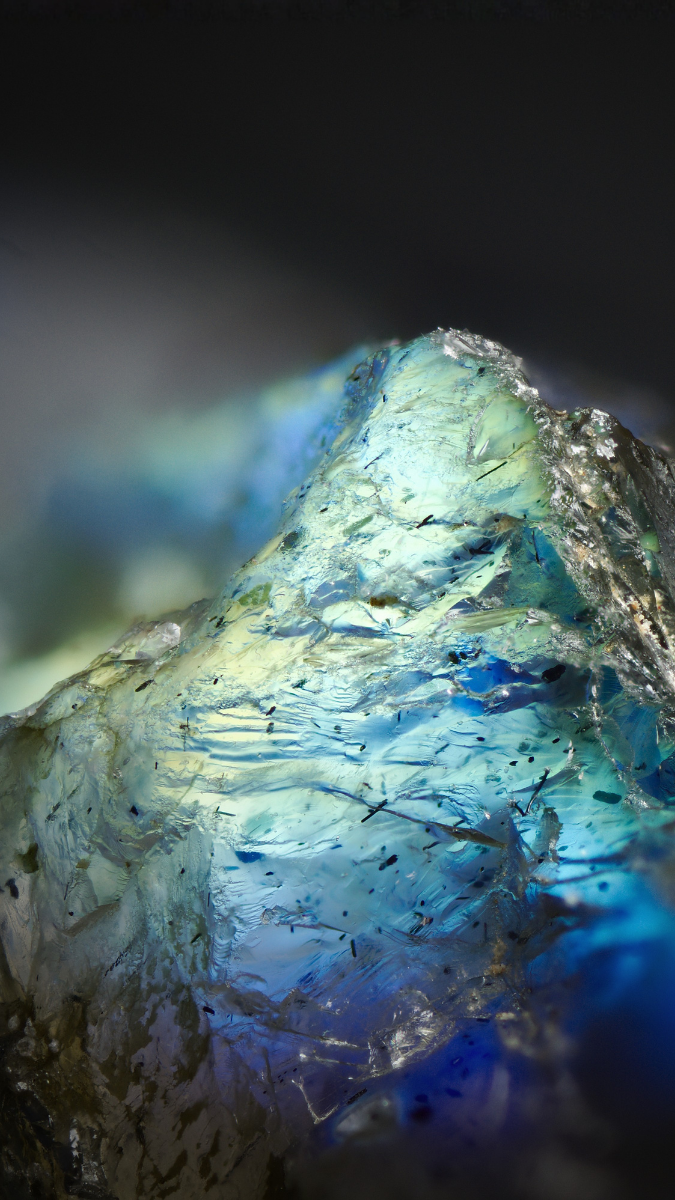
It is a natural blue-green stone with metallic sheen and even mirror-like effects when tilted toward the light in a certain way. These shimmering reflections are called labradorescence or the Schiller effect. It can be opaque, translucent, or transparent and has a vitreous luster.
The iridescent effects of this mineral have earned it the nickname “Rainbow Moonstone,” but it is also known as “Spectrolite,” though only when the stone displays a play of multiple colors.
Labradorite deposits are found in Australia, Canada, the United States, Russia, Finland, France, Ukraine, Mexico, and Madagascar.
In crystal healing, labradorite is known as a protective stone. It is said to absorb negative energies until they dissolve. It is believed to eliminate stress, negative vibrations, and anxiety, thereby promoting inner calm and well-being.
When placed on the solar plexus chakra (at the level of the stomach), it is said to facilitate the distribution of physical and mental energy and to foster commitment, respect, and tolerance.
When placed on the heart chakra (in the center of the chest), it is said to promote self-confidence, inner peace, and serenity.
Please note: Our gemstones are not sold for the purpose of crystal healing. Natural stones are in no way a substitute for medical expertise or medical treatment.
Since Labradorite eliminates negative energies, it’s important to purify it to clear away everything it has accumulated and to recharge it regularly.
To cleanse it, soak it overnight in a bowl of clear, distilled, or demineralized water—no salt.
To recharge it, expose it to moonlight for a few hours. Moonlight during the full moon cycle is best! For maximum effectiveness, you can place it on a pile of quartz or an amethyst geode.
Its unique color and metallic sheen will be enhanced when paired with 925 Sterling Silver or stainless steel jewelry settings. However, gold-plated and Gold Filled pieces will give it an elegant and sophisticated look.
Which stones pair well with labradorite? If you pair it with amethyst, rock crystal, or moonstone, you’ll enhance its spiritual properties. To boost its protective power, pair it with tiger’s eye or black obsidian.
However, you should definitely avoid pairing it with an emerald, peridot, shungite, or malachite. These stones are too powerful and will overshadow its benefits.
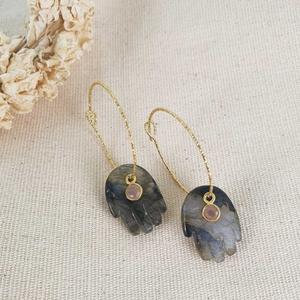

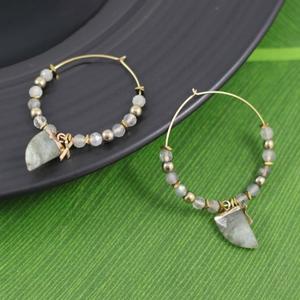

To create all your Labradorite jewelry, check out our semi-precious stone jewelry components —such as cabochons, pendants, charms, sequins, and beads—and get inspired by our DIY gemstone jewelry tutorials.

Credits
Perles & Co, Internet & E-Commerce company [02/12/2025] Any reproduction, representation, adaptation, in any form whatsoever, even partial, is prohibited, except for reproduction for private use not intended for collective use, representation in the family circle (art. L 122-5 CPI) and online publishing on condition that the source is mentioned and a link is included to the corresponding page of our site www.perlesandco.com.