Average Grades
comment se servir d'un bloque fil de chaine sur un métier à tisser les perles ? :-)
1 Answer
Show answers

For successful bead weaving, it's essential to manage the length of the thread. Cut between 1.2 and 1.7 m to avoid frequent replacements, and secure it properly to the loom for a discreet result. Change thread when you stay with 10 to 15 cm, hiding it cleverly in the rows of beads for an impeccable finish.
In this article, we will see how to change the thread on a bead loom without it showing on the beaded bracelet. Indeed, when weaving beads, we do not take the length of thread needed to make the bracelet completely. If we did that, the wire would be too long. Imagine a 4 cm wide bracelet with 100 strands of beads, that would be a thread of more than 4 m. The first few strands of beads will be very tedious, as you will have to pull the thread again and again... Moreover, this increases the risk of making knots with the thread.
Therefore, generally, we make the bracelet with several pieces of wire. Be careful, here we are talking about the weft thread, so the thread placed on your needle. The warp threads are fixed at the very beginning on the loom and will not be removed from the loom until the bracelet is finished.
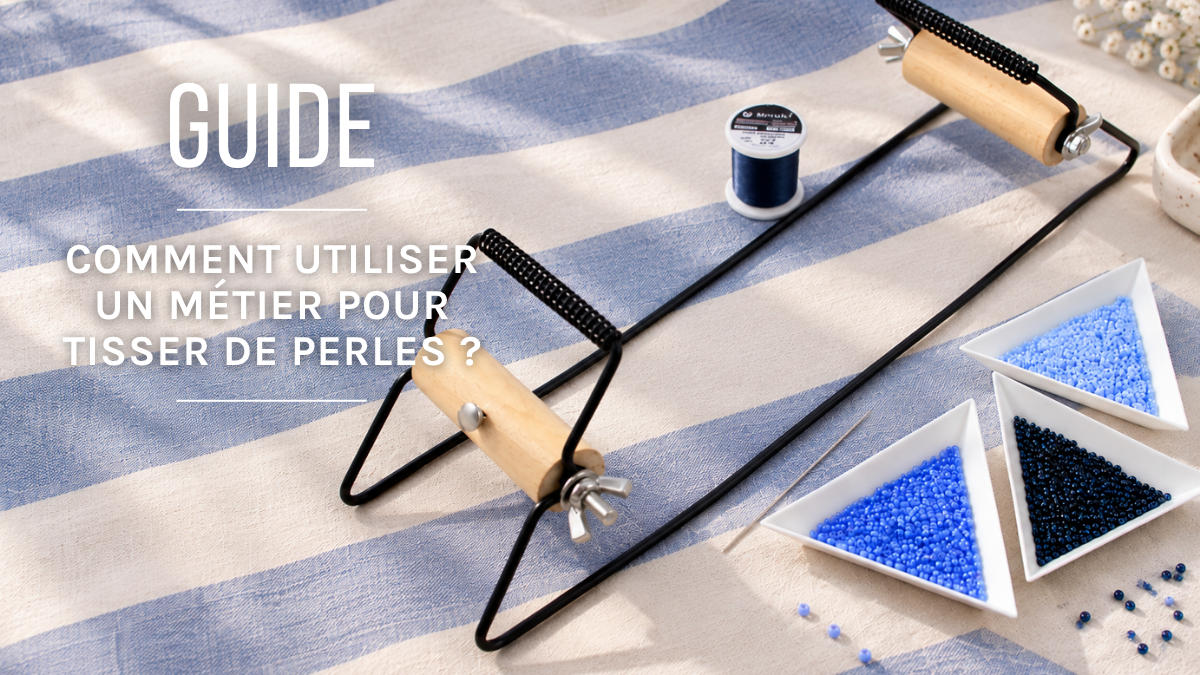
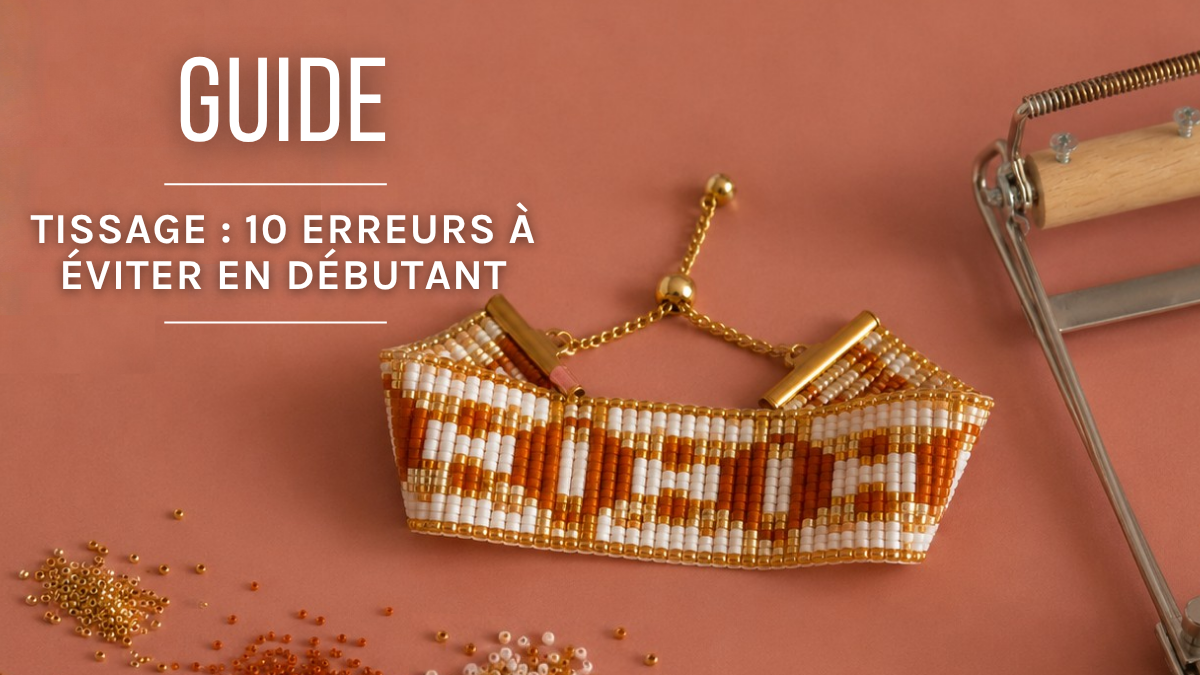
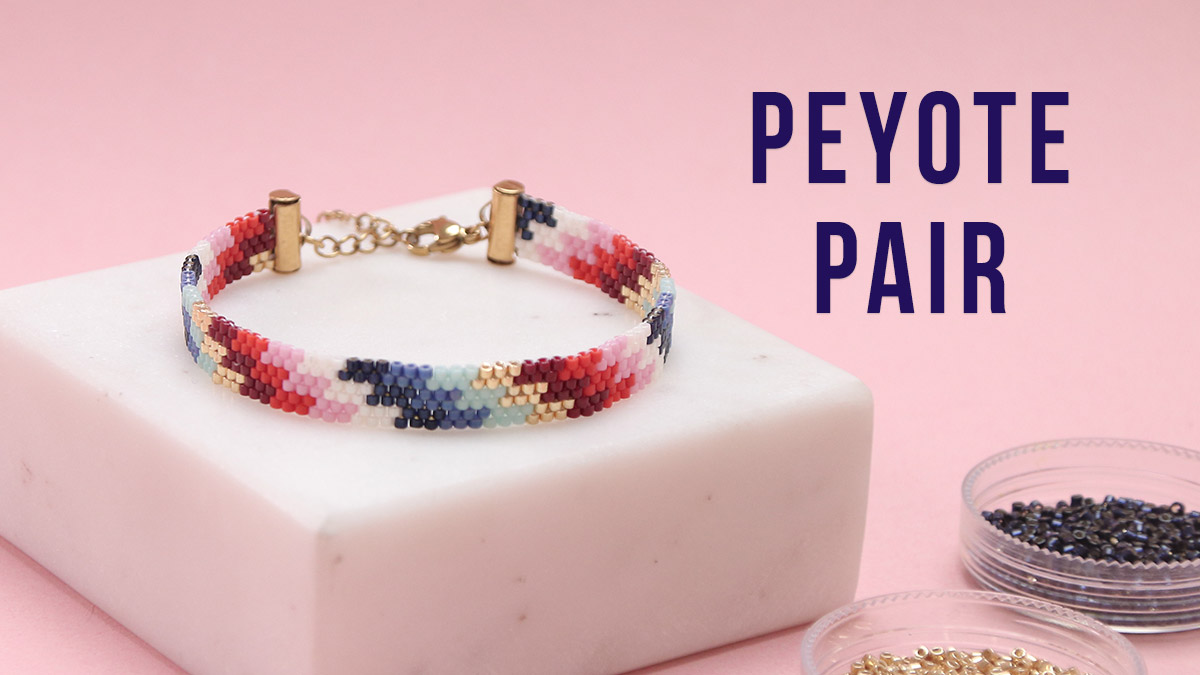
In the example video, we have taken an excerpt from the Flame Bead Bracelet tutorial. Feel free to check it out if you like the pattern. Want more information about bead weaving? Find all our bead weaving articles and tips in the Learn section.
The thread needs to be long enough that you don't have to keep replacing it, and short enough that you can pull it through quickly without having to make big movements. This is called the arm length of the thread. This is the length to which your arm stretches. Most of the time, we cut between 1.2 and 1.7 m of thread. Grab your spool of thread with your left hand, pull the thread with your right hand and spread your arms. Cut this length.
To begin weaving, attach your yarn to the loom by tying it to the first warp thread of the loom. Make a double knot. You will also need to leave about 15-20 cm of yarn end depending on how you will finish the bracelet. If you are going to hide the thread in the beads at the end, then you need to keep enough length of thread to thread it onto a needle and pass it through the first few rows of beads several times. You may want to put a little bit of glue on the knot after a few rows of beads are done.
As explained above, you need to keep enough thread to pass it through several rows of beads. So, change the thread when there is only 10 or 15 cm of thread left. This can be a little less if the bracelet is very thin. Once your bead row is set, pass the needle with the thread through the previous bead row. Don't come out at the end of the row of beads but a few beads before. Continue backwards through the front row in the opposite direction but pass through the bead next to the one the thread comes out of otherwise the thread will be visible. Pull out a few more beads before the edge of the bracelet. Continue to pass through the previous rows two or three more times to make sure the thread is blocked, then cut it as close to the beads as possible. With this method, your thread will not show at all and there will be no extra thickness of thread on the edge.

Cut a length of yarn arm and thread the yarn onto the needle. Attaching the thread in the weave is done in the same way as stopping the thread in the weave. Pass the needle through one of the rows of beads in the weave without starting at the edge. Use your finger to lift the weave, which will spread the beads apart and allow you to successfully pass the needle inside a row of beads. Pull the needle out a few beads before the edge. Pass through a new row in the same way. Hold the end of the thread so it doesn't slip off when you pull the thread through the weave. Do this four or five times and then return to the last row of beads woven and continue your weaving.





Credits
Perles & Co, Internet & E-Commerce company [15/09/2022] Any reproduction, representation, adaptation, in any form whatsoever, even partial, is prohibited, except for reproduction for private use not intended for collective use, representation in the family circle (art. L 122-5 CPI) and online publishing on condition that the source is mentioned and a link is included to the corresponding page of our site www.perlesandco.com.