Average Grades
Free shipping on orders over 50€ up to 500g
French Online shop for beads and accessories for the creation of DIY jewellery and other creative hobbies
Log-in
0
Shopping cart
Shopping cart
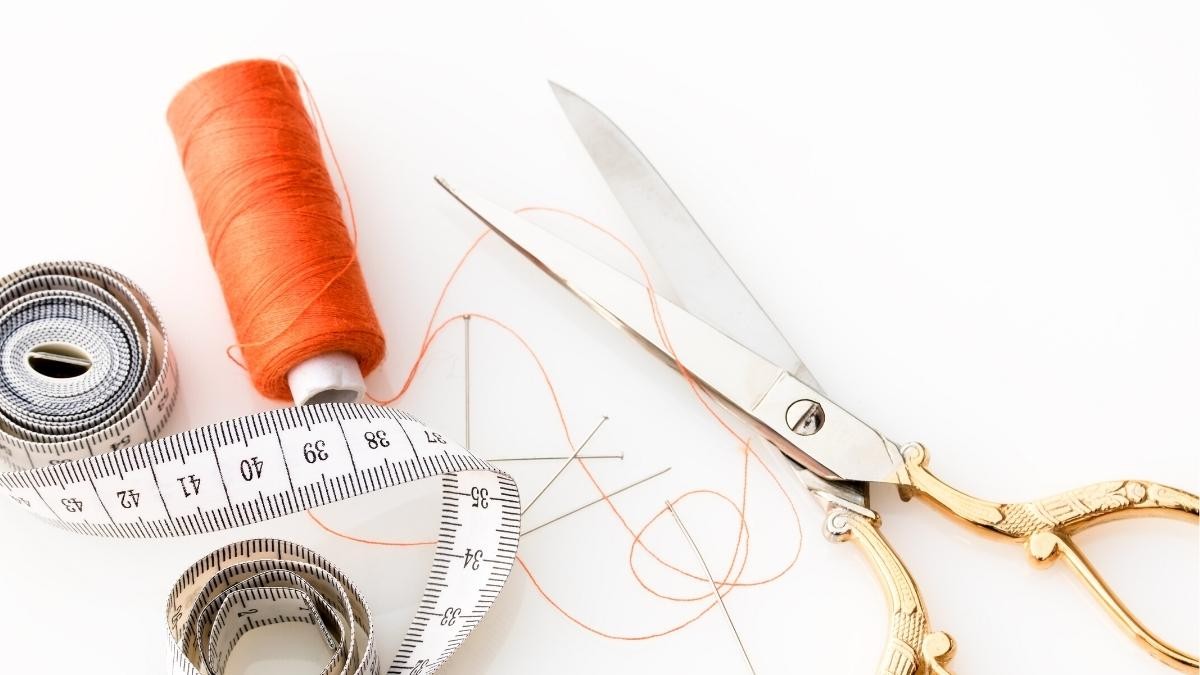
Armhole
Opening made in a garment to allow the passage of the arms.
To build
Prepare a temporary seam by hand before placing the fabric in the sewing machine.
Bias
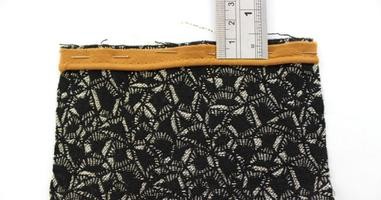
It is a strip of fabric more or less wide cut in the oblique of the fabric. Hence its name "bias". This strip of fabric is then folded several times, to give a closed strip that will be placed around an armhole, a neckline and others. The advantage is that it is flexible and therefore it can easily follow the curves of a fabric without giving it rigidity. It can hide the edges of the fabric when they are visible or make a clean and elegant finish.
Bobbin
Small spool essential for the proper functioning of your sewing machine. It is installed in the bobbin holder inside the compartment located under the plate where the needle of your machine is located. It will allow you to unwind the thread from below.
Braid
Thick band of fabric, woven or braided which is used to adorn a garment or a piece of furniture.
Braid
Make a finish with a bias.
Button
Small object used in sewing to close a garment or an accessory. Usually it is round and flat with two or four holes. But it is also found in various shapes, colors and materials. There are buttons with holes and shank buttons: the use remains the same, but the way of sewing them will be different.
Buttonhole
It is the small opening in which we introduce the button to be able to close the garment.
Canvas
Reinforce or make more rigid the parts of a fabric cut on the bias (such as V-necks or bare backs) using a straight iron-on thread. This will give it more hold by preventing the edges from deforming and altering the drape of the garment.
Crowbar
Sewing machine part. It is used both to hold the fabric flat and to sew the basic stitches.
Decatize
Remove luster from a fabric or prevent shrinkage after washing. There are several methods for this: iron with a wet cloth (wet cloth) or wash the fabric.
Edge
It is the border of a fabric. Its appearance is different from the rest of the fabric to differentiate it: it can have a specific weave or have small holes.
Fabric clips
Alternatives to prickpins, they securely hold multiple layers of fabric without damaging the fabric.
Fabric Coupon
This is the piece of fabric you are purchasing.
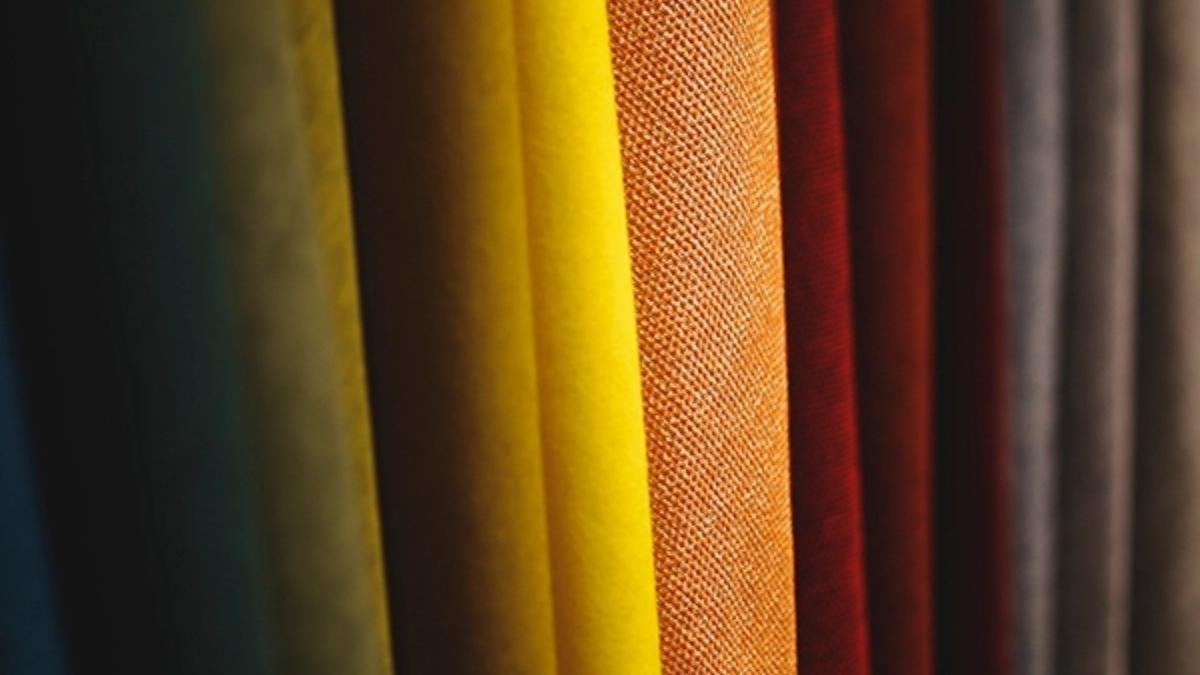
Fabric Weave
This is the way of crossing the warp threads (thread placed lengthwise) and weft threads (thread placed widthwise). There are three main weaves: canvas, twill, and satin.
Facing
A strip of fabric that serves to reinforce and give an impeccable finish to openings in a garment such as a collar, armholes, pockets or even hems. It may be invisible when folded upside down. It is said to be decorative when it is folded towards the place. It is also called facing.
Fleece
Thick, soft and light, fluffy fabric. It has been scratched to give it that fluffy look. It has good thermal insulation properties, it is breathable and it is easy to use.
To frown
Gather, that is to say, fold the fabric evenly.
No content for this part
Hem
Fold a fabric back on itself to shorten a garment or make a nice finish.
Hem darts
They make it possible to maintain and maintain the fabric (s) to make the hems of your clothes or your curtains.
Herringbone twill rubbons
Thick ribbon made up of a herringbone frame.
In shape
It is a facing (lining) of neckline or armhole.
Interlining
Material used to reinforce a piece of fabric to stiffen it or to make it easier to assemble.
Iron-on
Fabric used to stiffen a fabric. As its name suggests, it sticks under the effect of heat.
Japanese rule
Flexible checkered ruler. Very practical for adding seam allowances.
No content for this part
No content for this part
Mesureing tape
Supple and long. The ideal is to wear it around your neck so that you always have it close at hand.
Neck
Part of the garment that surrounds the neck.
Needles
Tool for sewing fabric. One end is pointed and allows the fabric to be pierced. The other end has a hole through which the wire is passed. There are different kinds of needles and different sizes depending on the thickness of the fabric used and what it is used for.
Needle eye
It is simply the hole of the needle.
Needle threader
As the name suggests, it is a small tool that helps pass the thread through the eye of a needle.
Notch
Make regular notches (small V-shaped notches) with the scissors on the seam allowances to be able to assemble two rounded pieces and give them a nice finish when turned to the right side.
Overcast
Sew the edge of the fabric in a zigzag or overlock stitch so that it does not fray.
Overlock
Sew edges together with a solid seam quickly and efficiently.
Parrot
Also called Pistol, it is a flexible curved ruler particularly suitable for creating or modifying patterns for sleeves, necklines, armholes, hips ... It allows you to draw different types of curves.
Piping
A sort of ribbon made up of a cord enclosed in a bias strip folded in half. It can be used to border various items such as necklines, armholes, but also accessories and decorative objects.
Pliers
Fold, often triangular in shape, to adjust a garment.
Prick
It is simply the verb used for machine sewing.
Prick pin
They allow different layers of tissue to be held together.
No content for this part
Return bias
It is a practical tool which is used to return the tubes of fabrics such as suspenders, bag handles, belts ...
Safety pin
Also called safety pin, safety pin, it is a small tool that allows two pieces of fabric to be fastened together quickly and temporarily. It will also be very useful for sliding an elastic or a lace in a slide.
Sewing value
This is the other name for seam allowances.
Score board
Stretch knit band used to finish, tighten the edges of some garments. Such as the necklines of t-shirts and jackets, the bottoms of pants and jackets as well as to belt certain dresses.
Seam allowance
Distance between the seam line and the edge of the fabric. It is important to add them when cutting the fabric in order to respect the size of the garment during assembly. It is also called "seam allowance".
Seam ripper
Tool that allows you to easily unstitch seams without damaging the fabric. It is composed of a point which is used to pass between the thread and the fabric and of a point with a ball to cut used for the thick fabrics. Between the two needles, there is a blade that allows you to cut the thread.
Sewing pattern
Flat representation of the constituent elements of a garment seen from the front and from the back, which makes it possible to design a garment before its manufacture by sewing. Usually, it is made of paper or cardboard, and less frequently on fabric. It is always wider than the garment that we are going to make in order to be able to assemble the different pieces of fabric.
There are three types of pattern: the basic pattern which consists in tracing the base of a garment; the model pattern, which consists of creating or transforming a model from an already existing basic pattern; and the industrial pattern which is a model pattern on which sewing values are added.
Shot plan
It tells you how to fold your fabric and how to position each piece of the pattern on the fabric.
Smocking
These are decorative gathers made in a garment in order to create a pleated effect, to reduce the total width of the fabric or to give elasticity to certain parts such as the neckline, the cuffs, the bottom of the pants ...
Starch
Coat a fabric with starch to give it weight (starch) or stiffen it during cutting and sewing. The starch will wash off.
Stitching
Stitch visible on the right side of a garment or accessory. It is used to strengthen and decorate the fabric.
Straight wire
Represented on the sewing pattern by a large arrow, it indicates the direction of the fabric. It is parallel to the selvedge (the edge of the fabric). When the edges of the fabric are not indicated, you can identify the straight grain thanks to the elasticity of the fabric by stretching it in both directions. The straight grain is in the direction of the least flexible and elastic fabric. It is important to cut a fabric in the grain so that it has a harmonious fall, does not warp and holds over time.
Template
It is a sewing pattern made on a sheet of paper or cardboard, which represents the garment from the back and the front, before its manufacture.
Thimble
Metal protection placed on the middle finger of the hand holding the needle. It is used to protect needle sticks when sewing.
No content for this part
No content for this part
Wet paw
Damp piece of fabric (not wet or soaked, but just damp!) Used when ironing delicate fabrics. It makes it possible not to shine the fabric and not to leave traces during the passage of the iron.
Width
Width of a fabric between the two edges.
Wire cutter
Precision scissors used for unstitching stitches, hems, cutting threads that protrude from fabrics or trimming frayed threads.
No content for this part
Yoke
It is a piece that is applied to another piece in order to add structure to a garment.
No content for this part




Credits
Perles & Co, Internet & E-Commerce company [06/12/2021] Any reproduction, representation, adaptation, in any form whatsoever, even partial, is prohibited, except for reproduction for private use not intended for collective use, representation in the family circle (art. L 122-5 CPI) and online publishing on condition that the source is mentioned and a link is included to the corresponding page of our site www.perlesandco.com.

