How to make lettering ?
Attention, we inform you that the following tutorial has been translated by the automatic translator Google Traduction. We are not responsible for the errors caused and we apologize in advance for the inconvenience. Feel free to contact our customer service via this online form if you need help to understand this tutorial.

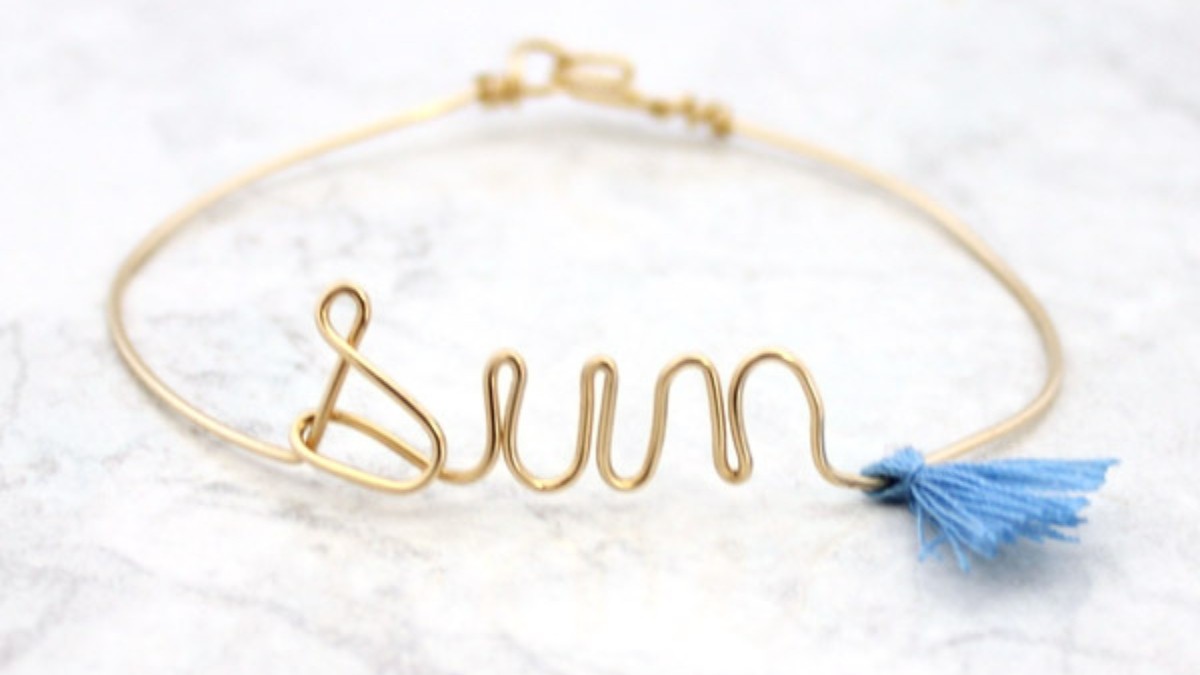
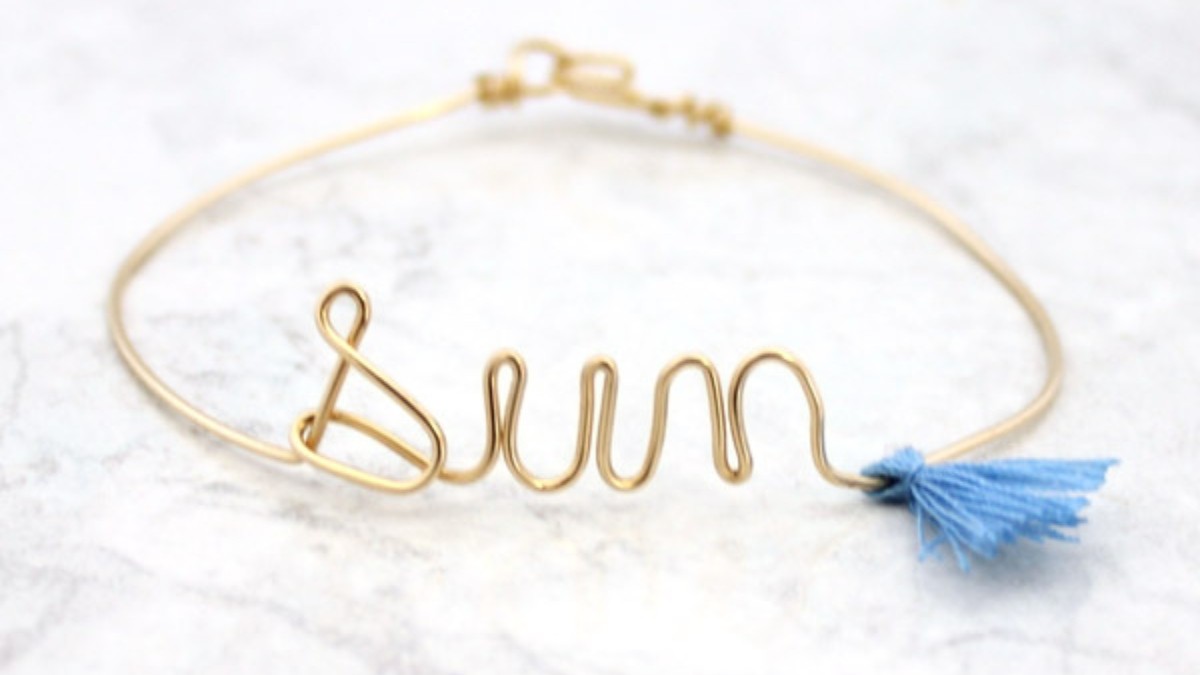
Lettering is the art of forming letters, whether by calligraphy, painting or the twisting of a thread to give it the appearance of a word. In this data sheet we will explain how to form letters with gold filled thread to create name bracelets or rings. This is a technique that may seem a little difficult at first, but it requires above all training. You can of course use 925 silver wire too.
Start with a simple 0.9mm copper wire at the beginning to practice, then a harder wire such as Griffin Craft wire 0.8 mm before starting with semi-hard Gold filled wire 0.8 mm . Once you master the technique with the semi-hard Gold filled finally go to the Gold filled hard wire that will deform less easily. Attention, when you pass the Gold filled thread, know that it is a thread that does not support repetitive twists in one direction then the other in the same place. You must give the fold directly without going back several times.
You can also decide to use 1.5mm aluminum wire for decoration for example, by writing a name or a word that you place on a bedroom door or on the wall of your living room.
For a bracelet prefer a wire of 0.8 mm and for a ring with several letters of 0.5 mm.
To form a bracelet:
Step 1 :
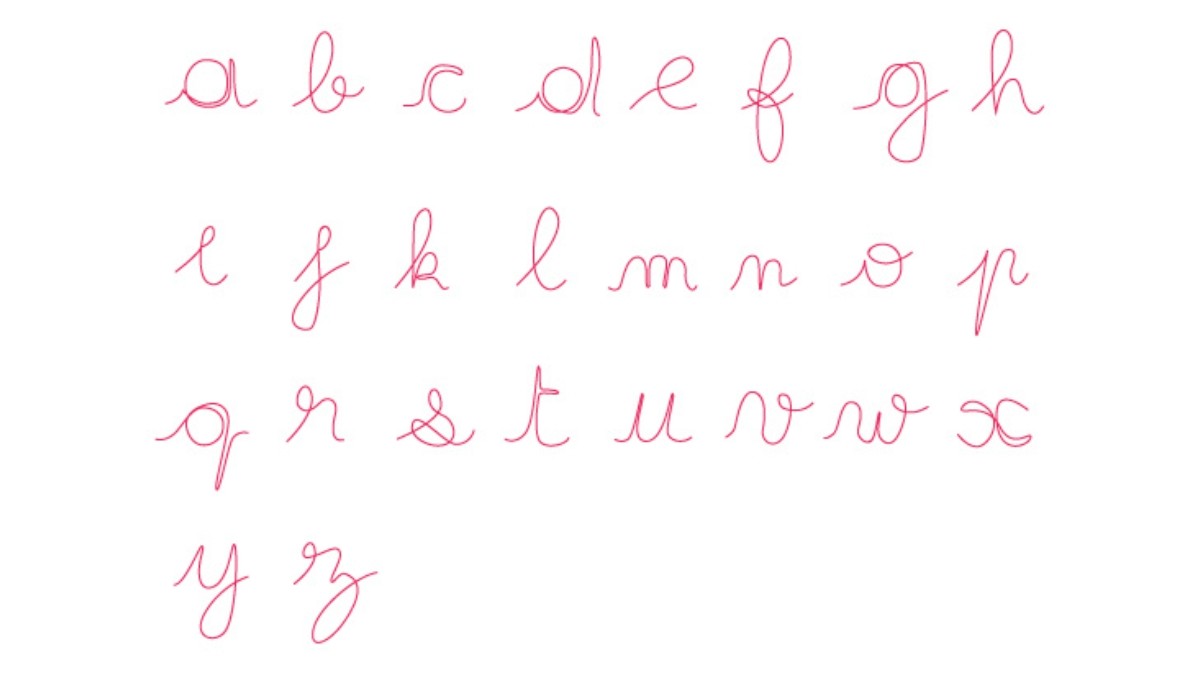
Start by writing the word you are going to train on a sheet. Try to visualize the thread when you write this word at one time. Below is an example of letters to train. Ideally, write it in real size to help you maintain correct proportions when you train it.

2nd step :
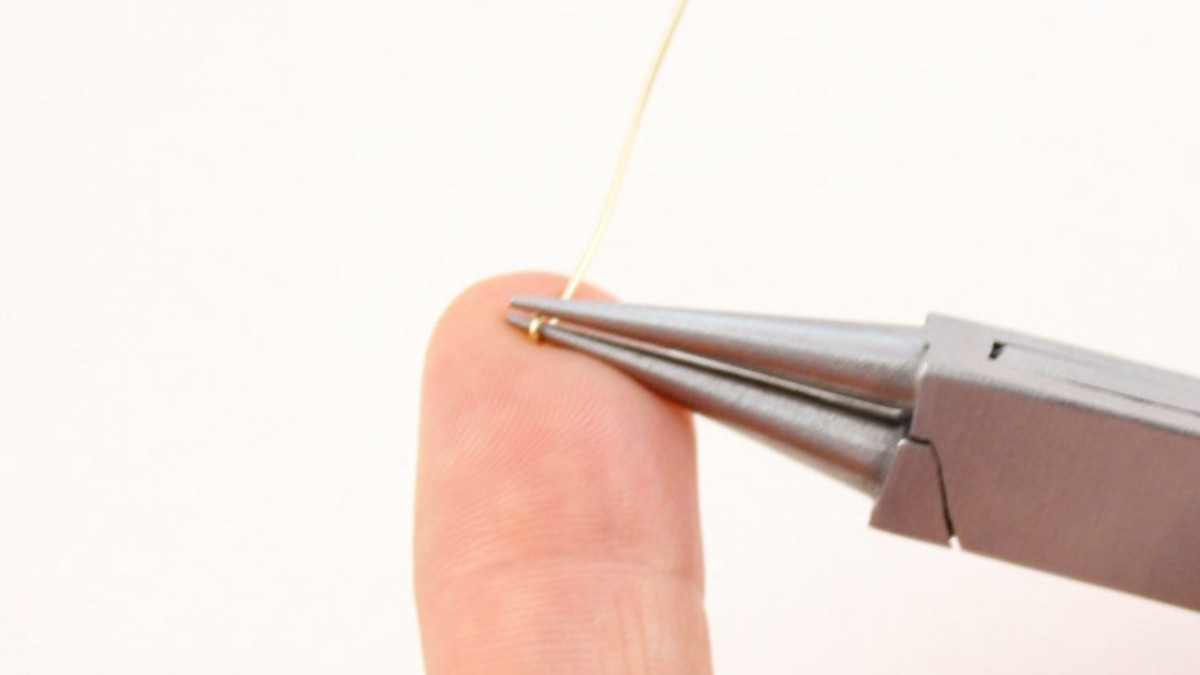
Form the word with a soft wire to practice and check the final result. This will also allow you to judge the amount of thread needed, measure the amount of thread you took with a tape measure before you start training it. You will then adjust the necessary amount of thread. Use round and thin pliers to form the wire. The differences in the diameter of the cone of the clamp will allow you to make circles and loops at once and without unsightly folds in the middle of the curves. For example to make an "o", bend the wire with the tip of the pliers to start it and then use the larger diameter of the pliers to wrap the wire and form a circle. You can also use the Tool Dip to prevent your clip from making marks on the wire.
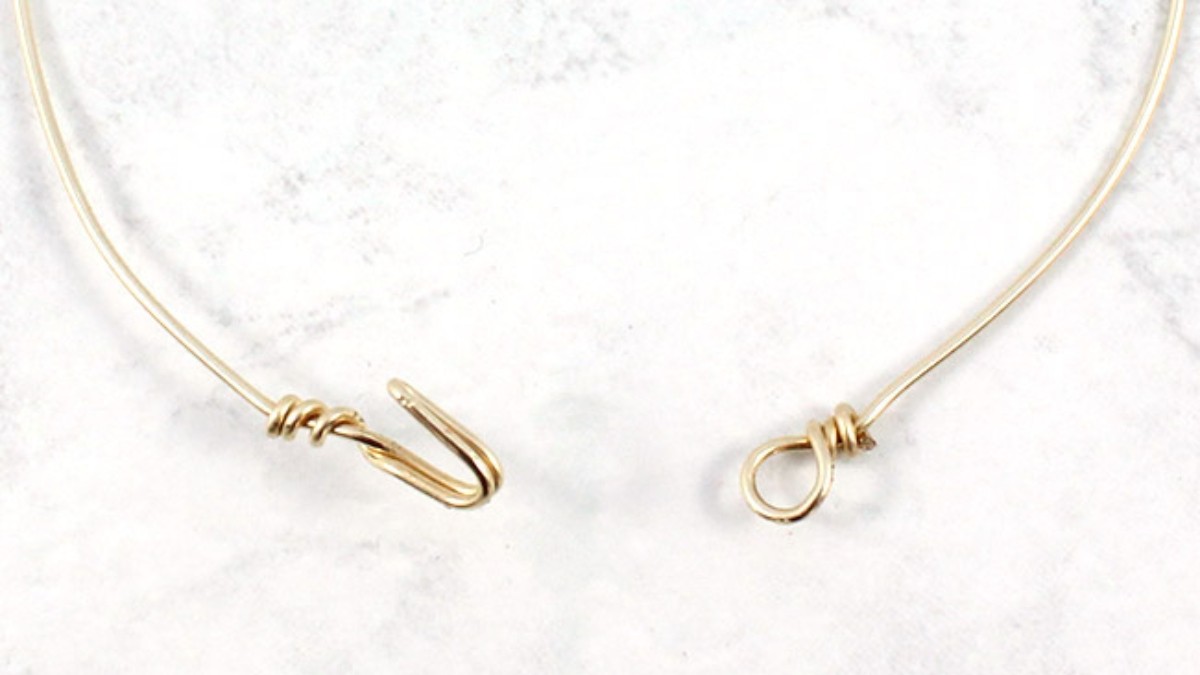
Also create the hook and loop of the bracelet and then try it to check the size. To create this closure you will need to know how to make a pigtail loop .

Step 3:
Once sure of the result, use the final thread for your project. If you feel comfortable, begin to form the word by its center, otherwise measure your starting level of the word by helping you with your tests. Once the word realized, you will be able to add pompoms and pearls before forming the clasp. Give the bracelet the right curvature for the wrist using a glass or other round shapes.
To form a ring:
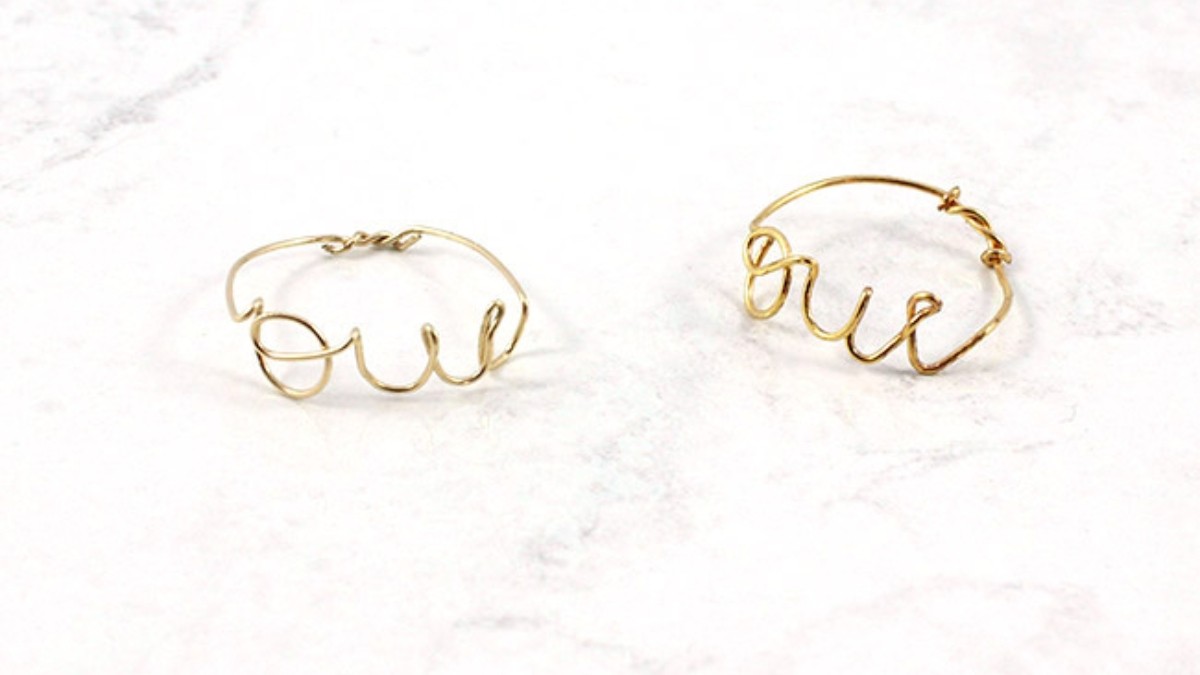
The formation of a ring is similar to that of the bracelet. Note however that for a ring with several letters you will need a thinner wire. Use 0.5 mm for 3 to 4 letter and 0.6 mm for a single small letter and 0.8 mm for a single large letter. Take a baguier to help you form the ring. You can finish it by twisting the threads, or for more elegance, by creating loops on each end of the thread.

Find the live Facebook of 11 August 2017 on the theme of the lettering in Gold Filled below: