Average Grades

Cut your wire at least 10 cm longer than necessary. Thread a bead to be crushed, pass the wire through the clasp and back into the bead.

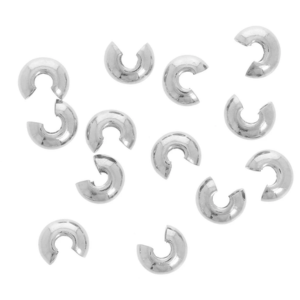
Crimp beads come in round and tube shapes, both made of flexible metal for easy use. They are primarily used to attach clasps or spacers to various types of wire, while the caps help improve their appearance. For the best results, make sure the hole in the bead is the right size for the wire you’re using and that the cap is large enough to cover the crimp bead.
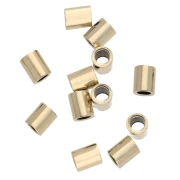
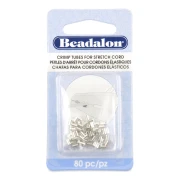
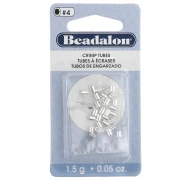
Crimp beads come in various shapes (round, tube, or 2-in-1). They are mainly used to secure a clasp, hold a spacer in place, or prevent beads from sliding off a wire.
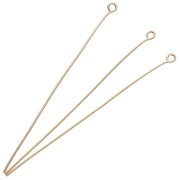
These three findings are available in brass (gold-plated, silver-plated, copper-plated, bronze), Gold Filled, 925 Sterling Silver, and stainless steel.
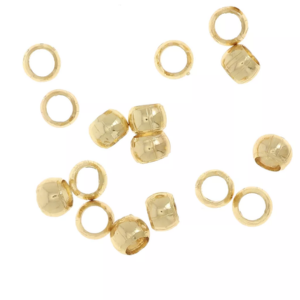
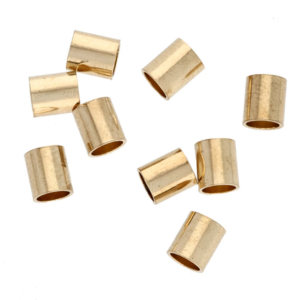
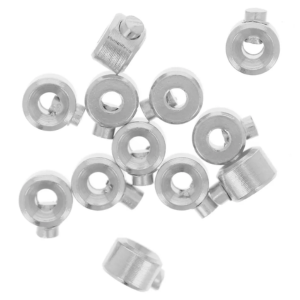
Crimp beads are mainly used to secure a clasp or spacer to a wire. This wire can be cable wire, nylon thread, silk thread, or synthetic thread. It is strongly recommended to avoid using them on elastic cord, as this may weaken it. They are also sometimes used to hold beads in place on a necklace or bracelet by flattening a crimp bead on either side of the beads.
Not to be confused with crimp beads, crimp bead covers are used to cover crimp beads for a neater finish. They look like hollow beads that have been almost completely cut in half. Place the crimp bead inside the crimp bead cover, then close it using special crimp bead pliers. Once closed, the crimp bead cover looks just like any other metal bead.
If you’re using 2-in-1 crimp beads, you won’t need to use covers because these beads already take the shape of a standard bead once they’re crimped.
While many people use simple flat-nose pliers to flatten beads, it’s actually better to use special crimping pliers designed for the size of the crimp beads.
Flat-nose pliers will simply flatten the bead, whereas crimp beads work in two steps: first flattening the bead and creating a notch in the center to separate the two ends of the thread, then folding the bead in half and clamping the two halves of the bead and the two threads together. Here’s why it’s better to use special crimp beads:
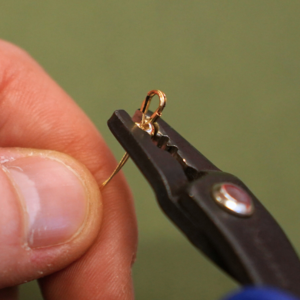
If your goal is to attach a clasp or a spacer, you should choose a crimp bead with a hole large enough for the wire to pass through twice.
For example, if you’re using 0.40 mm wire, you’ll need a bead with a 1 mm hole. It’s best if the hole is slightly larger than twice the size of the wire. Next, the bead cap must be larger than the crimp bead, as it needs to cover it completely.
If you use a 2 mm bead, you’ll need a 3 mm bead cap. The choice of material for the crimp beads is up to you. For example, you could use a brass crimp bead and a 925 Sterling Silver bead cap.
Cut your wire at least 10 cm longer than necessary. Thread a bead to be crushed, pass the wire through the clasp and back into the bead.

Flatten the bead near the clasp with the second notch on the crush bead pliers to begin folding it in half.

Fold it completely in half with the second notch of the pliers.
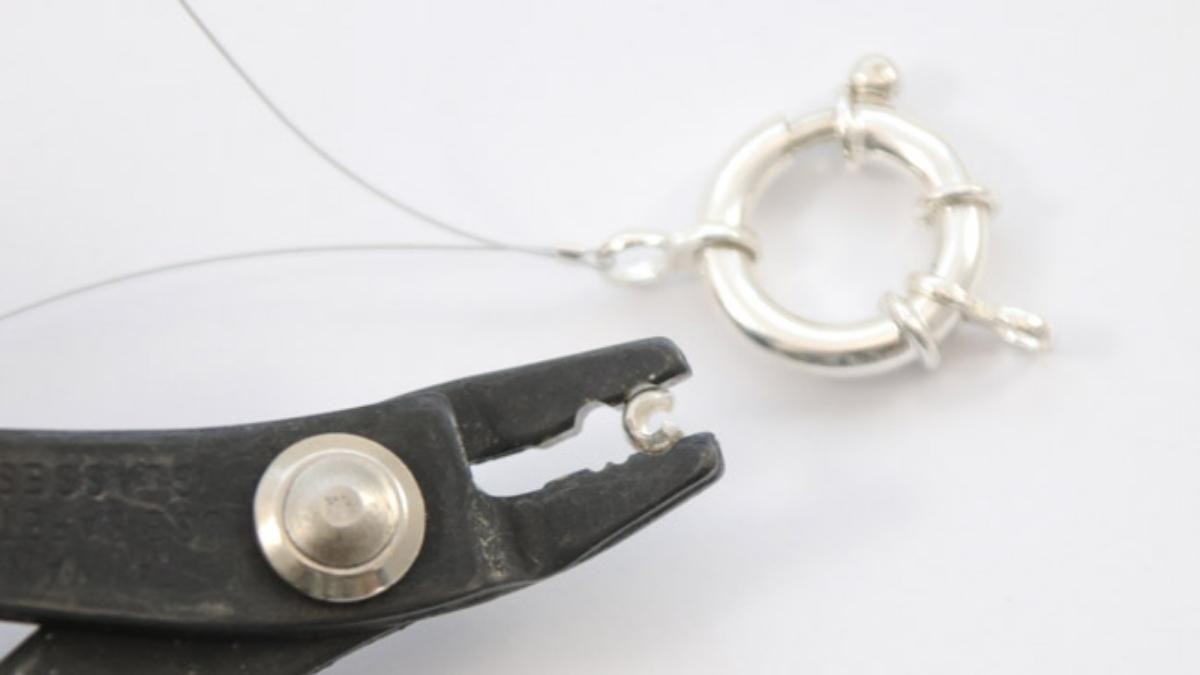
Place the bead cover over the bead to be crushed and close it.
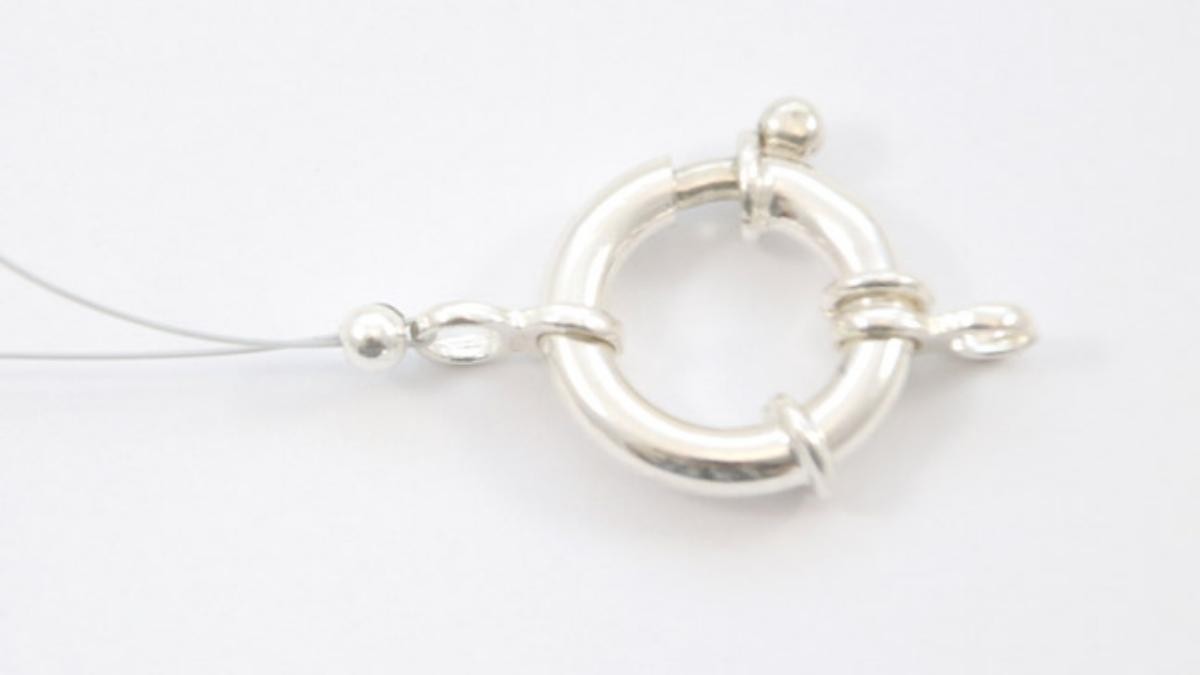
Here is the rendering.

Thread the beads and press the end of the thread through the beads. Finish by threading a new bead to be crushed.

Thread the wire through the clasp ring, then back through the crush bead and some beads. Squeeze to bring the bead closer to the clasp. Crush it and place a bead cover. Cut off the excess wire.
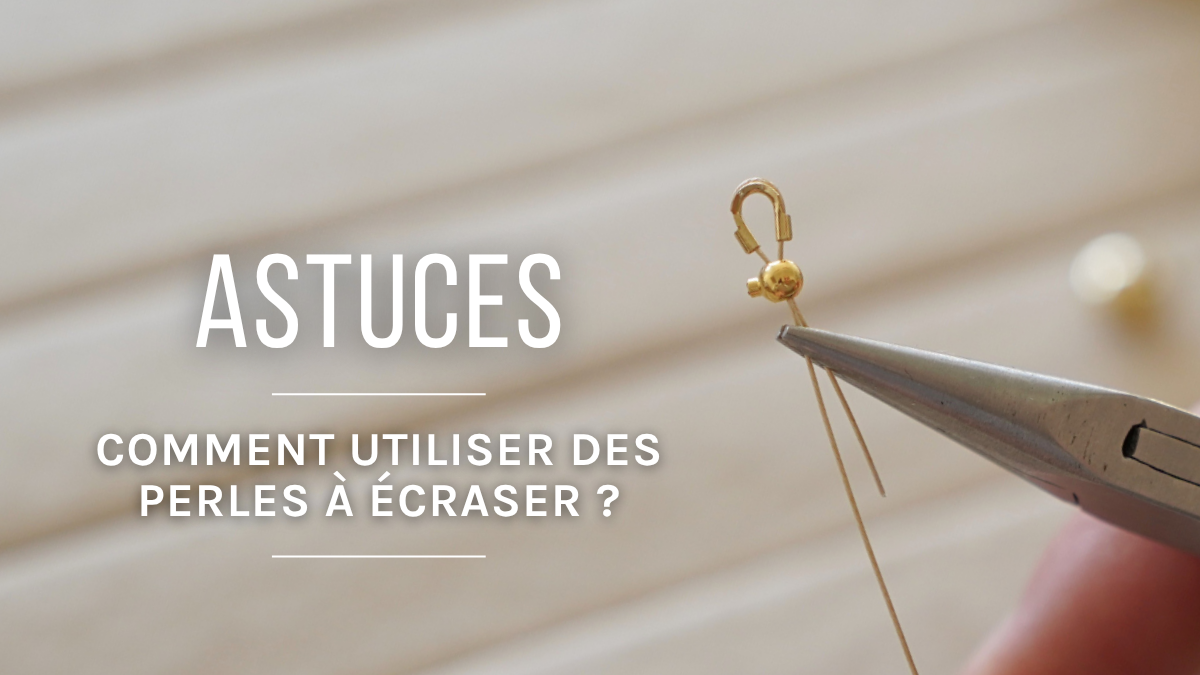
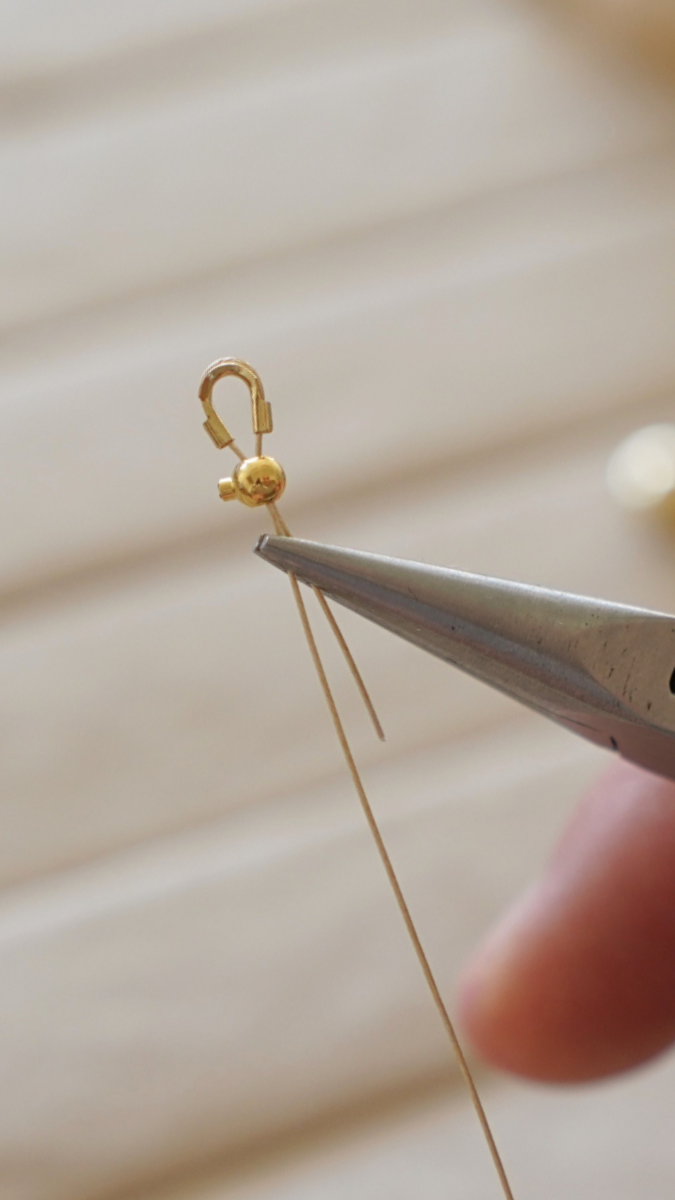

The crimp bead can easily be covered with a bead cap for an invisible finish. The longer crimp tube is typically used when it remains visible in the assembly.
No, this is not recommended: flattening the elastic thread weakens it, and it may break during use.



Credits
Perles & Co, Internet & E-Commerce company [15/03/2021] Any reproduction, representation, adaptation, in any form whatsoever, even partial, is prohibited, except for reproduction for private use not intended for collective use, representation in the family circle (art. L 122-5 CPI) and online publishing on condition that the source is mentioned and a link is included to the corresponding page of our site www.perlesandco.com.