Average Grades
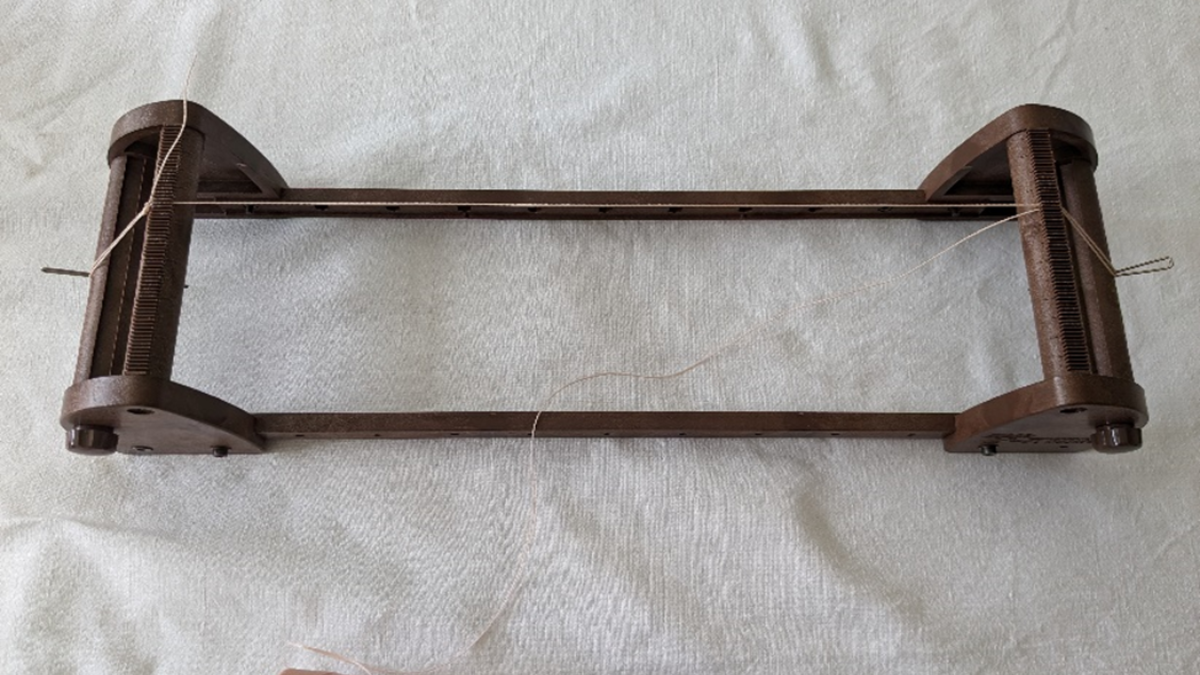
To begin with, choose a loom that allows you to have a long length of thread - you'll need at least 40 cm. Otherwise, cut several 40-50 cm pieces of yarn and attach them individually to the loom.


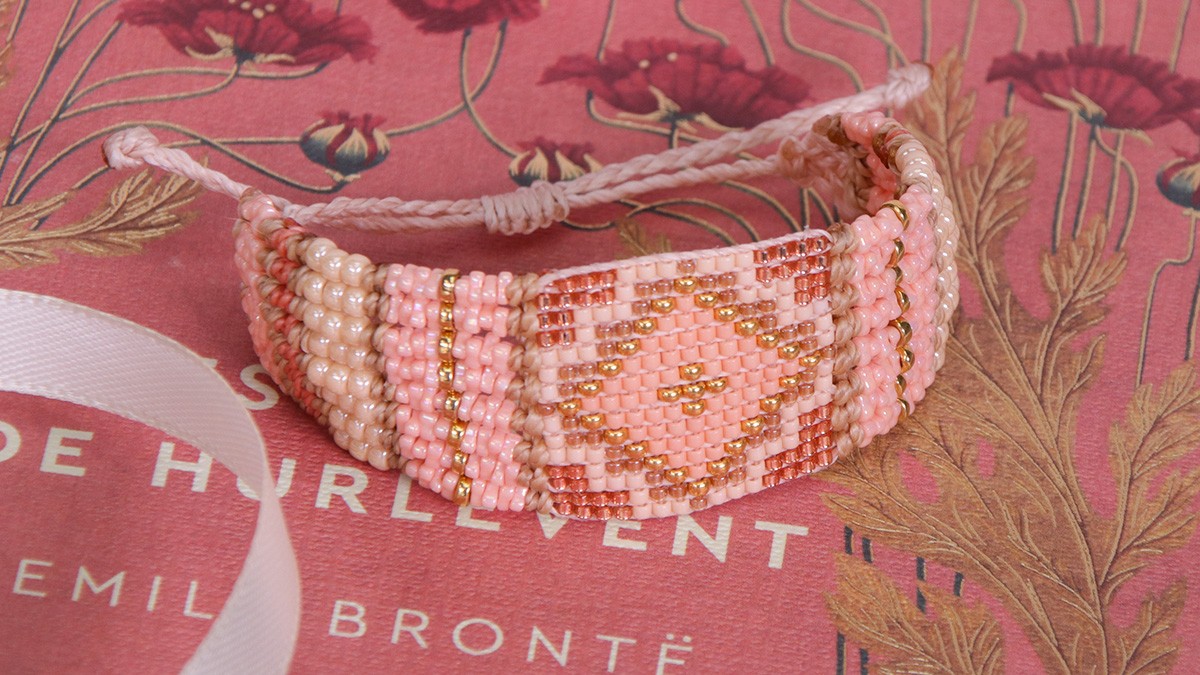
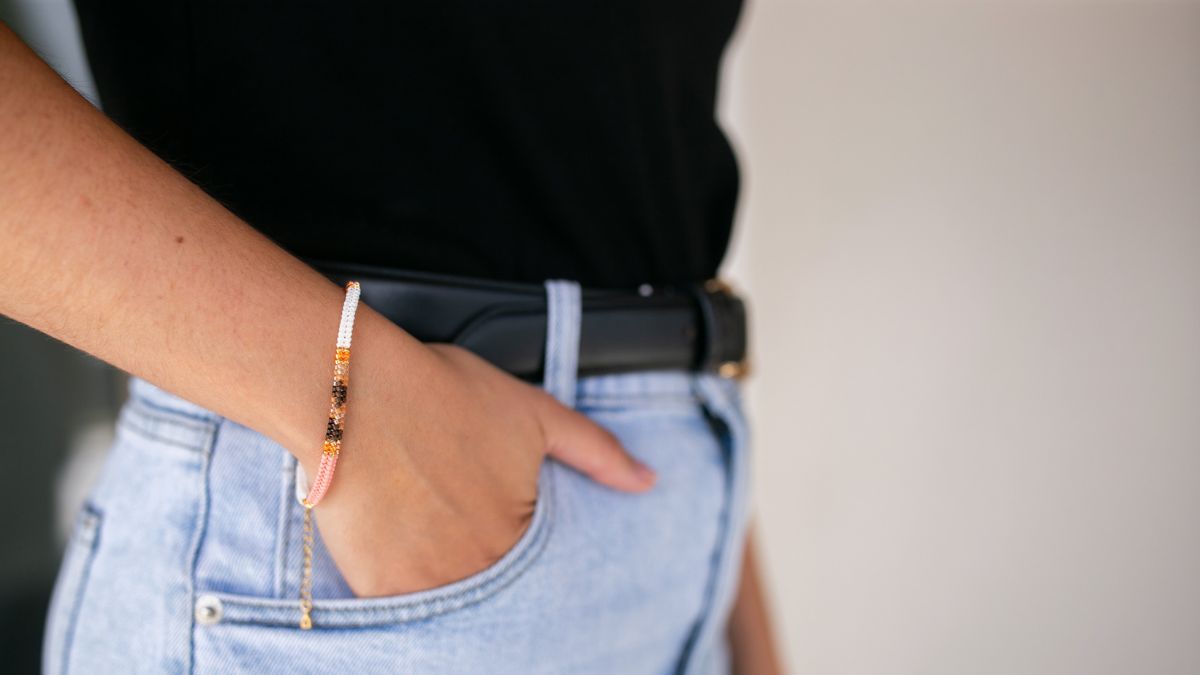
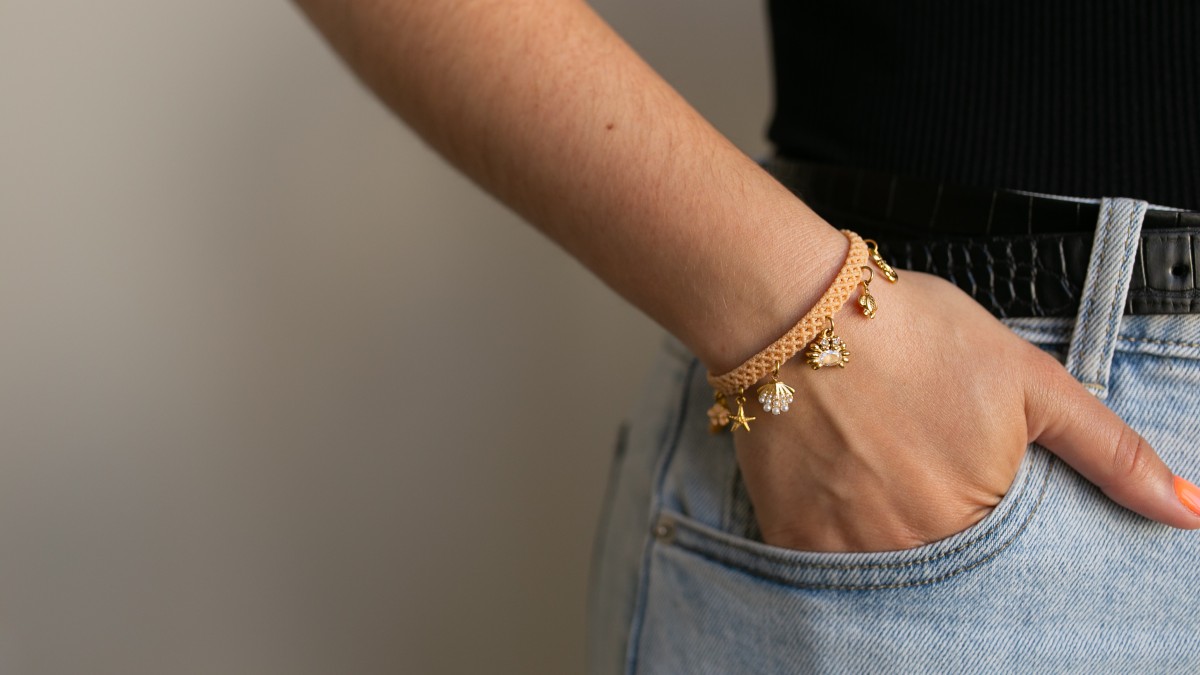
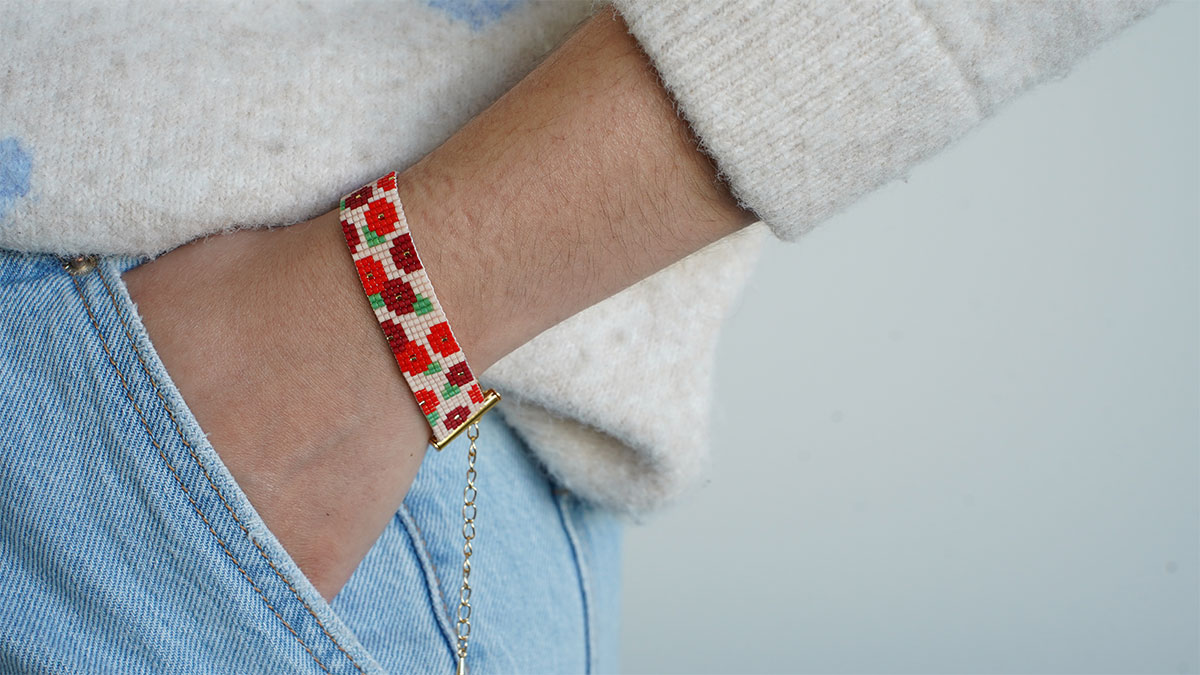
Which bracelet will you wear all summer long? This bracelet with pearl weave and micro-macramé is the kind of cuff-style bracelet we love to complete a pretty summer look. Dressed up with a little top or a strapless dress, it's sure to set off your wrist perfectly.
This woven bracelet was designed by Lise Léon, one of the five winners of our Cré'Académy 2024 creative competition. She designed a women's bracelet combining two techniques: pearl weaving and micro-macramé.
For this tutorial, Lise chose to mix Miyuki Delica 11/0 beads, Miyuki Spacer Triangles beads and Miyuki 8/0 seed beads in soft colors perfect for summer. Would you like to make this bracelet in other, more vibrant colors? You'll find a wide selection of Miyuki Delica beads on our site. Personalize your creation with the Miyuki beads of your choice.
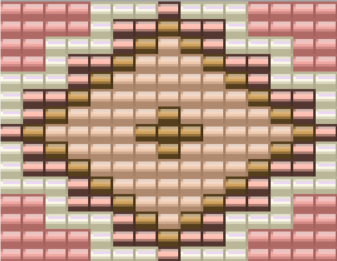
The geometric motif in the center is woven on a loom. A little experience in bead weaving is required, but following the detailed weaving chart is not insurmountable. Don't hesitate to consult our technical sheet to learn how to weave pearls on a loom.
This beaded bracelet is finished with a macramé overhand knot using Linhasita thread, so you can easily adjust it to your wrist or give it as a gift.
If you've made this tutorial, please share the result with us on social networks by tagging our Facebook or Instagrampage. It's always a great pleasure to see your DIY creations.
To begin with, choose a loom that allows you to have a long length of thread - you'll need at least 40 cm. Otherwise, cut several 40-50 cm pieces of yarn and attach them individually to the loom.
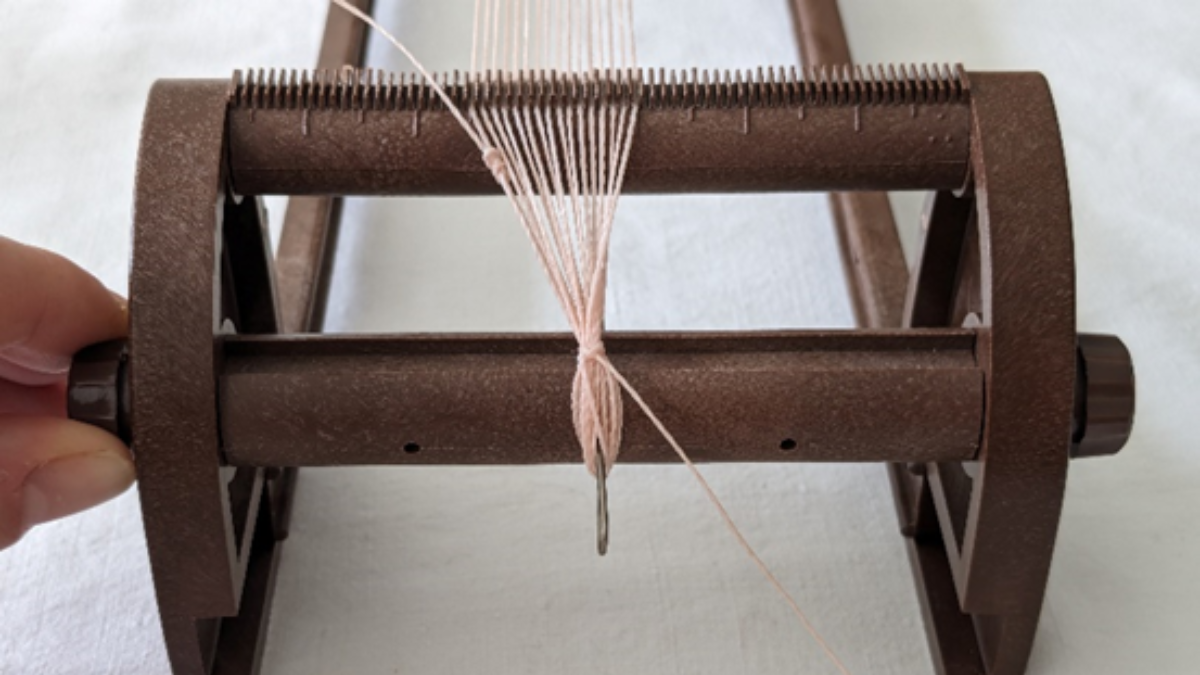
Place 0.5 mm mandarin linhasita thread on the loom. You will need a total of 16 threads.

To weave the central pattern, take 1m30 Miyuki weaving thread and follow the pattern.
Position yourself at the center of the loom so that you have enough thread on each side of the weave. These will be used to make the sides of the bracelet.
Once the weaving is complete, tuck in the weaving wires and trim the excess.
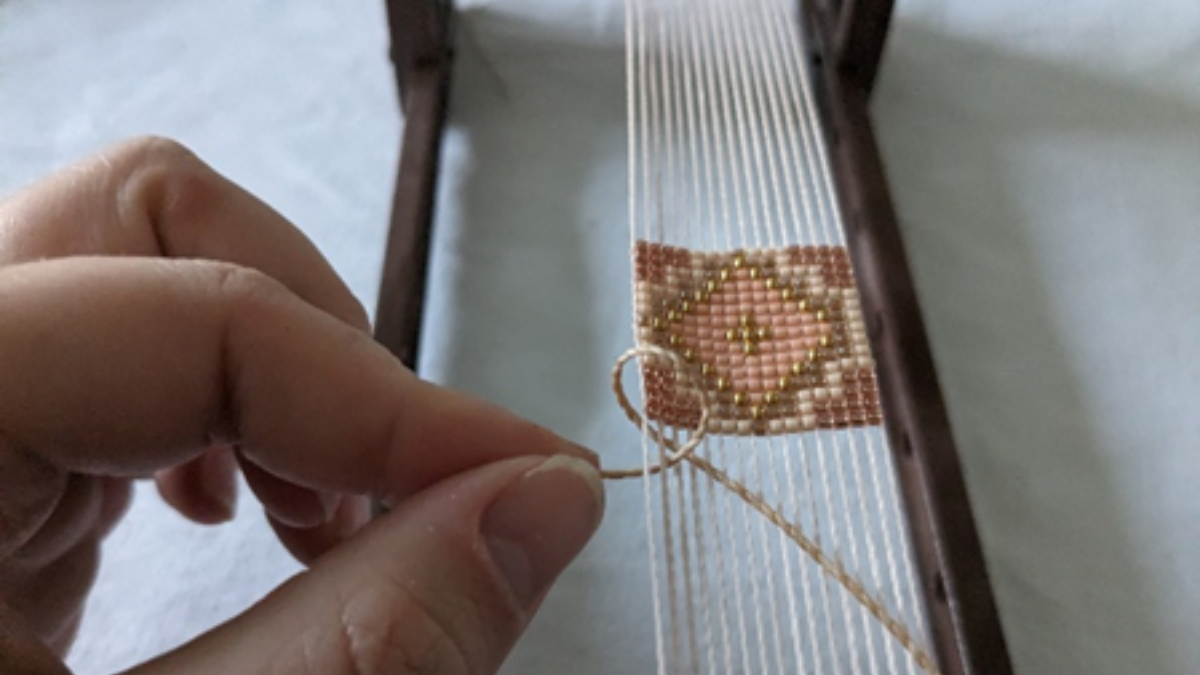
We'll now start on the macramé part. Make a row of micro macramé knots with 1 mm linhasita Cinnamon (Palha) thread, using the vertical barrette technique. If you're a beginner, take a look at our data sheet on macramé knots.
Cut a 25 cm length of wire. Be sure to tie the knots around 2 wires each time. To make the 1st knot, proceed as shown in the photo.
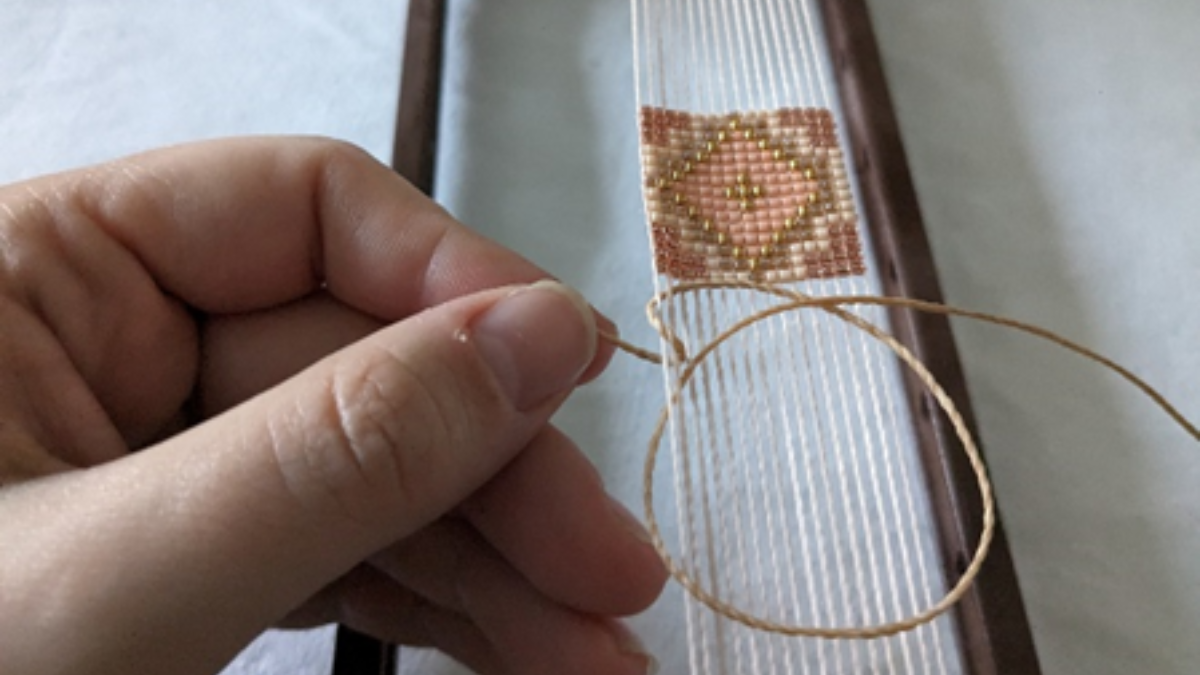
Make the 2nd knot as shown in the photo. Tighten the wire to obtain the 2 knots.
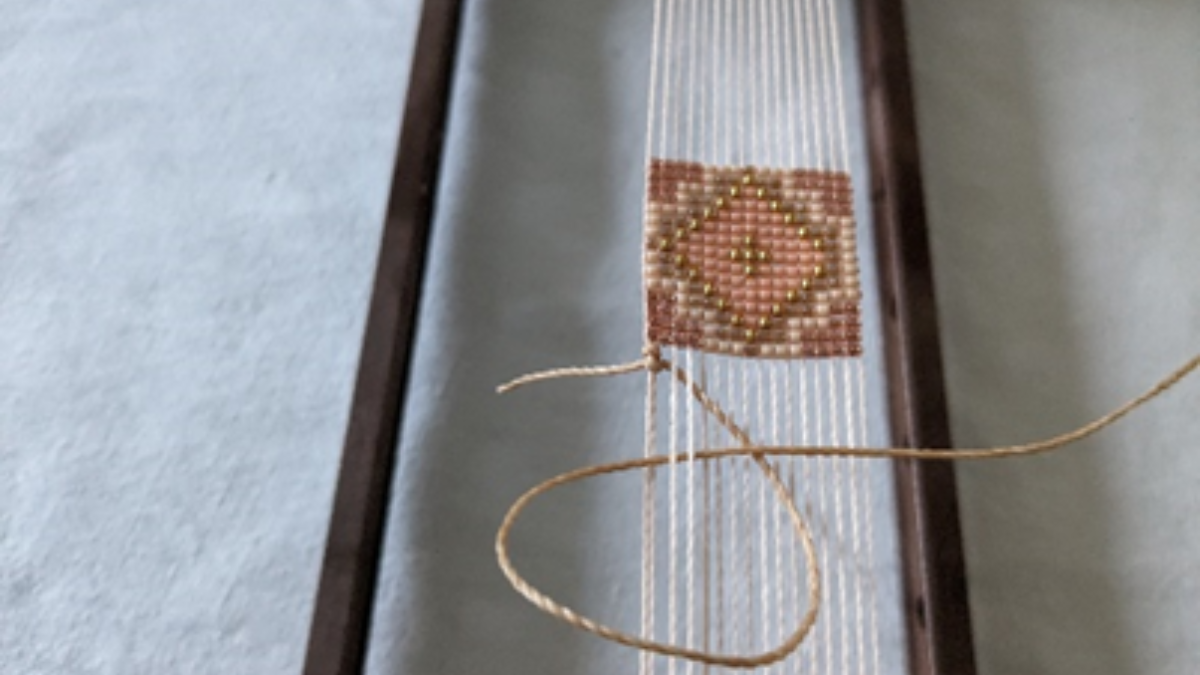
This is the result. Proceed to the next knot on the next 2 wires.

Tie the 2nd knot and tighten.
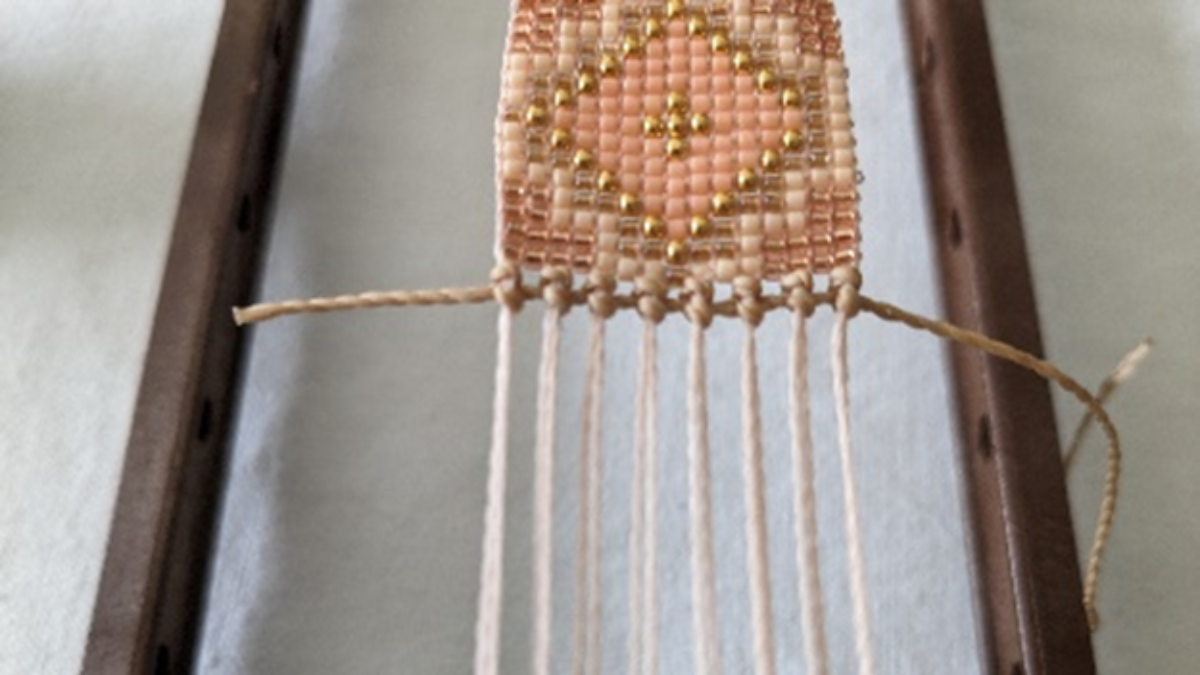
Proceed in this way for the whole row, making sure to tie two knots each time.
In the same way, make a row of knots on the other side of the weave. Then detach the weave from the loom by cutting the threads at the ends of the loom (where they are attached by screws or hooks). Cut well at the ends to keep the yarn as long as possible.
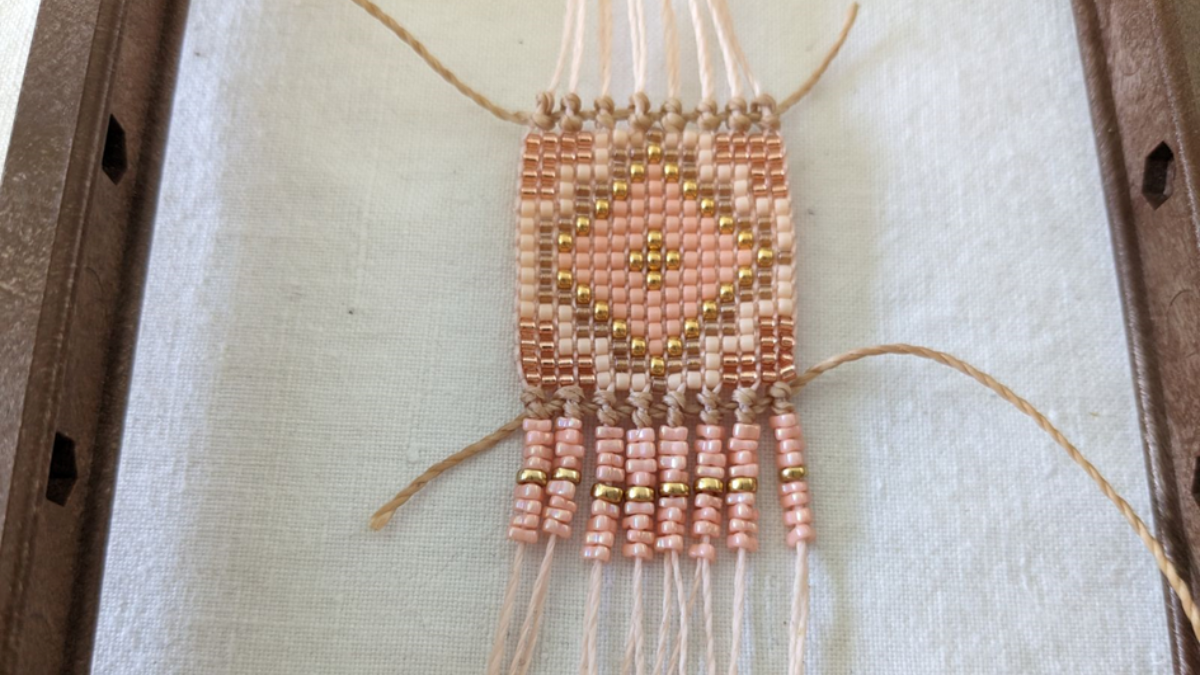
You will now thread the beads.
Start by threading 4 Miyuki triangle spacer beads, 1 Miyuki spacer bead, then 4 Miyuki triangle spacer beads onto the first 2 strands. Repeat this step for the remaining wires, making sure to string the beads on two linhasita wires each time. A little tip for easier stringing: burnish the ends of the linhasita wires.
Make a new row of knots as in the previous step, using 1 mm Cinnamon (Palha) linhasita thread. Then string 3 Miyuki 8/0 caramel seed beads. Make a row of knots with Cinnamon (Palha) 1 mm linhasita, then a row of knots with Terracotta 1 mm linhasita and again a row of knots with Cinnamon (Palha) 1 mm linhasita. Thread 4 Miyuki triangle spacers and finish with a final row of knots with Cinnamon (Palha) 1 mm linhasita thread.
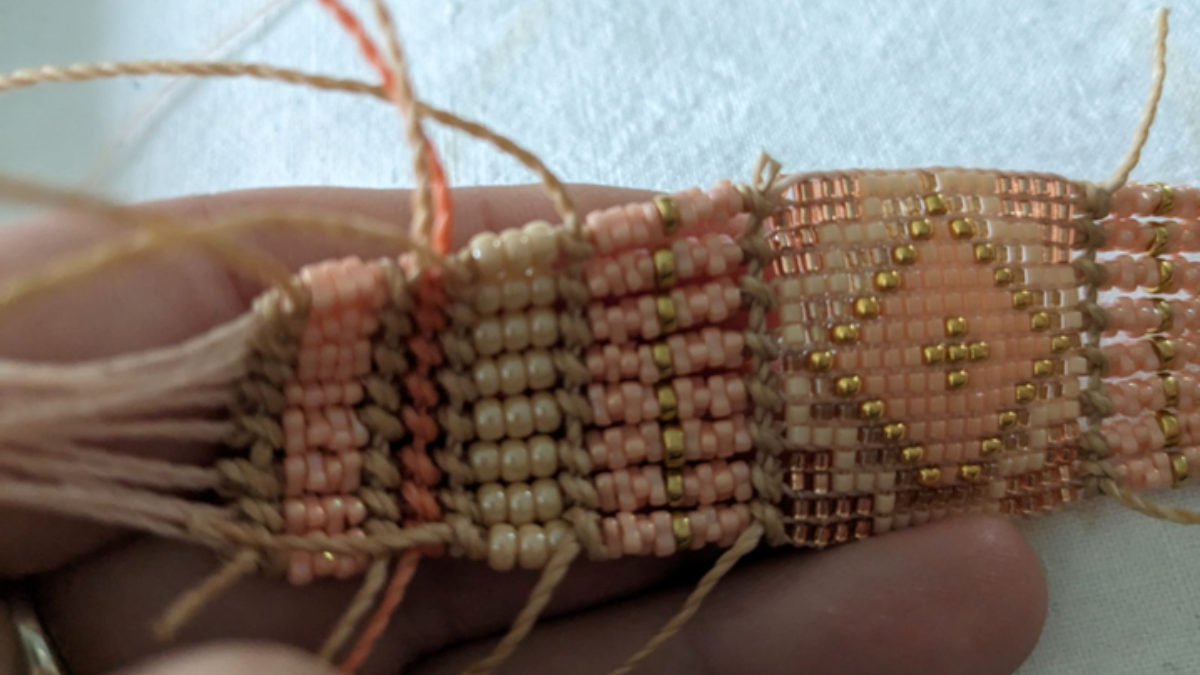
Cut the threads used to make the macramé, then burn the thread with a lighter or thread burner. Be sure to burn the thread gently so it doesn't blacken.
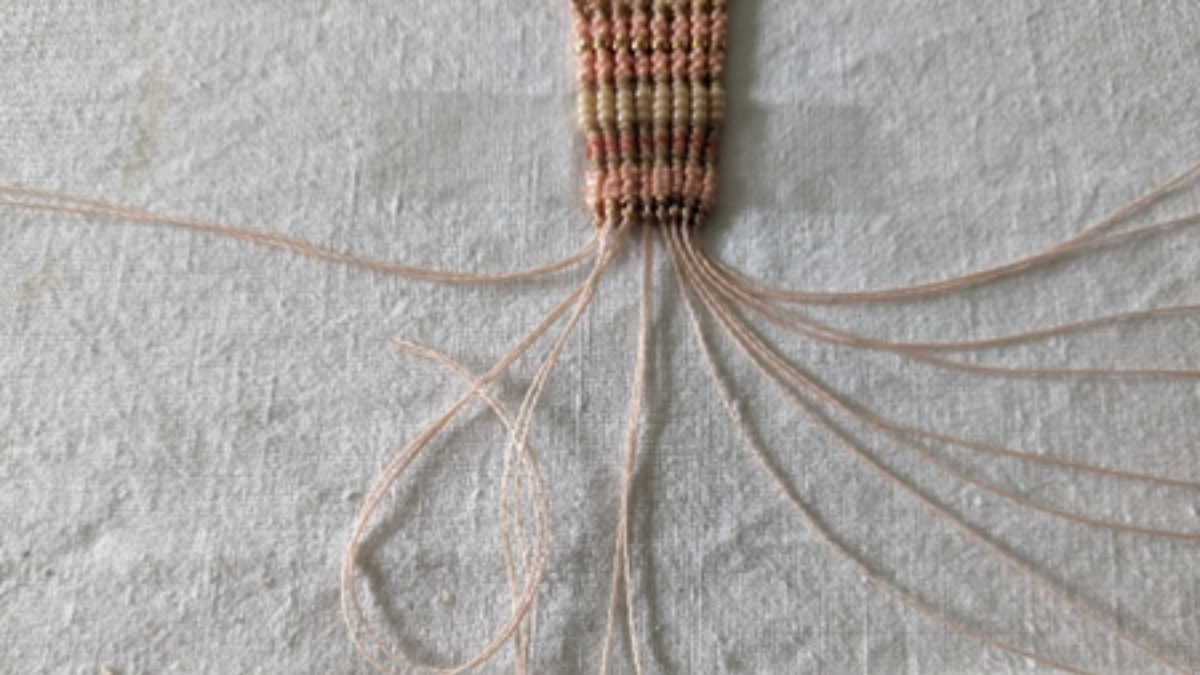
Finish the bracelet using the micro macramé vertical barrette technique. Tape the bracelet to your work surface.
For each of the following steps, make two knots. Take your 3rd pair of wires, pass them under the 2nd pair of wires and wrap them around the 2nd pair. Do this 2 times.
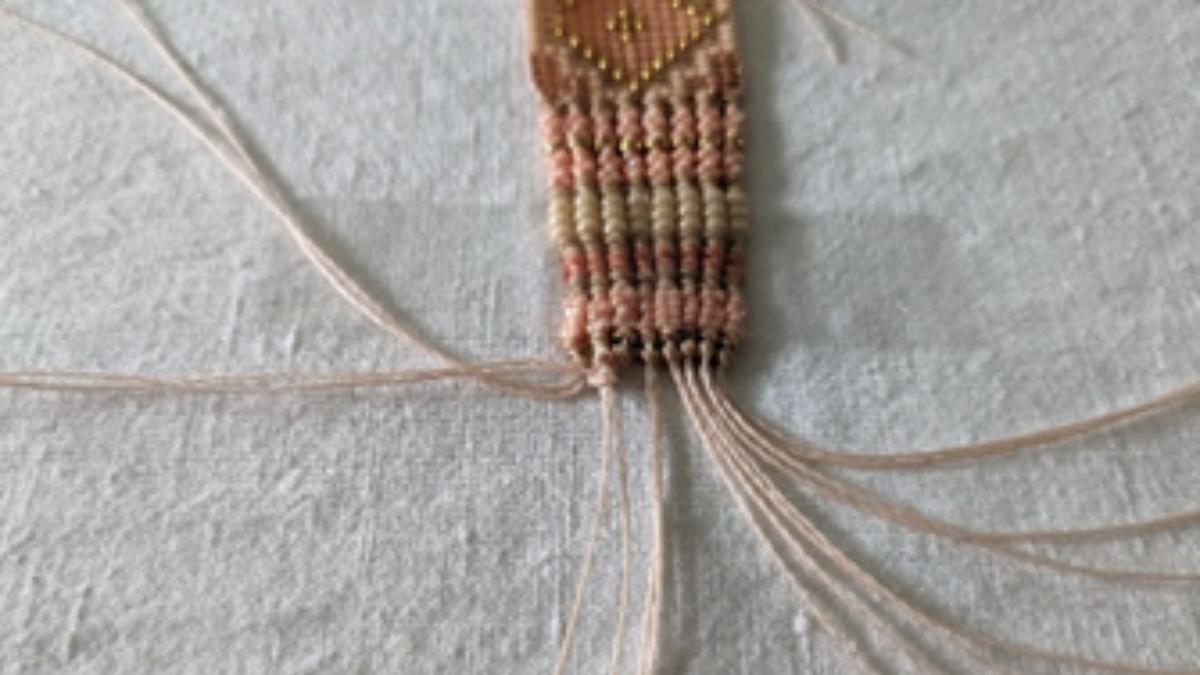
You need to get this.
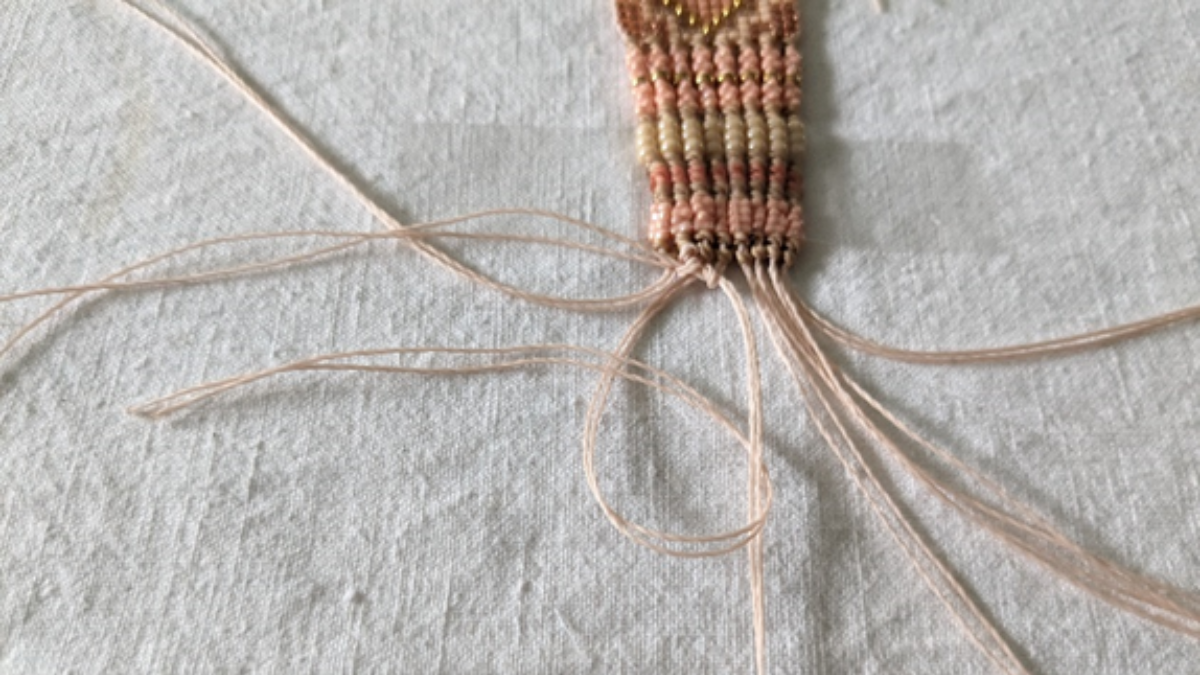
Proceed in the same way as above, but this time the 4th pair of wires wraps around the 3rd. Do this 2 times. Please note: the number of each pair of wires is inverted between each step, so take into account the position where it is when you make the knot.
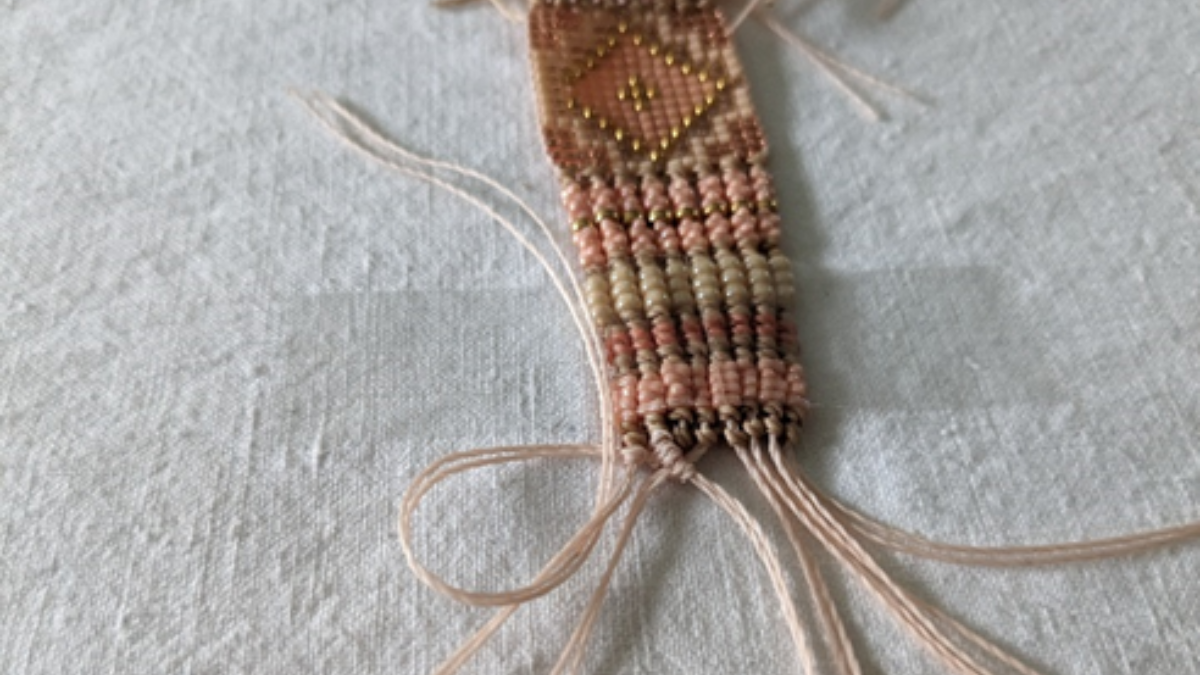
The 2nd pair of wires wraps around the 1st pair. Repeat this step 2 times.
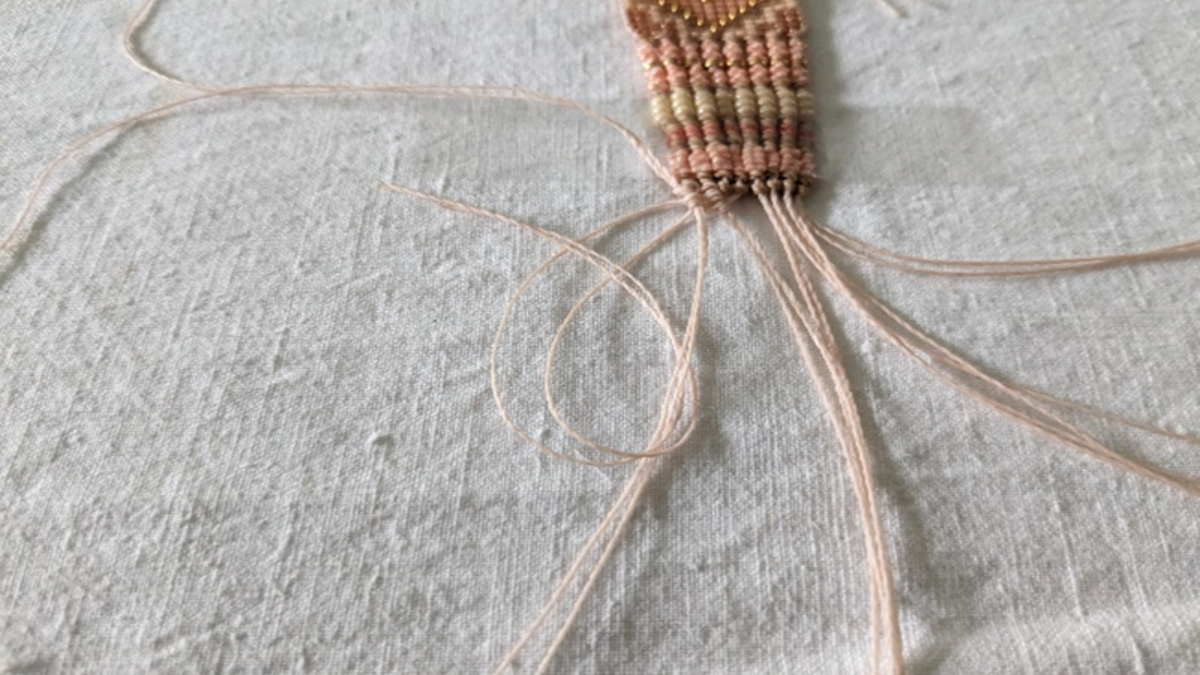
The 3rd pair of wires wraps around the 2nd pair. Repeat this step 2 times.
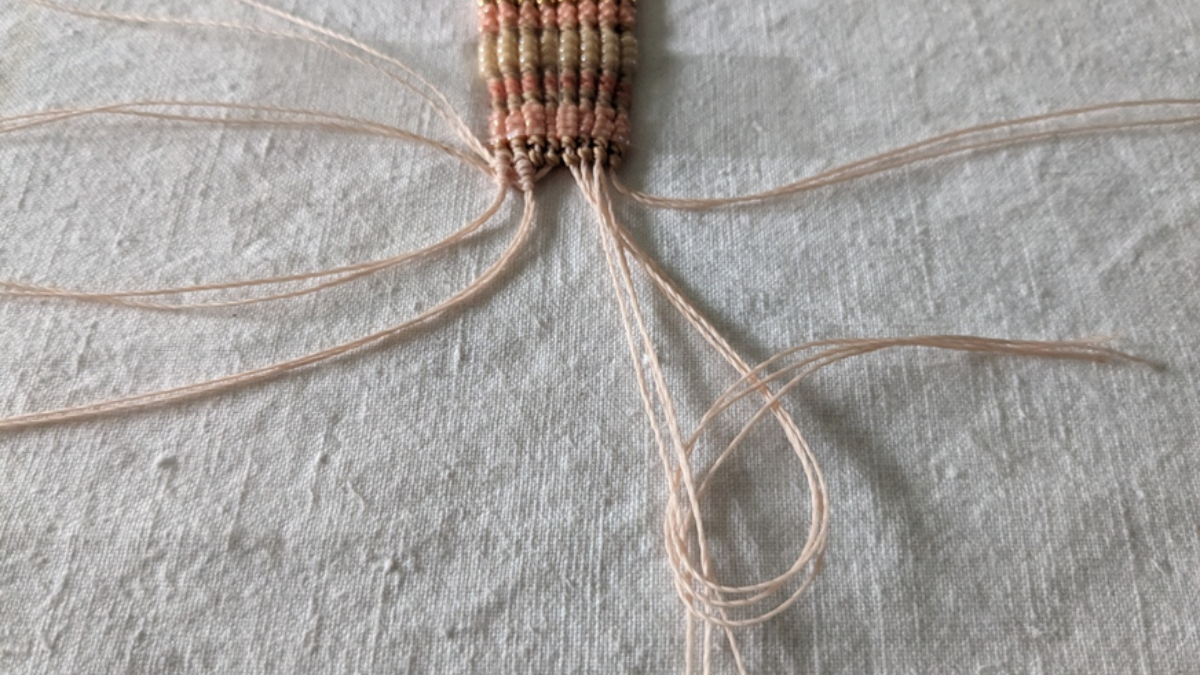
You'll now make knots on the right-hand side.
To do this, group the wires so that there are only 3 groups of wires (the left-hand group has 3 wires, the middle group has 3 wires and the right-hand group has 2 wires).
Now you'll make knots in the other direction.
The 5th pair of wires wraps around the 6th pair. Do this 2 times.
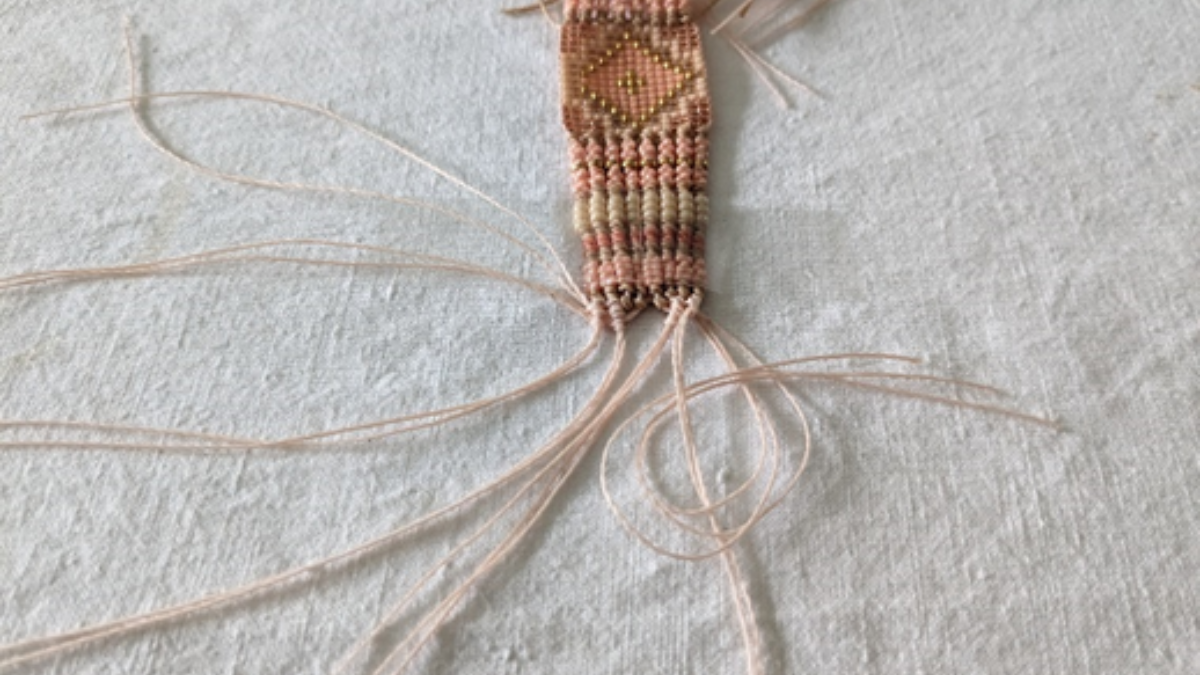
The 6th pair of wires wraps around the 7th pair. Do this 2 times.

The 4th pair of wires wraps around the 5th pair. Do this 2 times.
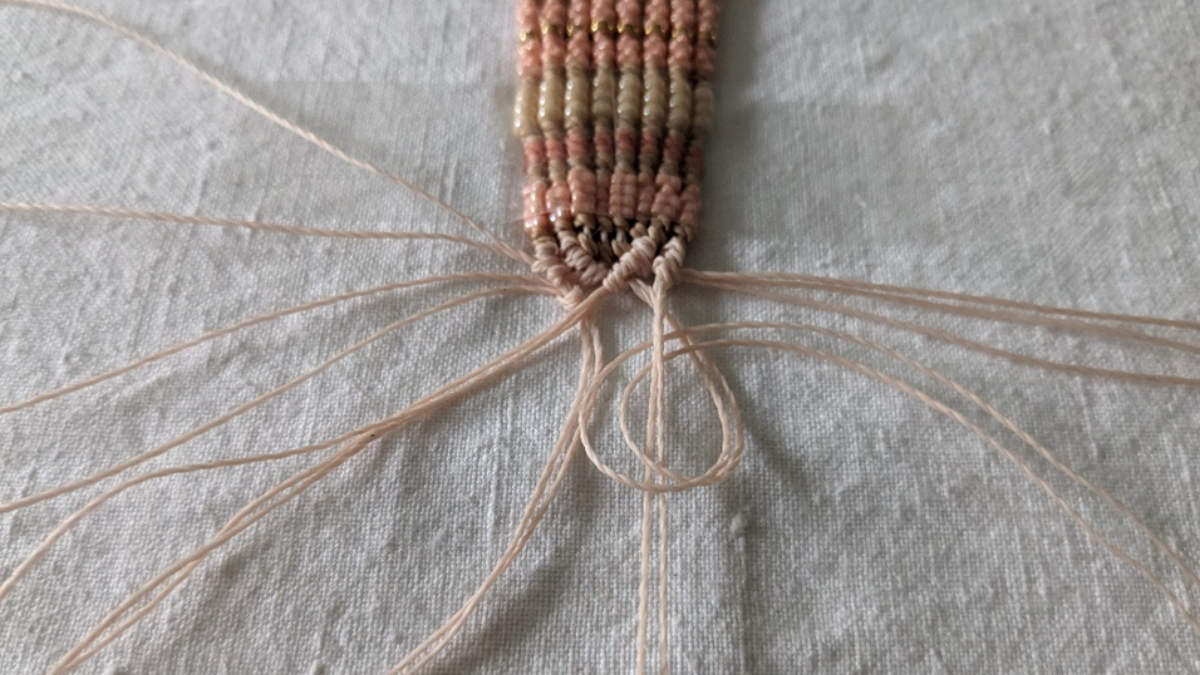
The 5th pair of wires wraps around the 6th pair. Do this 2 times.
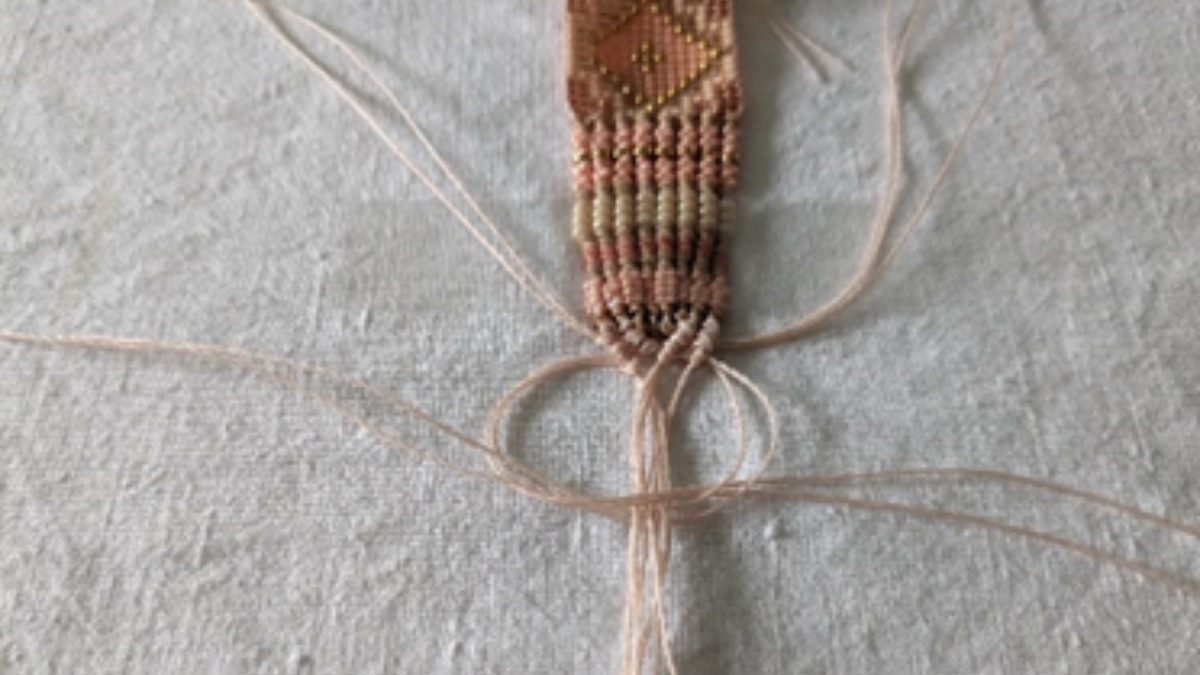
Tie an overhand knot with the 2nd and 6th pair of wires, then tighten.
If you're just starting out, don't hesitate to refer once again to our data sheet on different knots. The overhand knot technique is explained there.
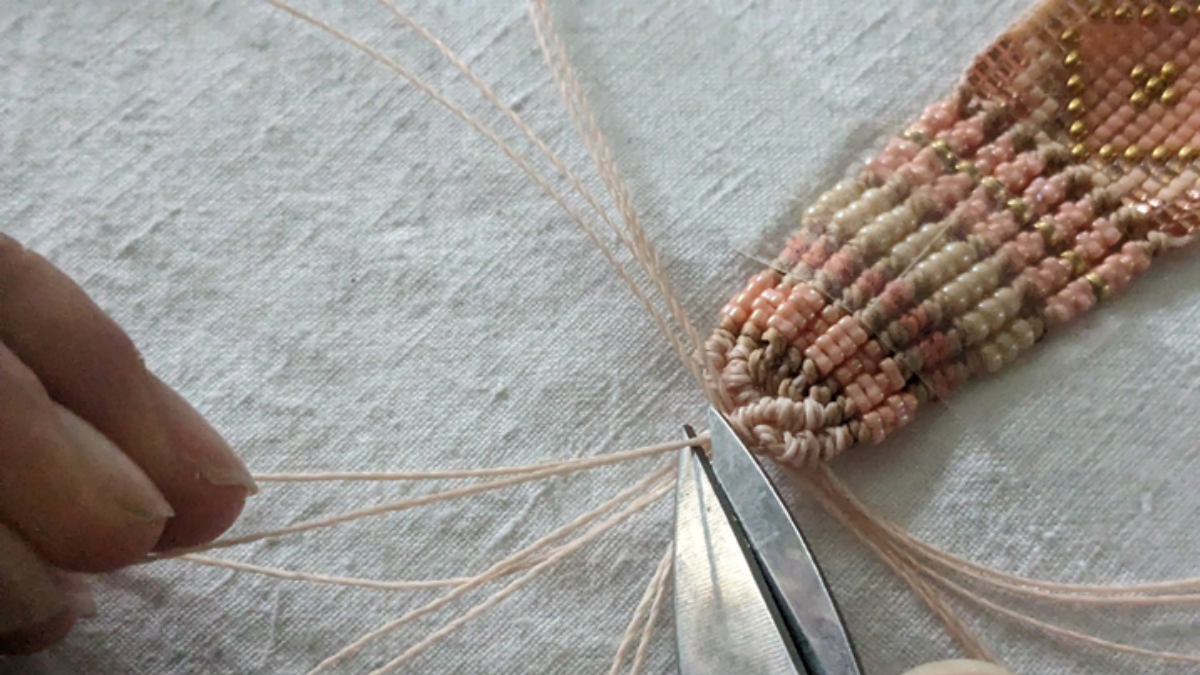
Cut one of the center wires down to 6. Burn its end. Tie another overhand knot.
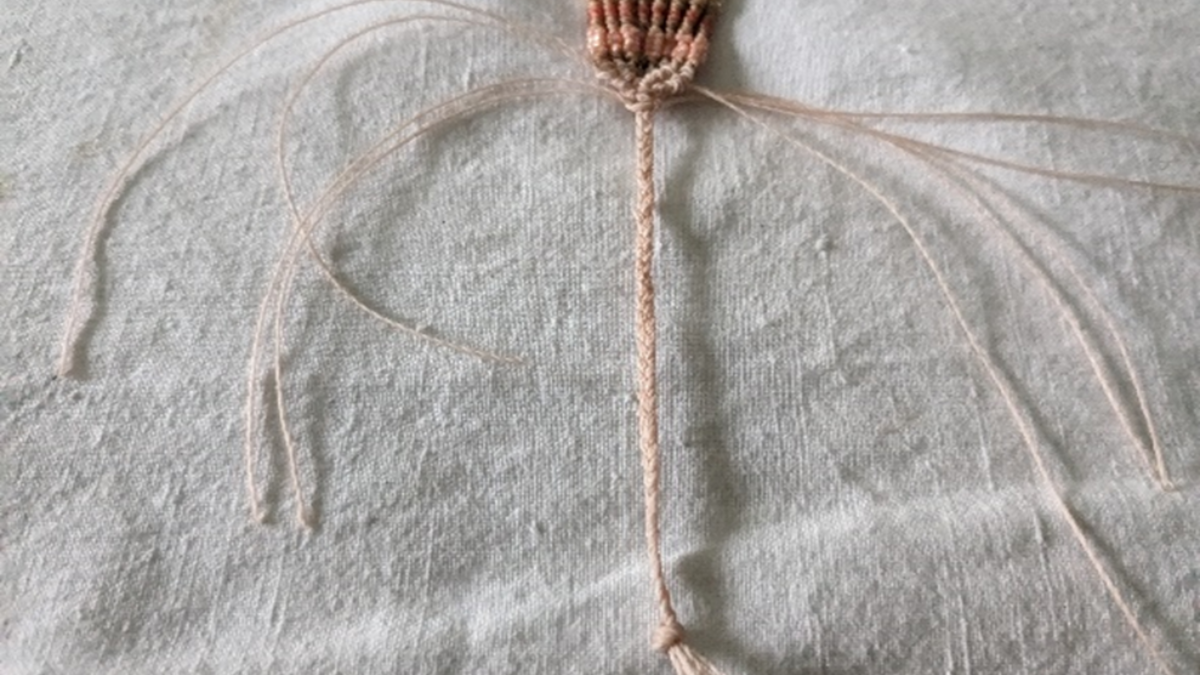
Make a braid with the remaining 6 center wires, grouping them in 2s and tying a knot at the end of the braid.
Cut the other wires (those higher up), and burnish the end of each.
Repeat steps 11 to 22 on the other side of the bracelet.

Tie a classic knot around the two braids, then tie at least 6 overhand knots.
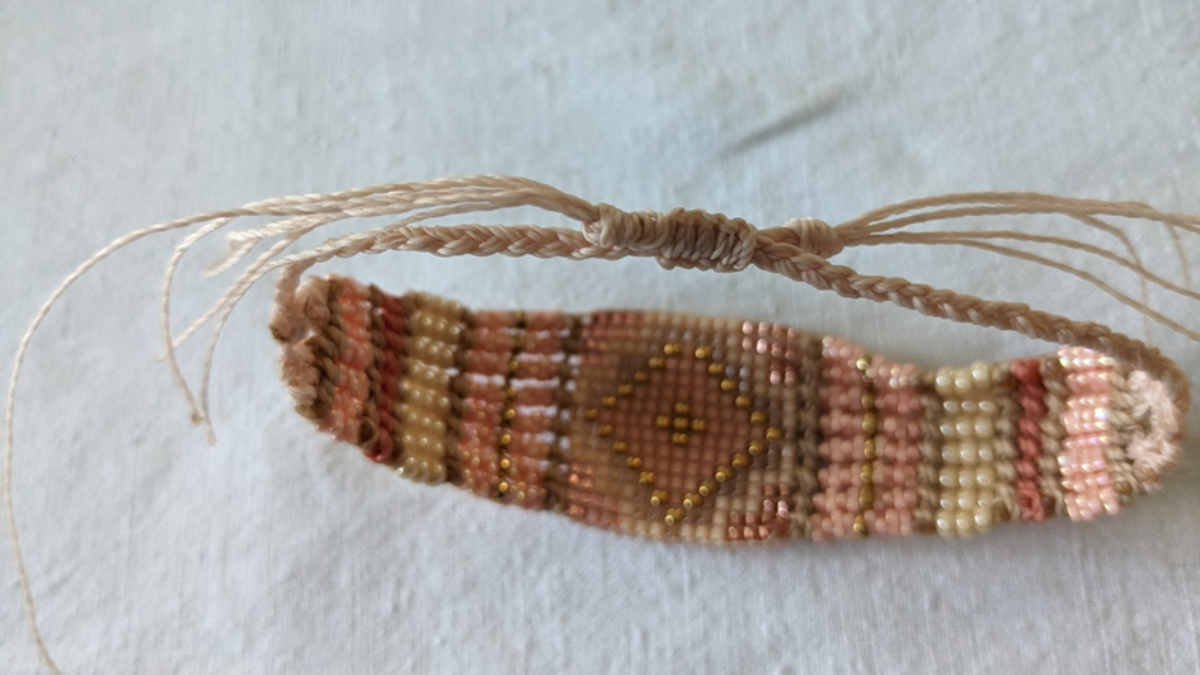
Adjust the size of the bracelet to your wrist. Put it on, keeping the bracelet open, and tie a knot in each braid.
Remove the excess braids after the knot, cut the wires and burn them.
Congratulations, the bracelet is finished!

You have a question about this tutorial? Ask it to our team and the people who have already tested it. The Perles & Co community is here to help you!
Credits
Perles & Co, Internet & E-Commerce company [03/06/2024] Any reproduction, representation, adaptation, in any form whatsoever, even partial, is prohibited, except for reproduction for private use not intended for collective use, representation in the family circle (art. L 122-5 CPI) and online publishing on condition that the source is mentioned and a link is included to the corresponding page of our site www.perlesandco.com.