Average Grades
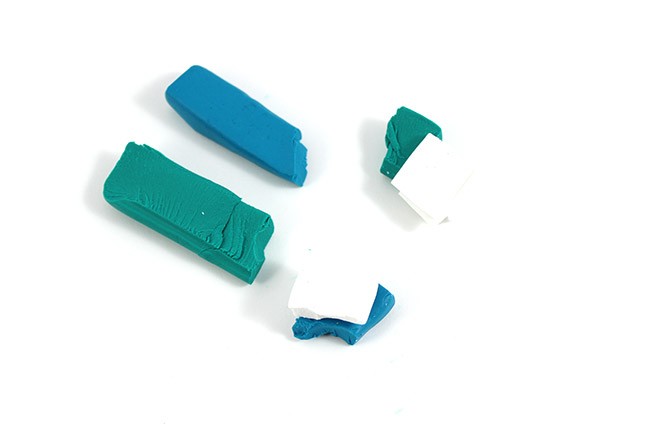
Take a little more than a bar of emerald-coloured paste and the same quantity of petroleum-blue Fimo paste. Cut off a piece of each and add the same quantity of white paste to obtain a second, lighter color than the reference paste.


Install Perles & Co on your home screen: tap the Share button in Safari, then "Add to Home Screen".
Install Perles & Co on your home screen for quick access and real-time updates.
Enable notifications to track your orders and never miss our highlights.
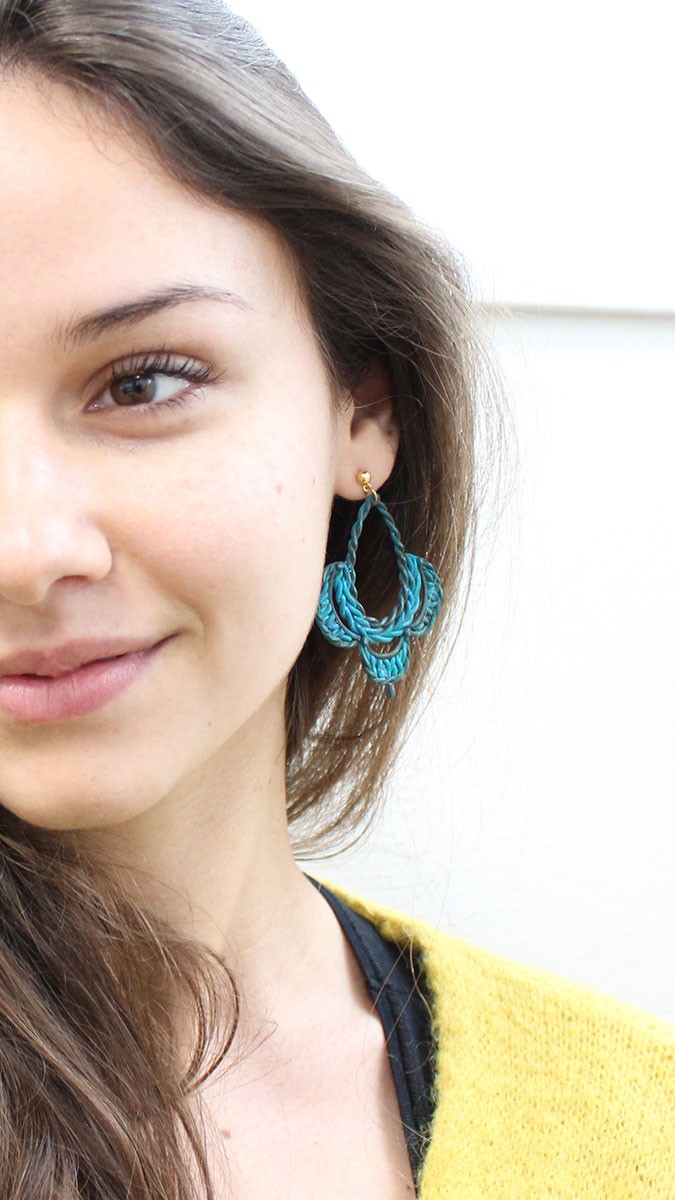
Learn how to imitate wool with polymer clay in this tutorial. Whether Fimo, Sculpey, Cernit, Pardo or kato polyclay, all you need is an extruder to get started.
Take a little more than a bar of emerald-coloured paste and the same quantity of petroleum-blue Fimo paste. Cut off a piece of each and add the same quantity of white paste to obtain a second, lighter color than the reference paste.
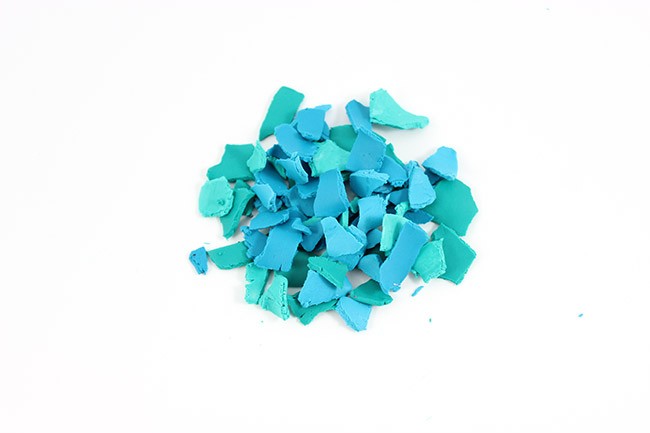
Crumble your different colors of pasta. Bring them together, first into a ball, then into a cylinder.
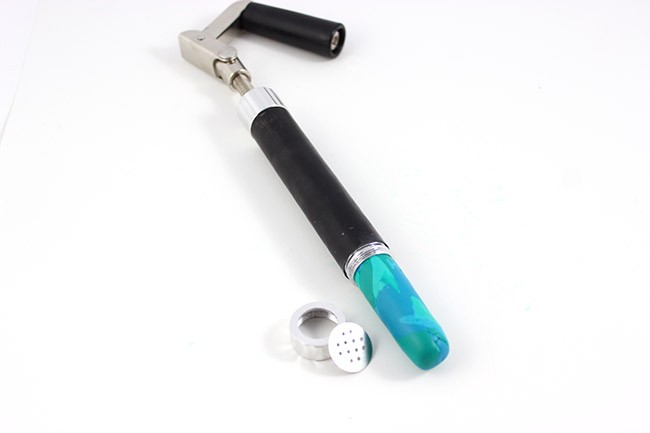
Place your cylinder inside the extruder, its width should be slightly less than the diameter of the extruder.
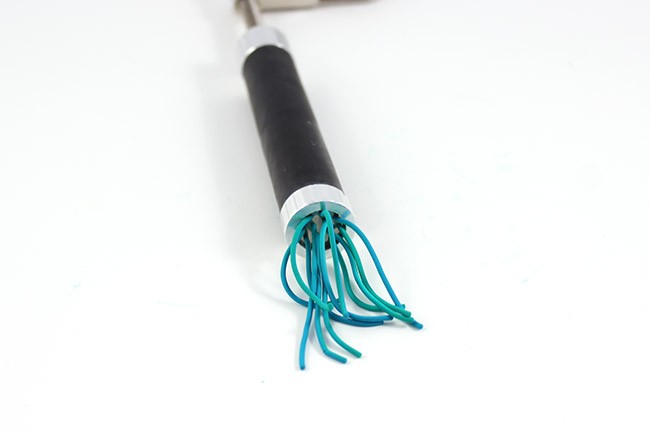
Fit the 12-hole end cap, screw the end cap closed and turn the crank as evenly as possible.
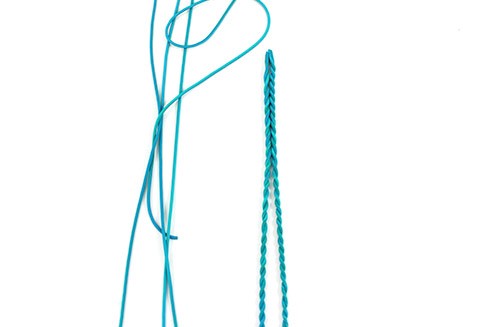
Take one of the strands, fold it into 2 parts and then, between 2 fingers, twist the polymer wire always on the same side, here to the right, along its entire length. Take a second strand, fold it over and twist it, this time to the left. Lay your 2 twisted strands side by side, pressing lightly to adhere your pasta to each other. The result is a mesh.
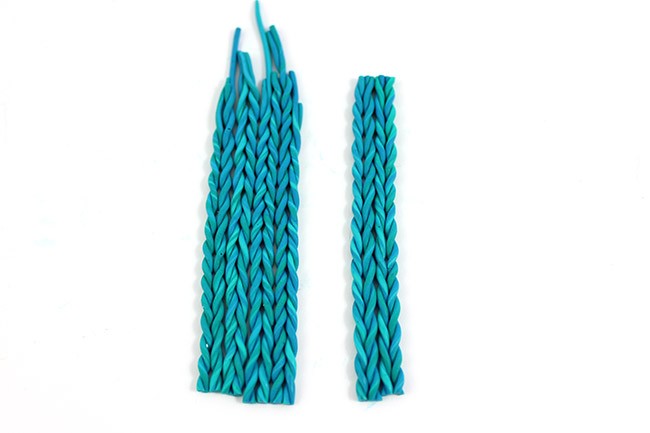
Continue twisting strands to obtain a knit-effect plate, always arranging your stitches next to each other. Reserve two single strands and one stitch made with 2 strands.
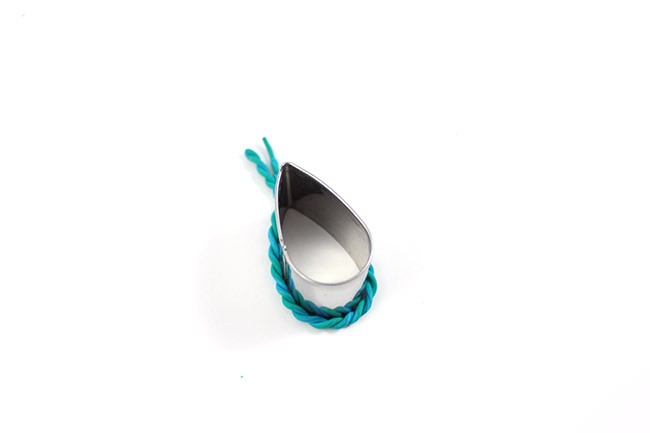
Make a small twist with one of the two strands, and place it around a 3 cm teardrop-shaped cookie cutter.
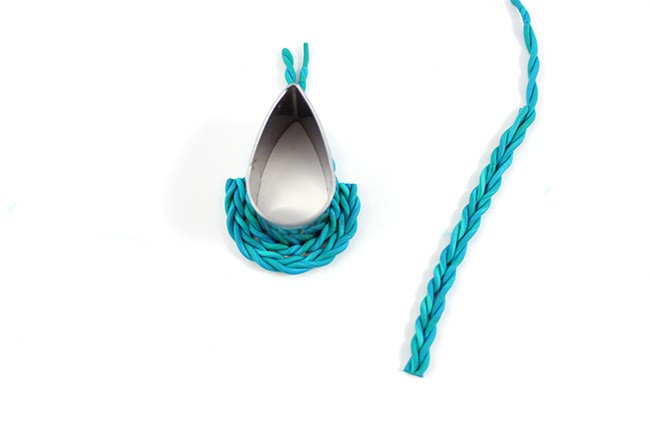
Use the reserved stitch to wrap part of the first twisted wire around the cookie cutter. Use a blade to cut the mesh halfway up the drop.
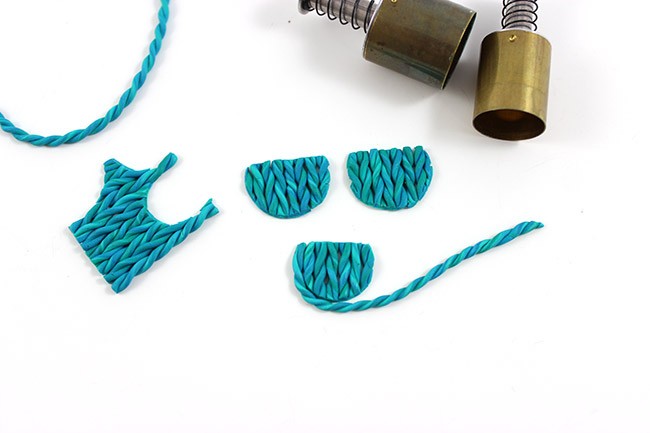
Take 2 round cutters, 15 and 19 mm, and use the larger one to cut 4 rounds from the knit effect plate and 2 others of 15 mm. You don't need to use all the rounds. Use a twisted wire to wrap a part of each round.
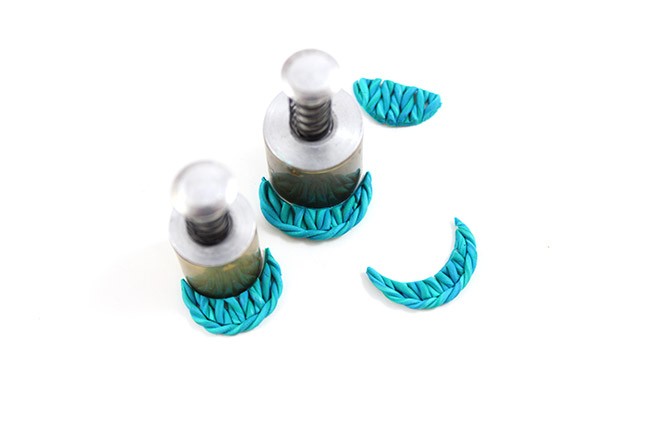
Use the half-height cutters to remove a part of the round, so that what's left looks like a half-moon. Use the 15 mm cutter for 15 mm rounds, and the 19 mm cutter for rounds of this size.
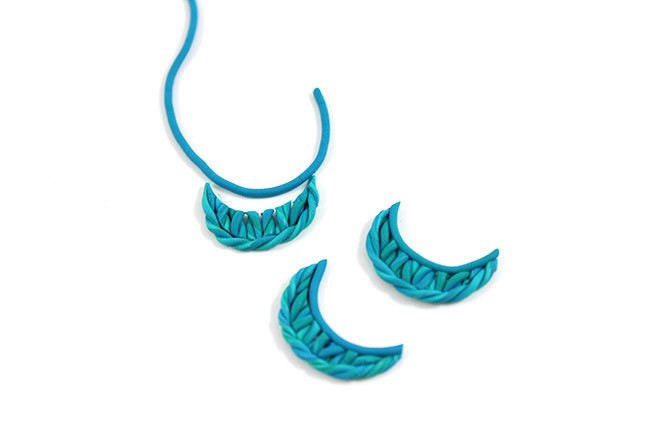
Place a pasta thread on the top of each half-moon. Take each piece in hand, pressing lightly to weld your pasta threads.
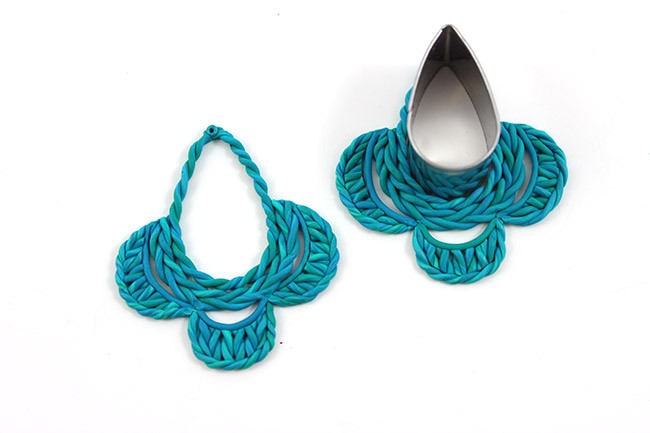
For each earring, place the smallest circle in the middle and the other 2 on the sides, stretching them slightly. Using a small smoothing tool, press the joints to consolidate the future earrings.
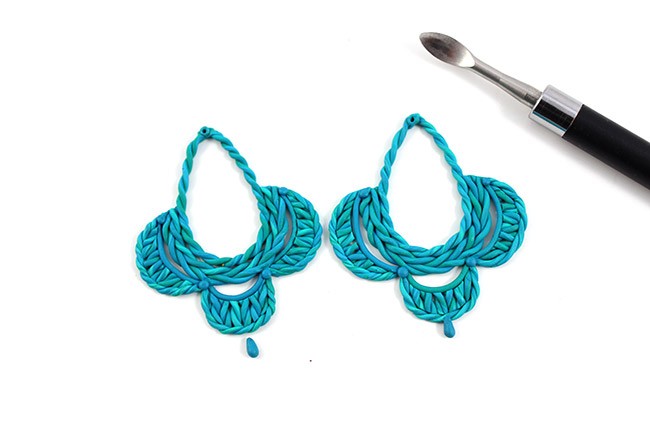
Once you've cut identical lengths of yarn, make small balls and place them on the areas to be strengthened, pressing down to weld the yarns together. Add a ball to the top of the first twist, at the junction of the wire, so that you can hang them up. Pierce this ball and cut off the remaining dough. Add two drop-shaped pieces of dough, adhering them to the bottom twist.
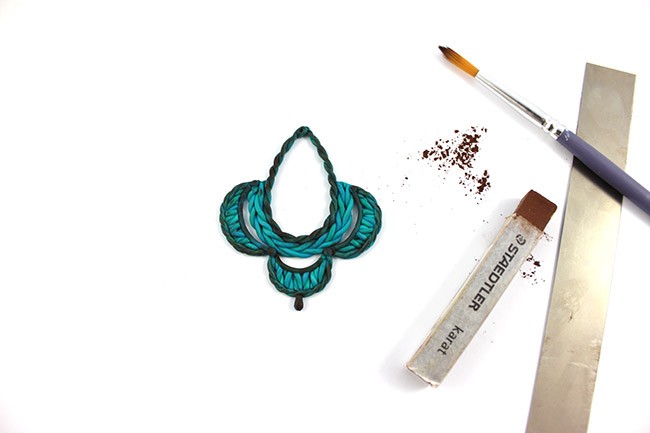
Shade the edges of your earrings with a little brown dry pastel. To do this, scrape the pastel stick with a blade to obtain a powder. Using a brush, apply this powder to the desired areas.
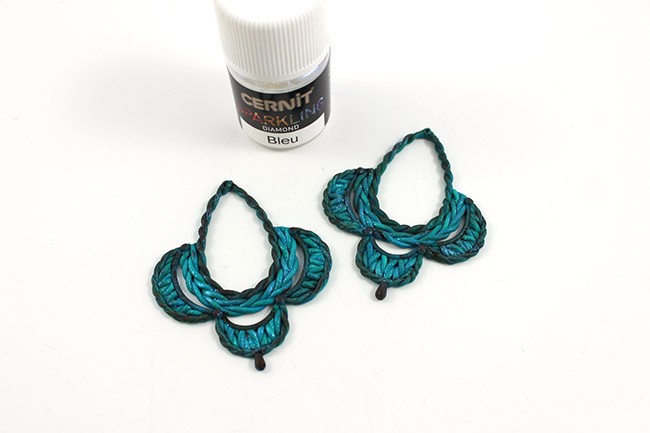
Apply blue Sparkling powder to the blue twists for a metallic effect. Bake the pieces at 130 degrees for 30 minutes.
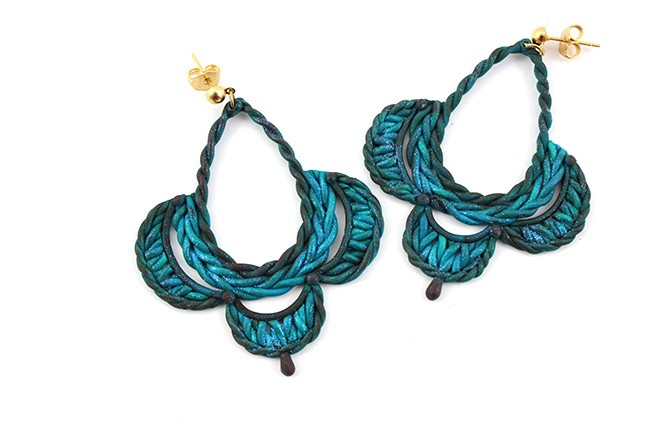
Wait until your earrings have cooled before spraying with a matte spray varnish to protect the pastel and metallic powders. Thread a ring through the hole in your earrings, then close the ring by inserting the ring from the earring holder.



You have a question about this tutorial? Ask it to our team and the people who have already tested it. The Perles & Co community is here to help you!
Credits
Perles & Co, Internet & E-Commerce company [25/01/2018] Any reproduction, representation, adaptation, in any form whatsoever, even partial, is prohibited, except for reproduction for private use not intended for collective use, representation in the family circle (art. L 122-5 CPI) and online publishing on condition that the source is mentioned and a link is included to the corresponding page of our site www.perlesandco.com.

