Average Grades
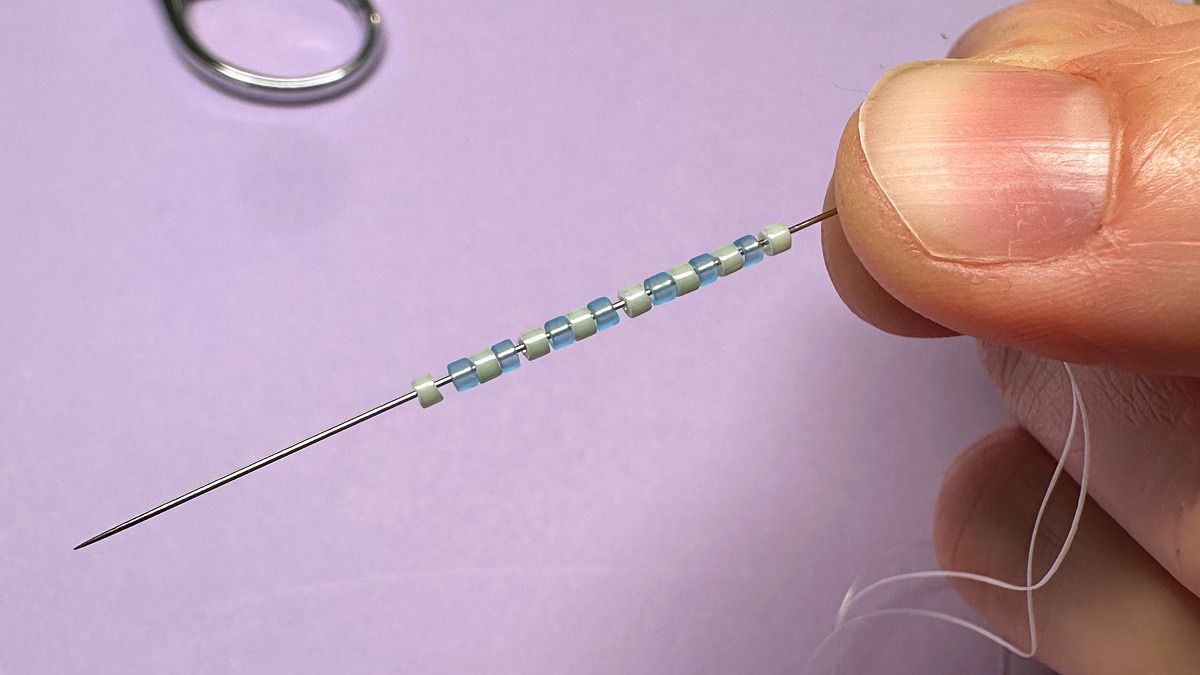
Weave using the odd peyote stitch. Start by stringing 15 beads, alternating green and blue, onto a thread about 1m20 long.

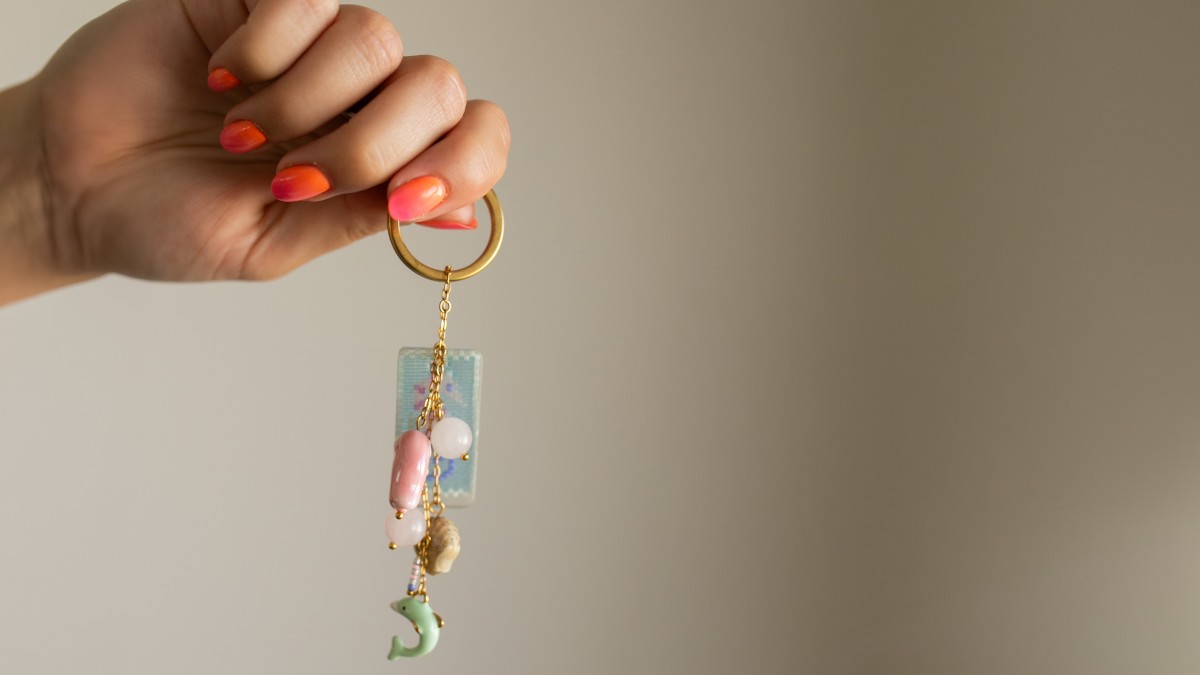
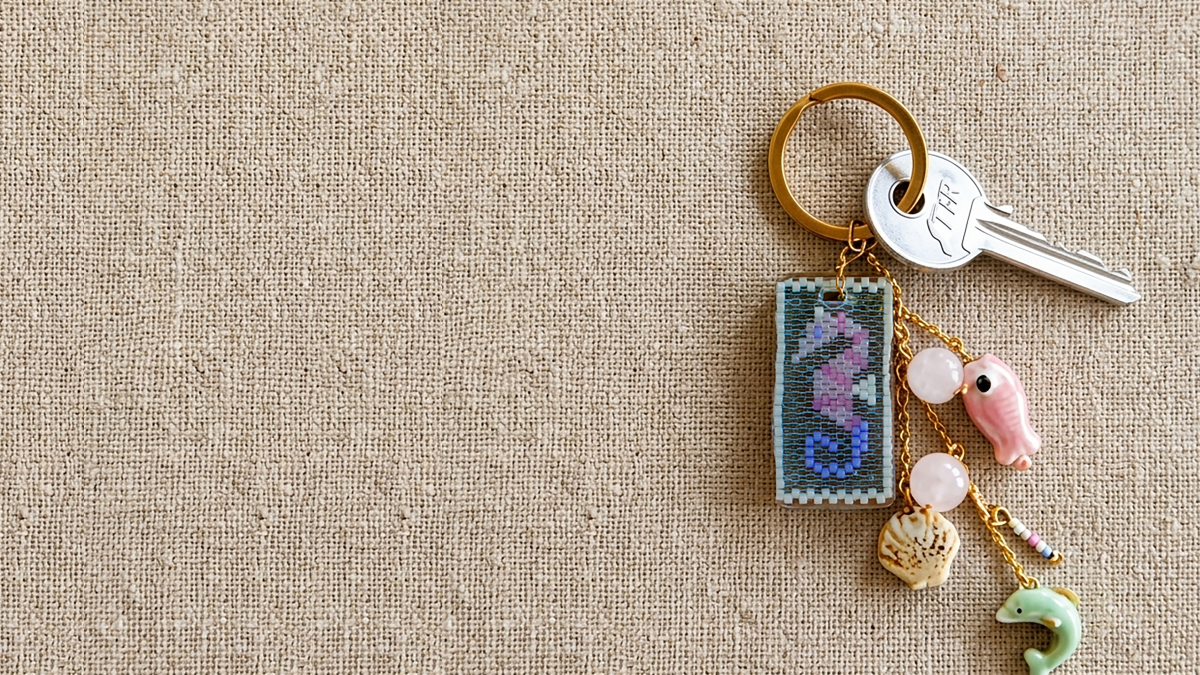
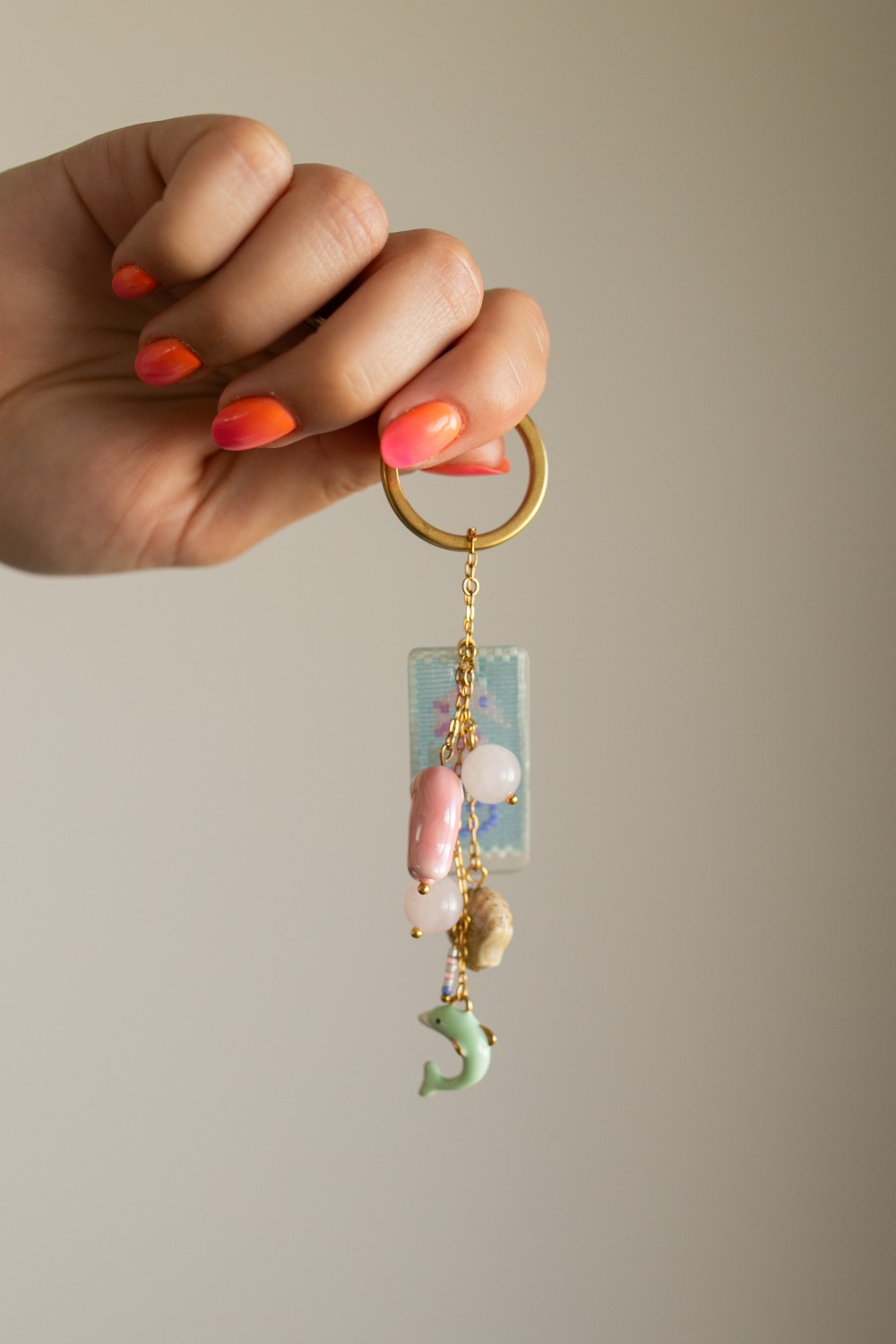
Check out this tutorial created by our partner ju_lillu to make a beautiful square keychain featuring a seahorse-patterned bead weave —a trendy creation perfect for fans of DIY jewelry and crafts. Using the odd-count peyote stitch technique with Miyuki Delica 11/0 beads, learn how to create a colorful, personalized handmade accessory.
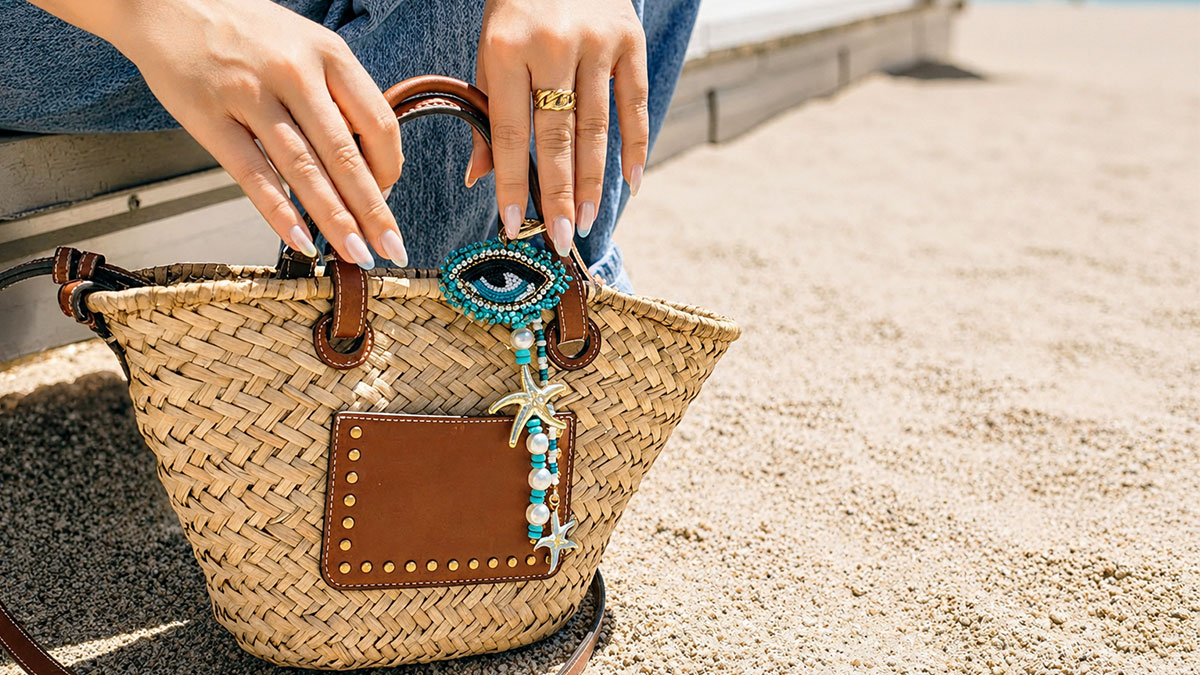
This beading tutorial is ideal for beginners. You’ll learn how to use Miyuki Delica 11/0 beads, Fireline thread, and a beading needle to create a seahorse pattern that’s perfect for this summer. This beaded keychain can also be turned into a bag charm.It’s the perfect gift to show off an ultra-trendy style this summer.
The seahorse pattern with its nautical and bohemian style. This DIY jewelry project lets you unleash your creativity by making a one-of-a-kind piece inspired by the ocean and summer vacations.
In this tutorial, you’ll find detailed instructions along with an explanatory diagram. Whether you’re looking for a bead project idea or a DIY keychain tutorial, this creative project is perfect!
Start creating your seahorse-patterned keychain with Miyuki beads today and let your imagination run wild with this trendy craft project.
If you follow this tutorial, we invite you to share your creation with us on social media by tagging Perles & Co in your post. We love seeing the beautiful creations you make! Grab your pliers, get ready, and start creating!
Weave using the odd peyote stitch. Start by stringing 15 beads, alternating green and blue, onto a thread about 1m20 long.
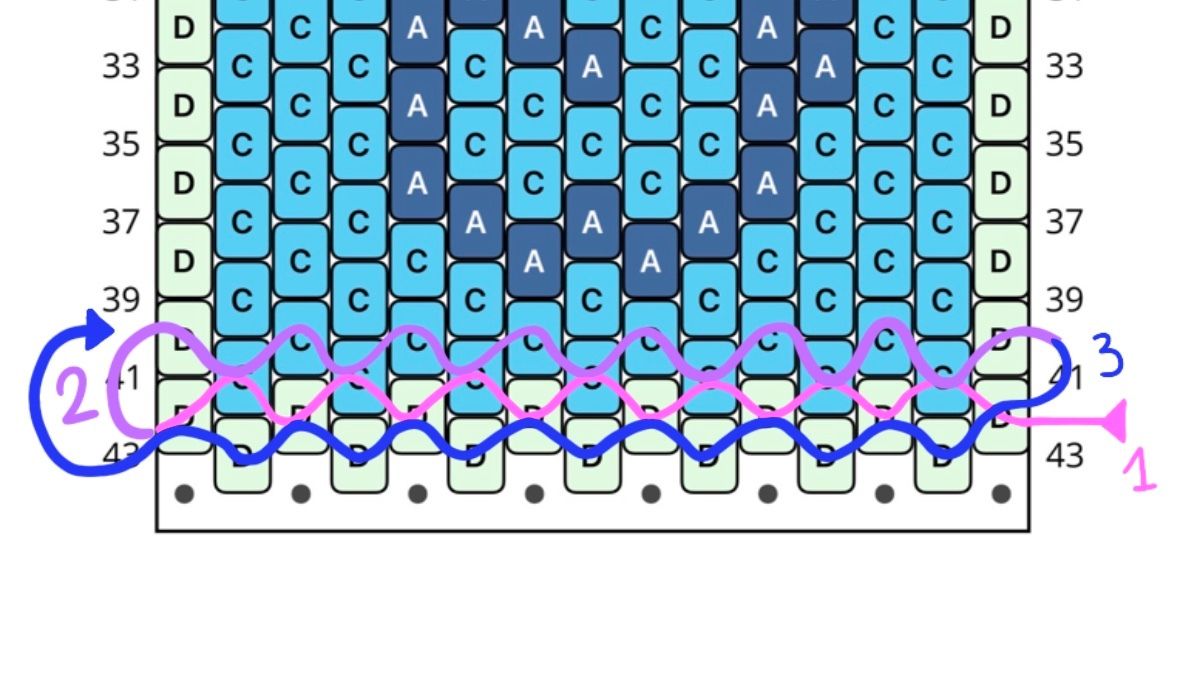
To create a “rounded corner” effect, start by weaving the second row of the diagram.
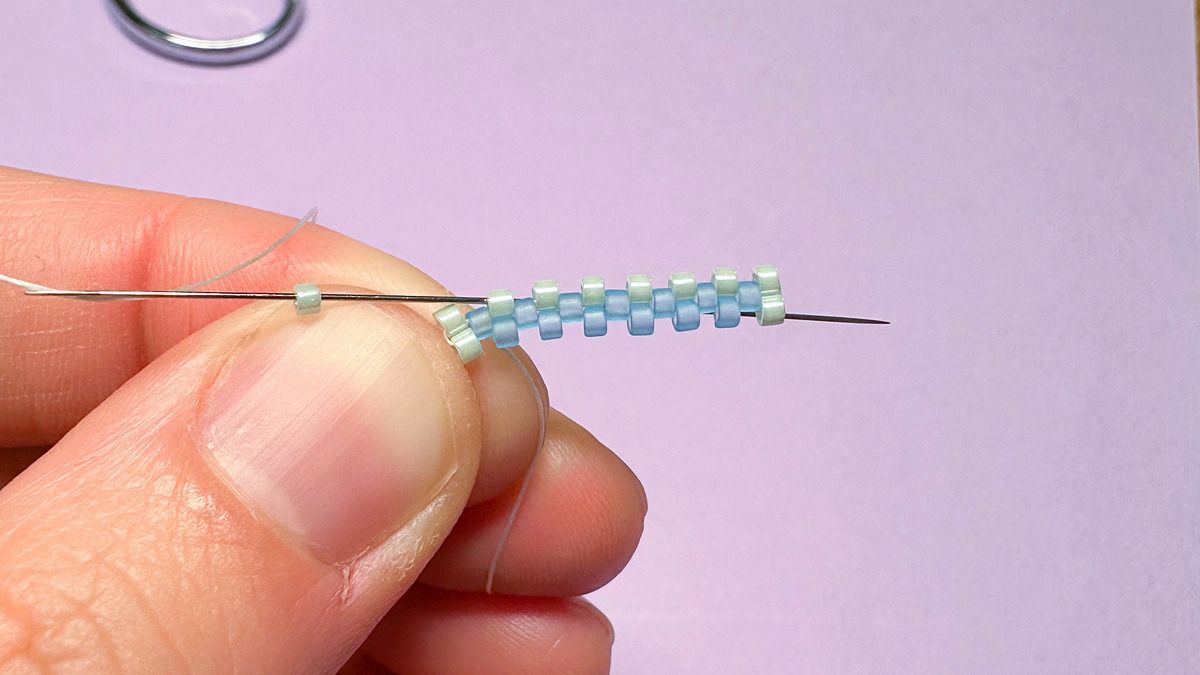
Once you've woven the second row, go back over the bottom of the weave with the outline color, then continue following the diagram upward using the standard odd-count peyote stitch.
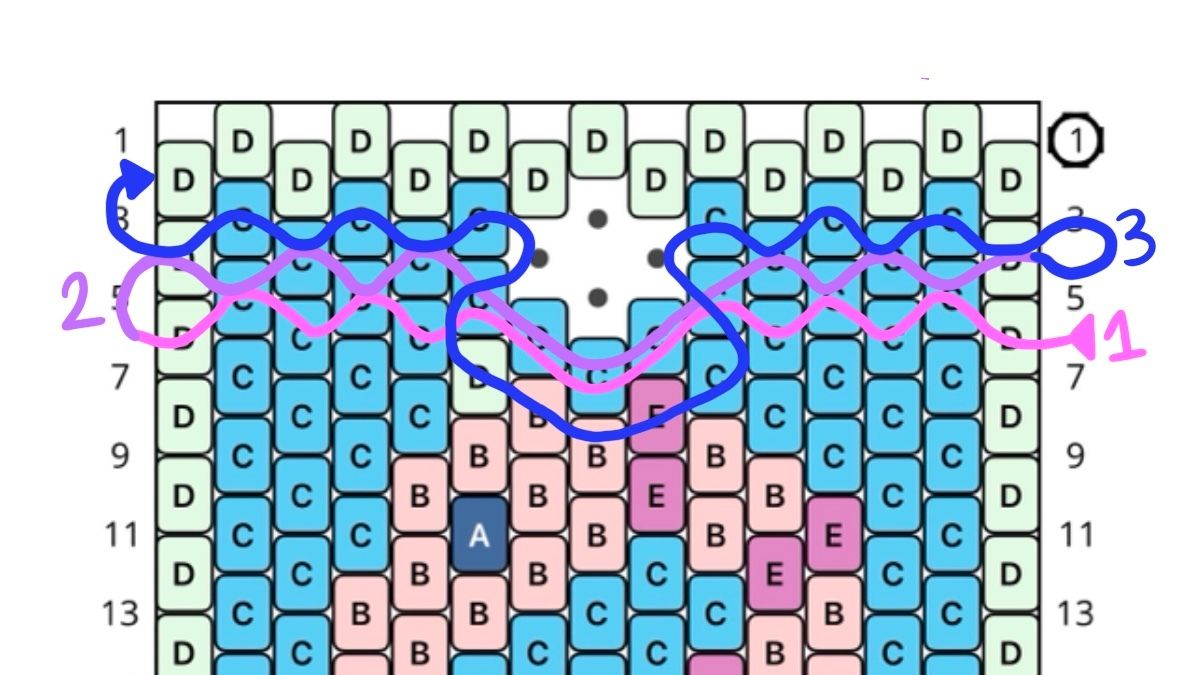
Toward the end of the weaving process, leave a hole in the weave by weaving around that section with the thread, as shown in the diagram opposite. This will allow the weave to fit properly into the resin mold.
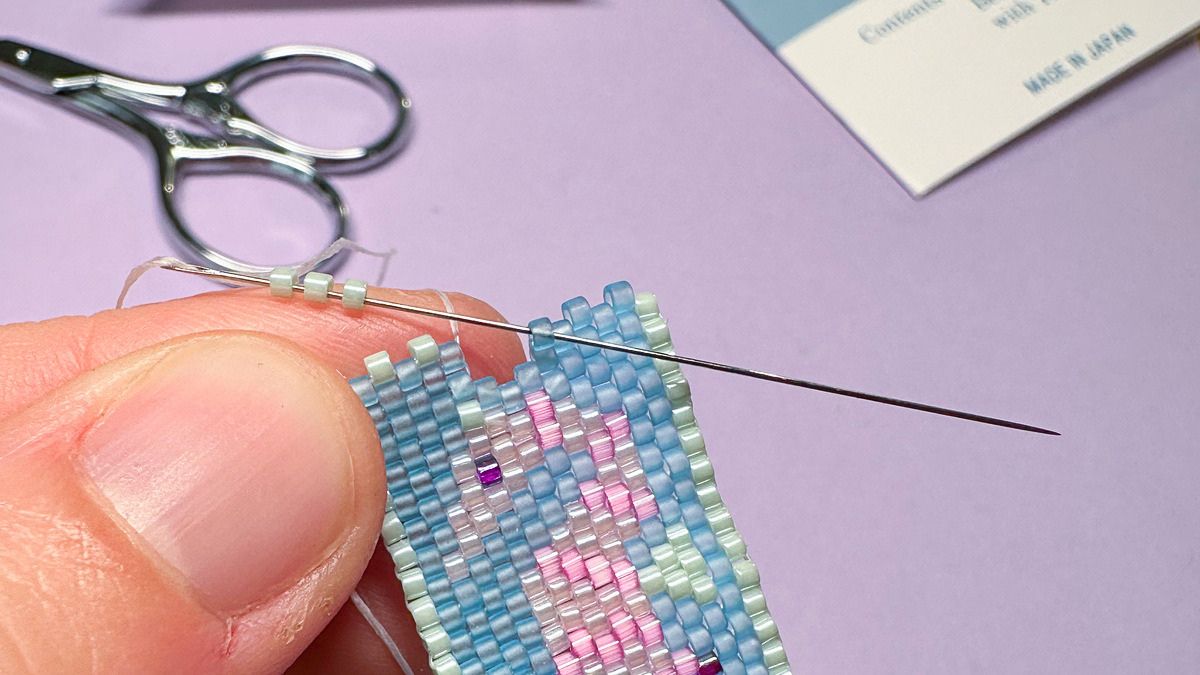
Thread 3 beads to close the hole in the weave, then finish weaving as usual. Tuck in the threads to complete the weave.
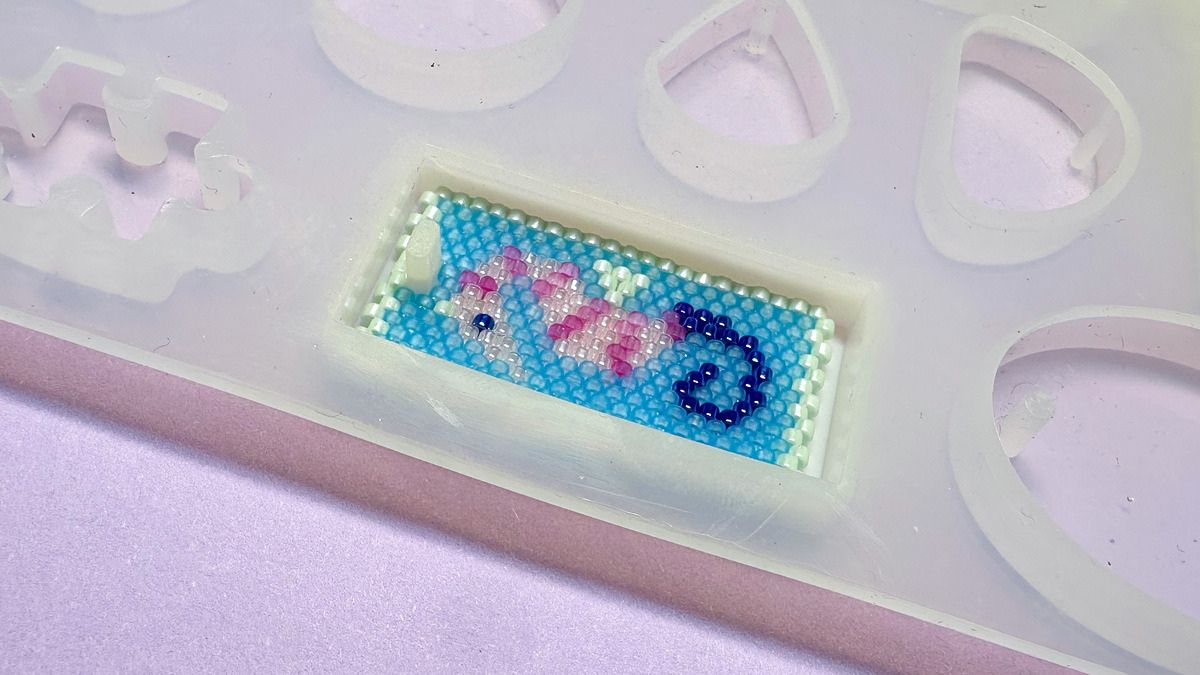
Optional: Insert the weave into the corresponding slot in the mold.
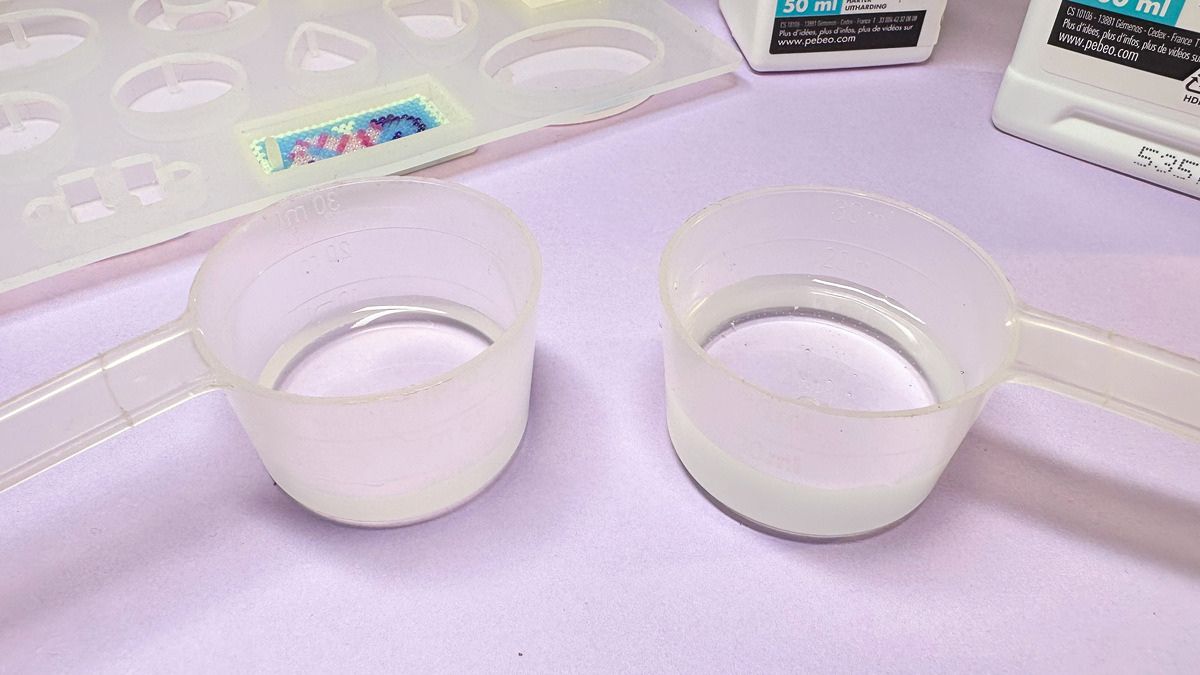
Optional: Prepare a small amount of resin. Don’t forget to wear protective gloves. By mixing 10 ml of Component A and 5 ml of Component B, you’ll have enough resin to fill about 8 slots with weaves. So feel free to plan on filling other slots in the mold as well.
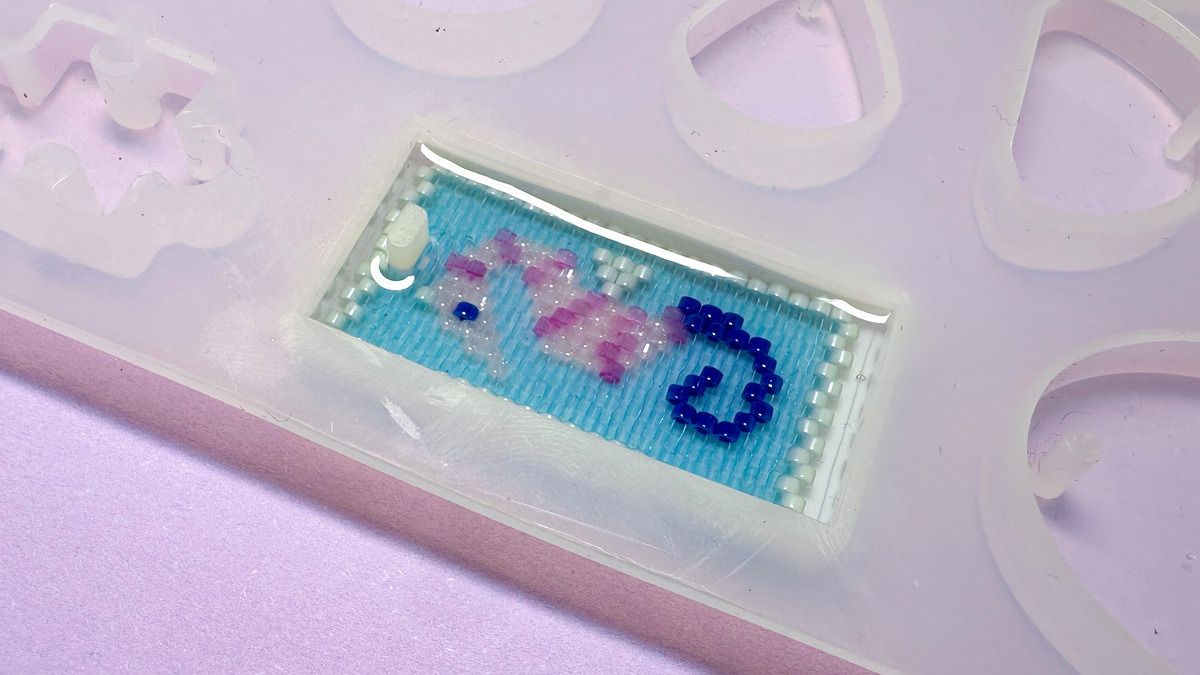
Optional: Let the resin dry for the specified amount of time. If you choose a transparent color for the background, as shown here, it will become very transparent once embedded in the resin, and tiny bubbles may appear inside the beads. If you want to avoid this effect, choose an opaque color for the background instead.
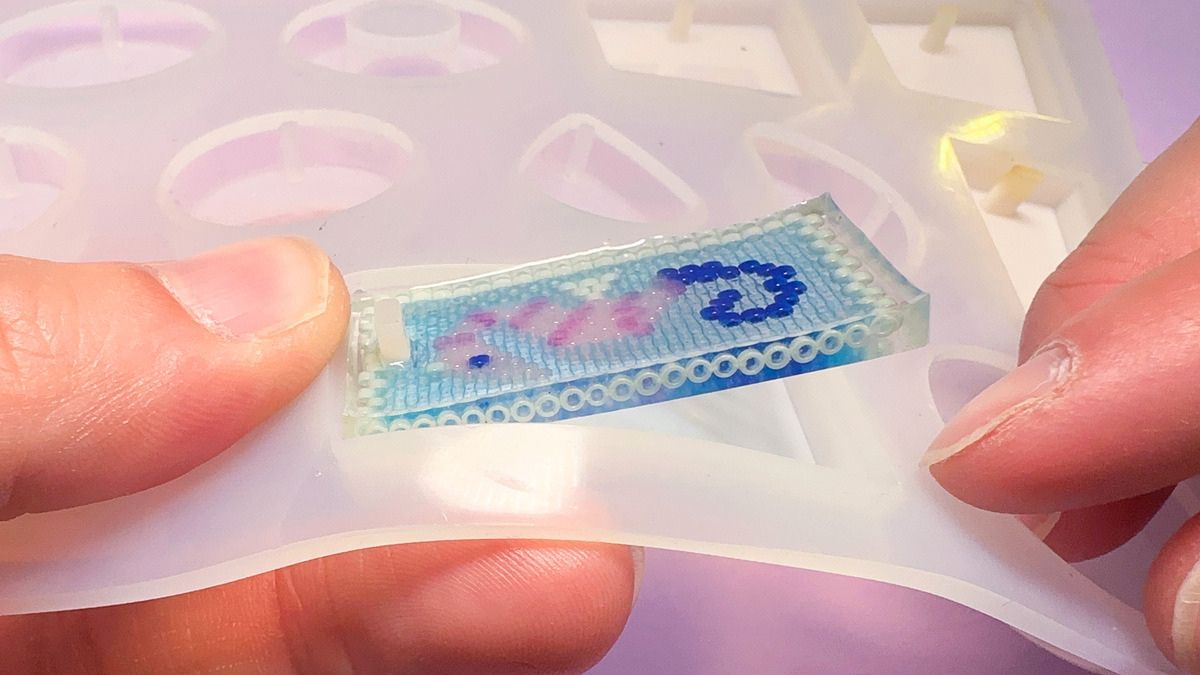
Optional: Remove the weave from the mold. You can let the weave dry for a few more hours outside the mold to allow the resin to harden completely.
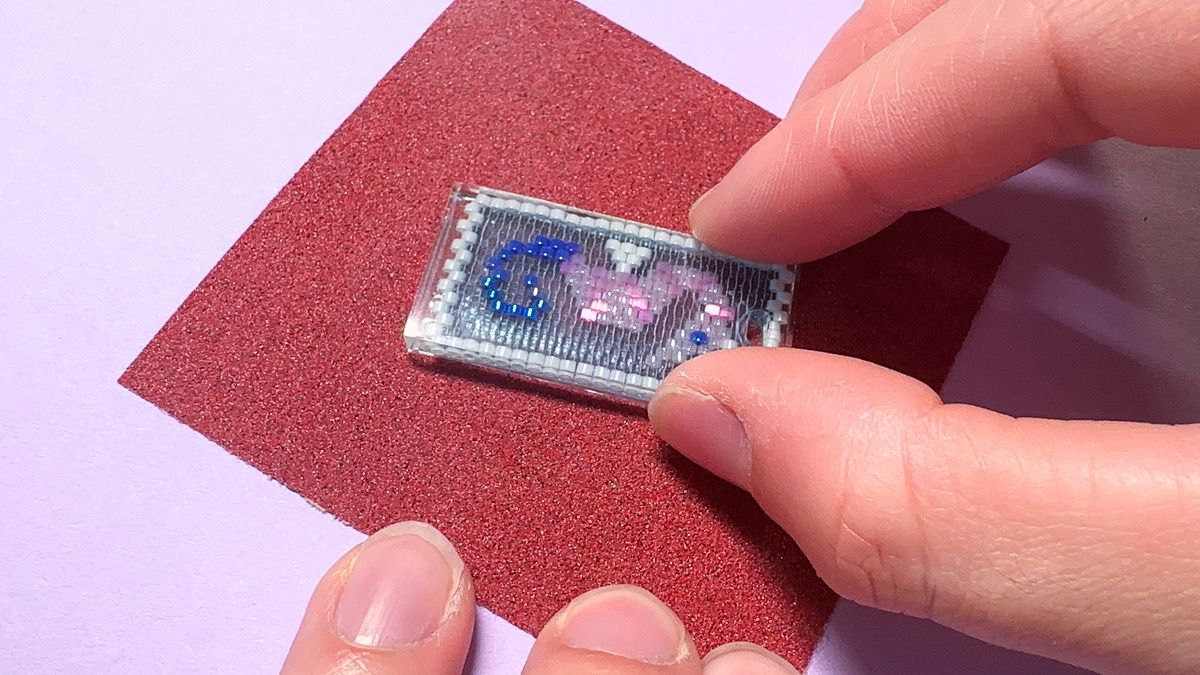
Optional: To remove any excess edges on the top surface of the resin, you can lightly sand the fabric with sandpaper or carefully trim them with a utility knife. Feel free to sand the corners as well to smooth them out.
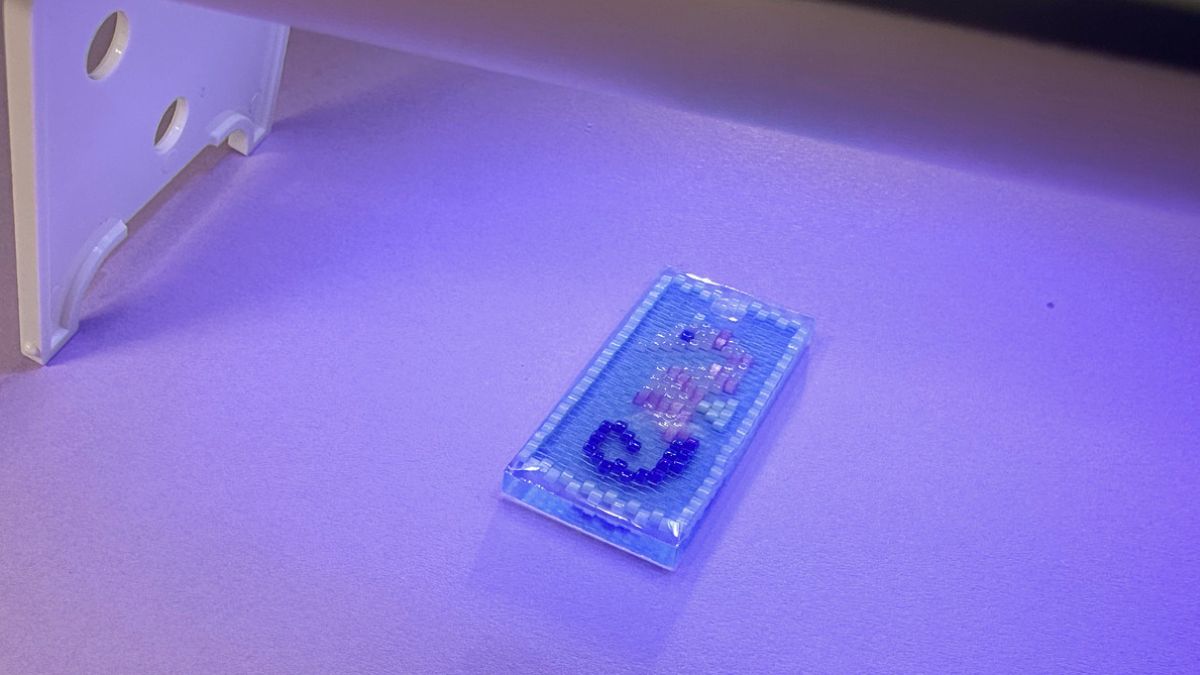
Optional: If you want to further improve the finish, you can apply a final, thin coat of UV resin to the side from which you just removed the edges.
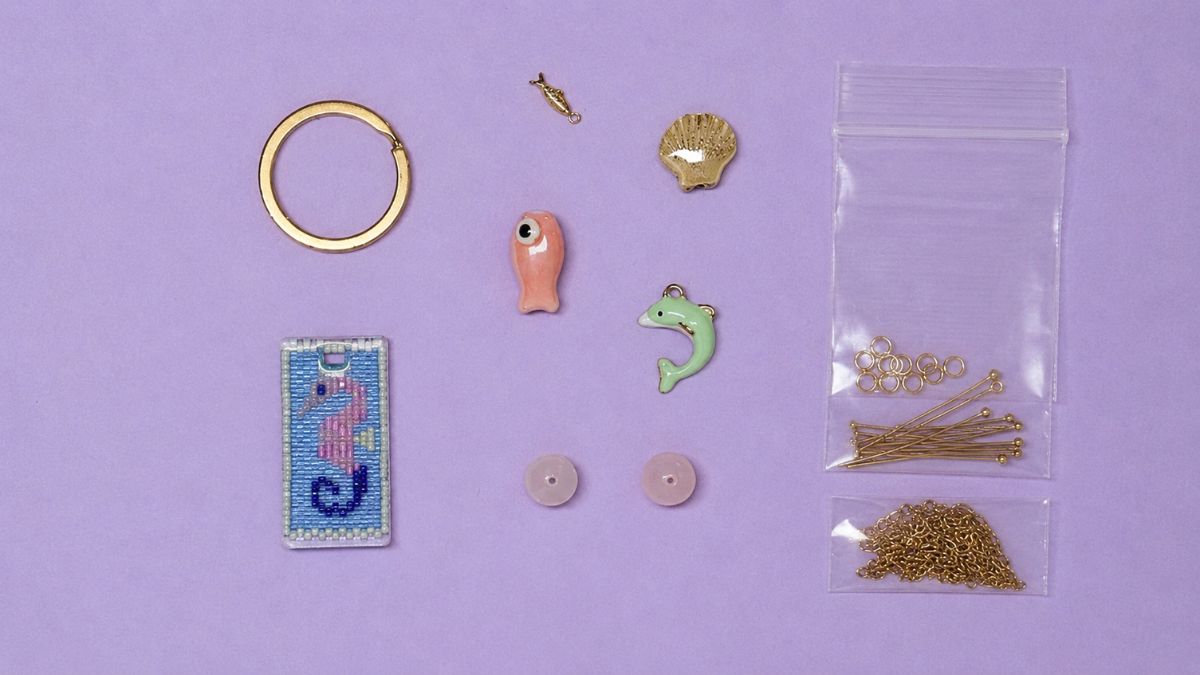
Gather all the items you need to assemble the keychain: the woven cord, the chain, the beads and charms, the pins, and the pliers.
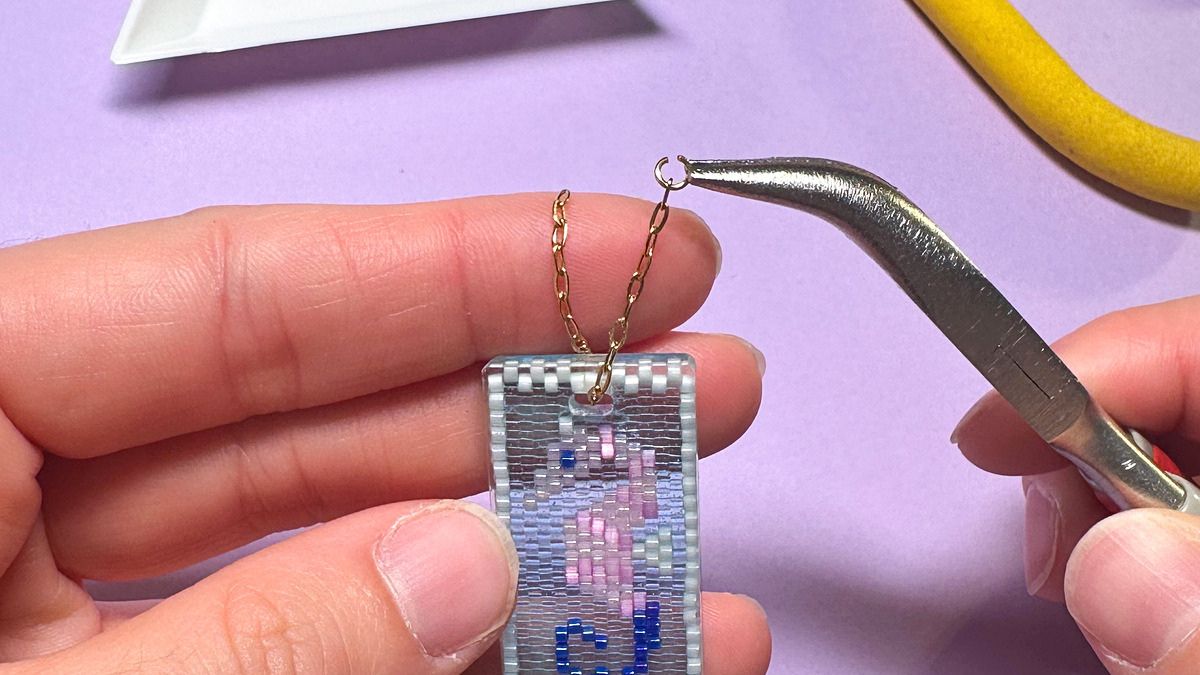
Cut a small piece of chain, about 5 cm long. Thread this piece of chain through the hole in the weave. Secure the end of the chain with a ring.
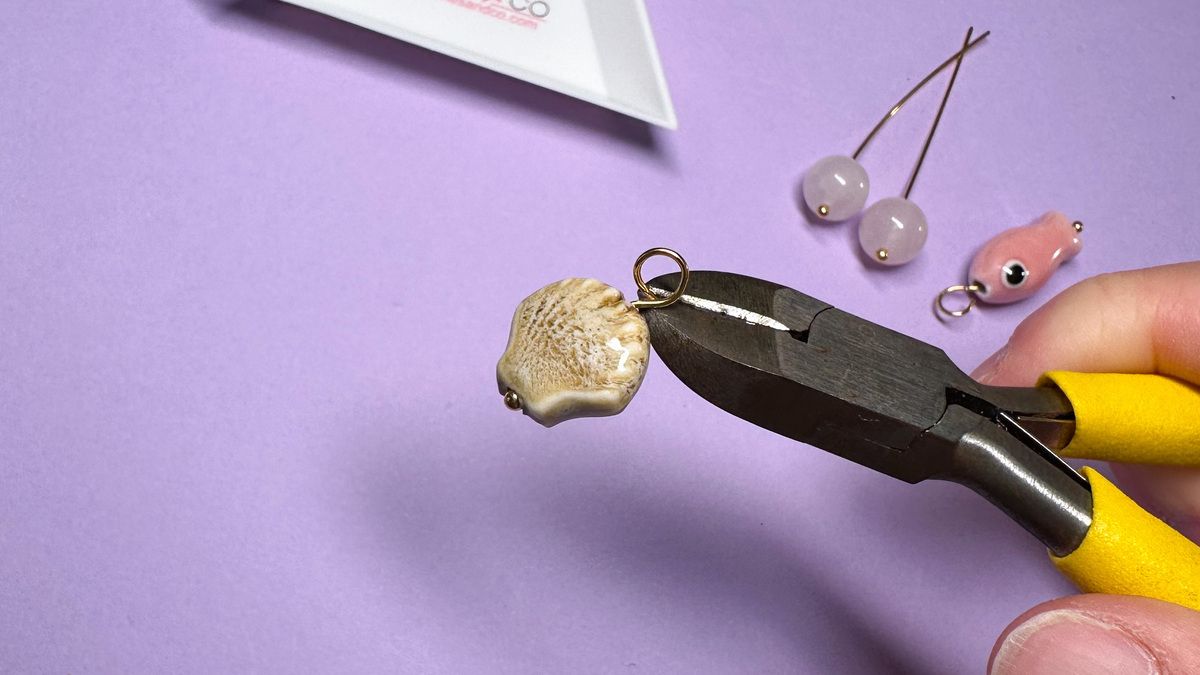
Prepare the charms to be strung on pins: thread the bead onto a pin, make a loop using pliers, and cut off the excess pin with wire cutters if necessary. Ceramic beads may have a large hole and slip through the pin. In this case, you can simply insert a seed bead first to secure the ceramic bead.
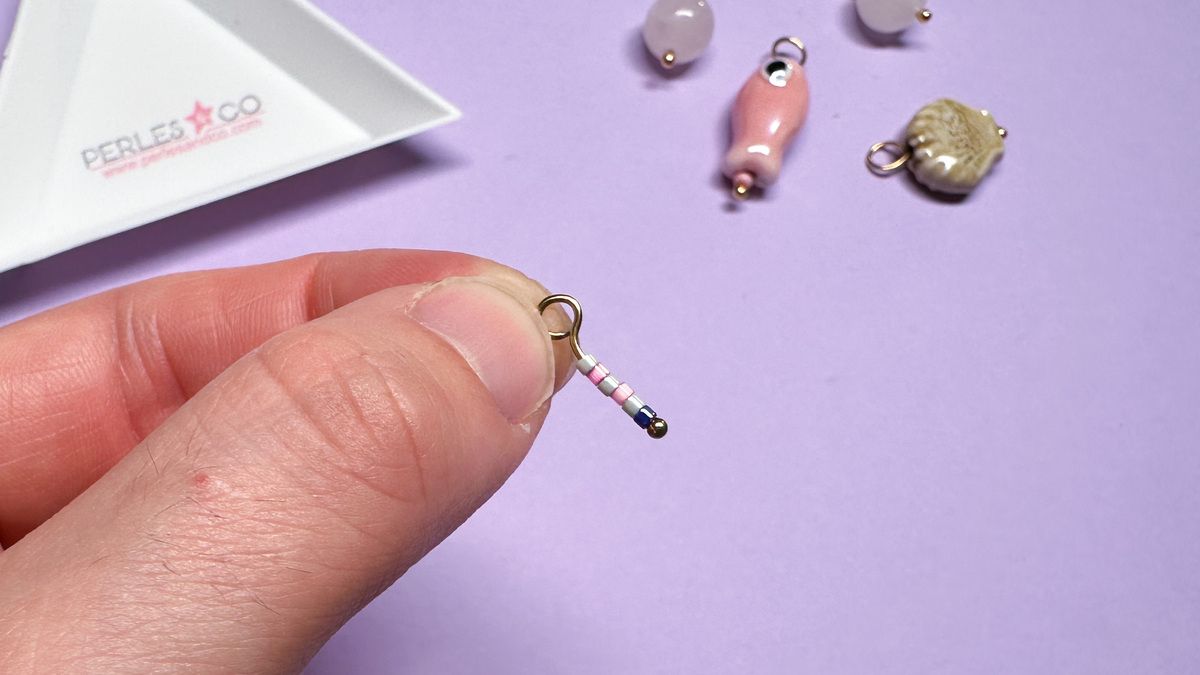
Thread a few Miyuki beads that match the color of the weaving onto a pin to create a design that complements the weaving.
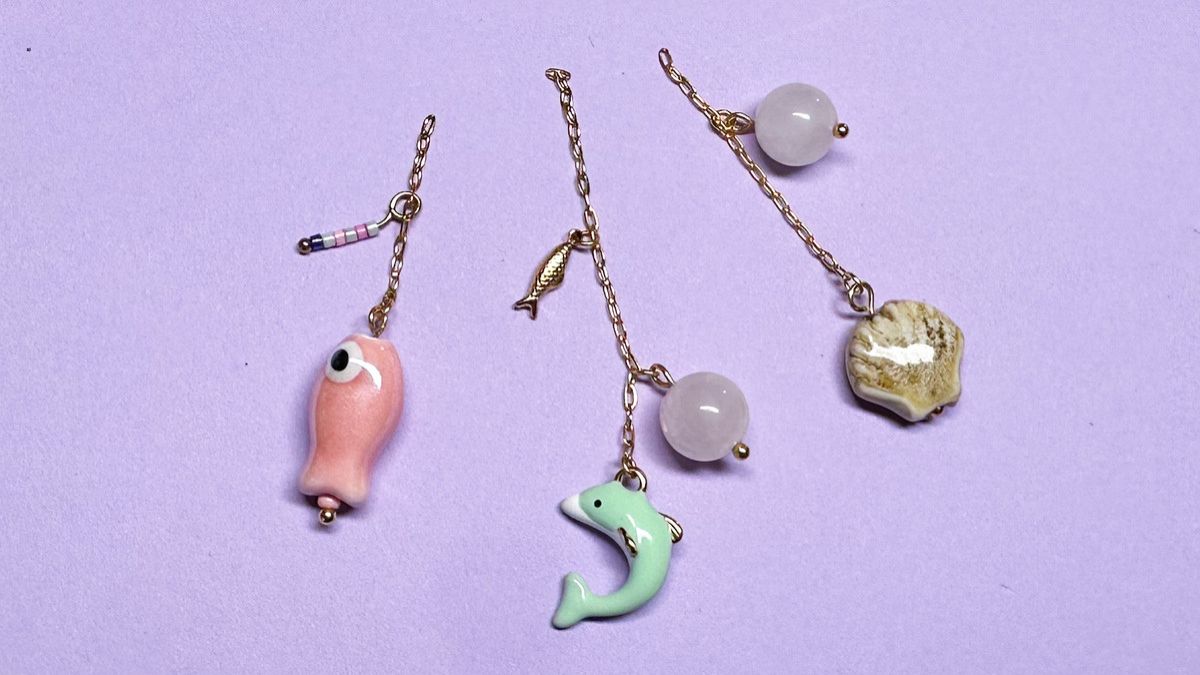
String all the charms onto pieces of chain of different lengths. For example, you could use a piece that’s about 2 cm long, one that’s 3.5 cm long, and one that’s 5 cm long.
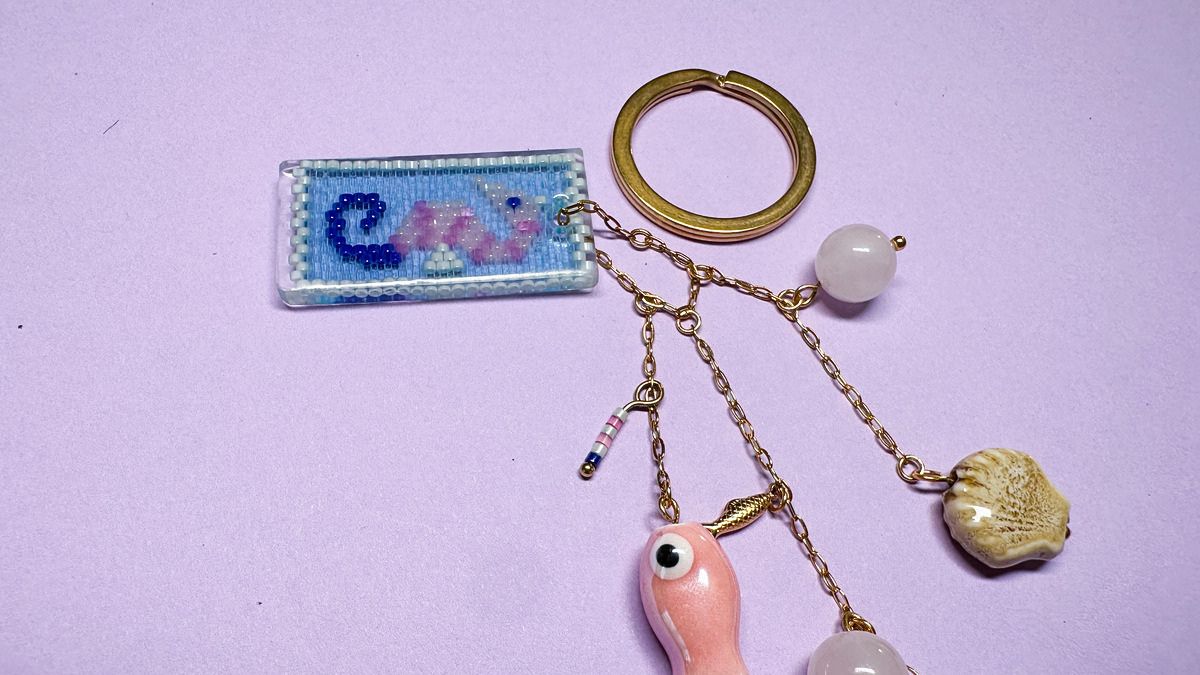
Hook these 3 pieces of chain onto the chain you placed on the weave.
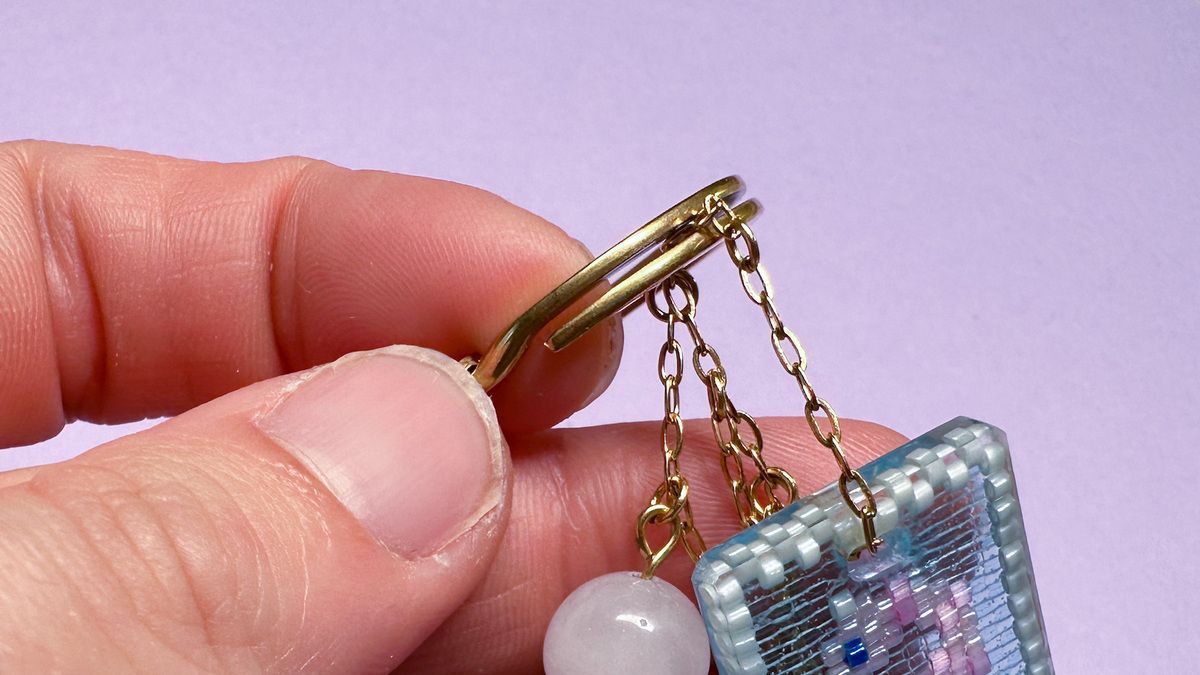
Finally, attach this chain to the keychain.




You have a question about this tutorial? Ask it to our team and the people who have already tested it. The Perles & Co community is here to help you!
Credits
Perles & Co, Internet & E-Commerce company [22/06/2026] Any reproduction, representation, adaptation, in any form whatsoever, even partial, is prohibited, except for reproduction for private use not intended for collective use, representation in the family circle (art. L 122-5 CPI) and online publishing on condition that the source is mentioned and a link is included to the corresponding page of our site www.perlesandco.com.

