
Average Grades
In summary
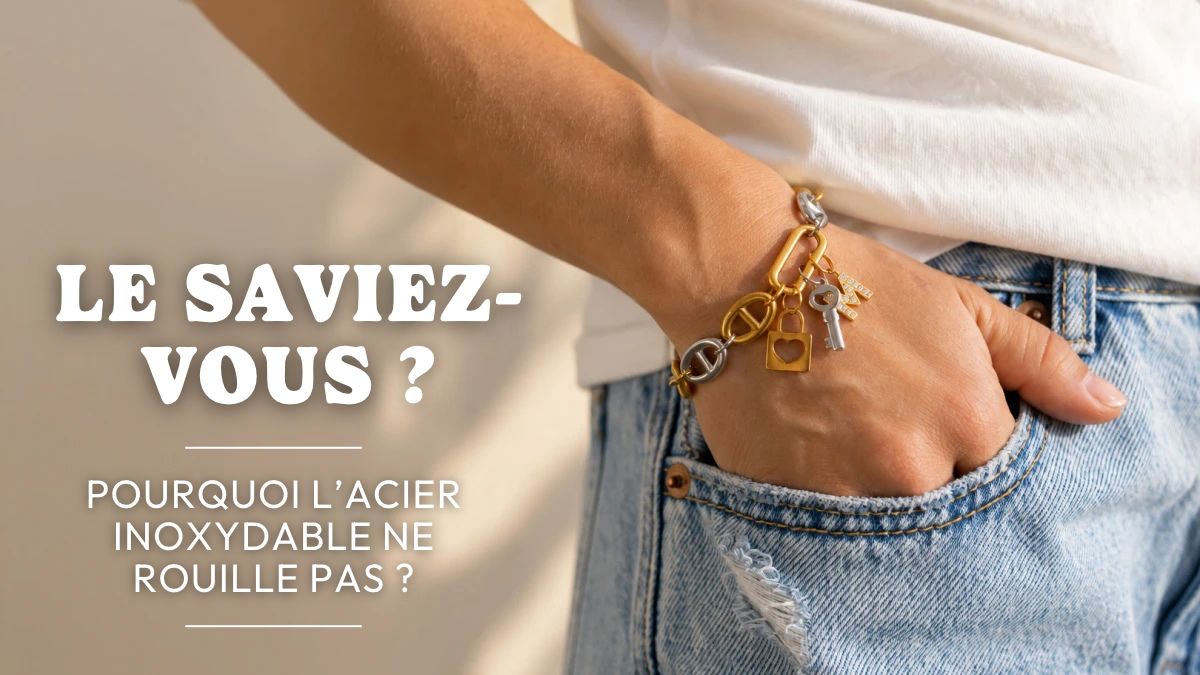
Stainless steel does not rust because it contains at least 10.5% chromium, which forms an invisible, self-repairing film on its surface. Grades 304 and 316L do not offer the same resistance to salt and chlorine; 316L is best suited for marine and swimming pool environments. With gold-plated stainless steel, only the finish may fade over time: the steel underneath remains rust-resistant.
Why doesn't stainless steel rust, and do all grades offer the same level of resistance?
Your stainless steel ring or bracelet retains its luster for months, even years, despite showers and summer days. It’s not magic.Stainless steel doesn’t rust thanks to an invisible—yet incredibly effective—mechanism at work on the metal’s surface.
Whether you’re new to DIY or already making your own jewelry, understanding this secret will help you choose the right steel and care for it properly.
The secret: an invisible layer of chromium oxide
Iron rusts when it comes into contact with oxygen and moisture. Stainless steel is also an iron-based alloy, but it contains at least 10.5% chromium. According to European standards, it is this threshold that allows it to be classified as stainless.
When exposed to air, chromium immediately reacts with oxygen. It forms a thin filmof chromium oxide on the surface, known as a passive layer. It measures only a few nanometers thick, is transparent, and adheres very tightly. It isolates the iron from water and air.
This protection is self-regenerating. If you scratch the jewelry, the layer reforms on its own upon contact with oxygen.
To see the complete composition of the alloy, check out our fact sheet on stainless steel in jewelry and its characteristics.
What elements enhance this protection?
Chromium is the foundation, but it doesn’t act alone:
- Chromium (at least 10.5%) forms the protective layer against rust.
- Molybdenum (about 2–3% in 316 and 316L) enhances resistance to salt and chlorine.
- Nickel makesthe steel more flexible and shiny, and improves its corrosion resistance.
- A lower carbon content (“L” grades) provides better performance after welding.
Do all stainless steels have the same resistance?
No. The grade number (304, 316L, 201, 430…) determines its resistance:
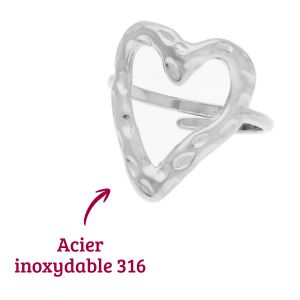
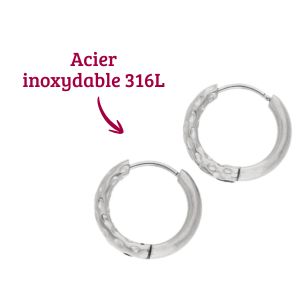
- 316L is the industry standard in jewelry. Thanks to molybdenum, it offers better resistance to salt, chlorine, and sweat. It’s suitable for earrings, rings, and jewelry worn at the beach or pool.
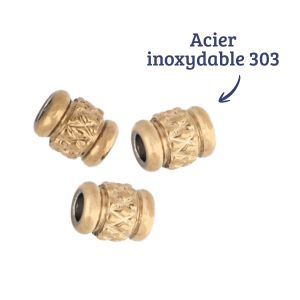
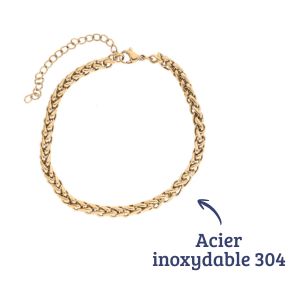
- 304 is the most commongrade. It is versatile and holds up well against fresh water, cosmetics, and perfumes. It performs slightly less well in salty or chlorinated environments.
- Grades 201 and 430 are more economical, but their corrosion resistance is average. They may leave marks in humid environments.
For more detailed information, check out our comparison chart of stainless steel types.
When can stainless steel still develop stains?
“Stainless” does not mean “indestructible.” The passive layer can be compromised in certain cases:
- Salt and chlorine (from the ocean or swimming pools) attack the protective layer, especially on the most economical grades of stainless steel.
- Harsh products such as bleach, chlorine-based detergents, or acids can damage it.
- Tools made of ordinary steel (pliers, files, brushes) can deposit iron particles on the stainless steel. These rust and leave small orange spots.
- Areas where water pools limit the supply of oxygen needed to regenerate the layer.
Stainless steel that rusts quickly is often not true stainless steel, or is made of very low-quality steel.
What about gold-plated stainless steel?
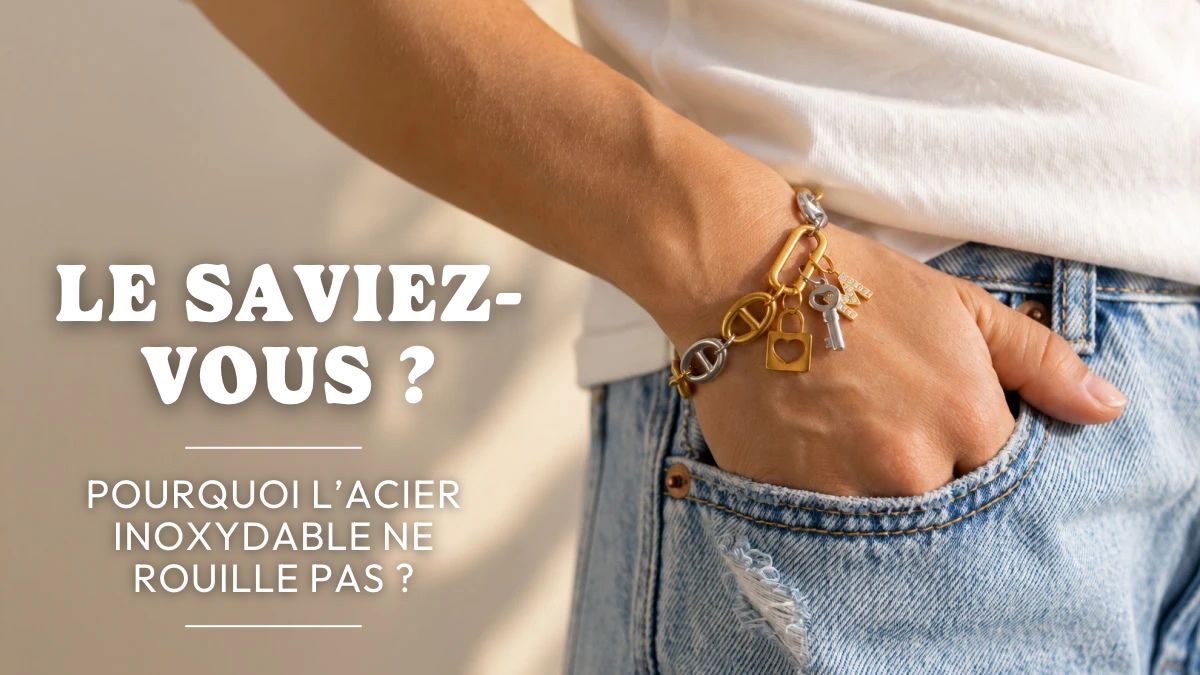
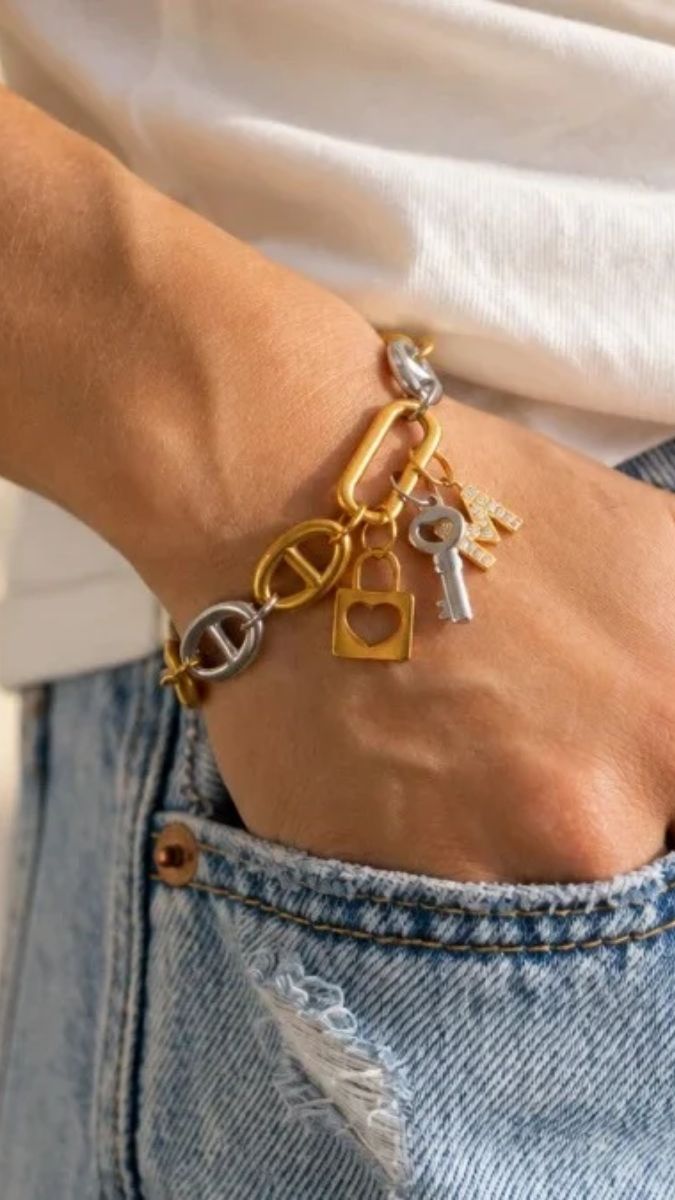
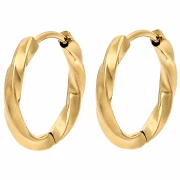
Gold-plated stainless steel is “raw” steel—often 304 or 316L—coated with a galvanized layer or a plating. What changes over time is the gold finish, which may fade depending on use. The steel itself, however, remains stainless underneath.
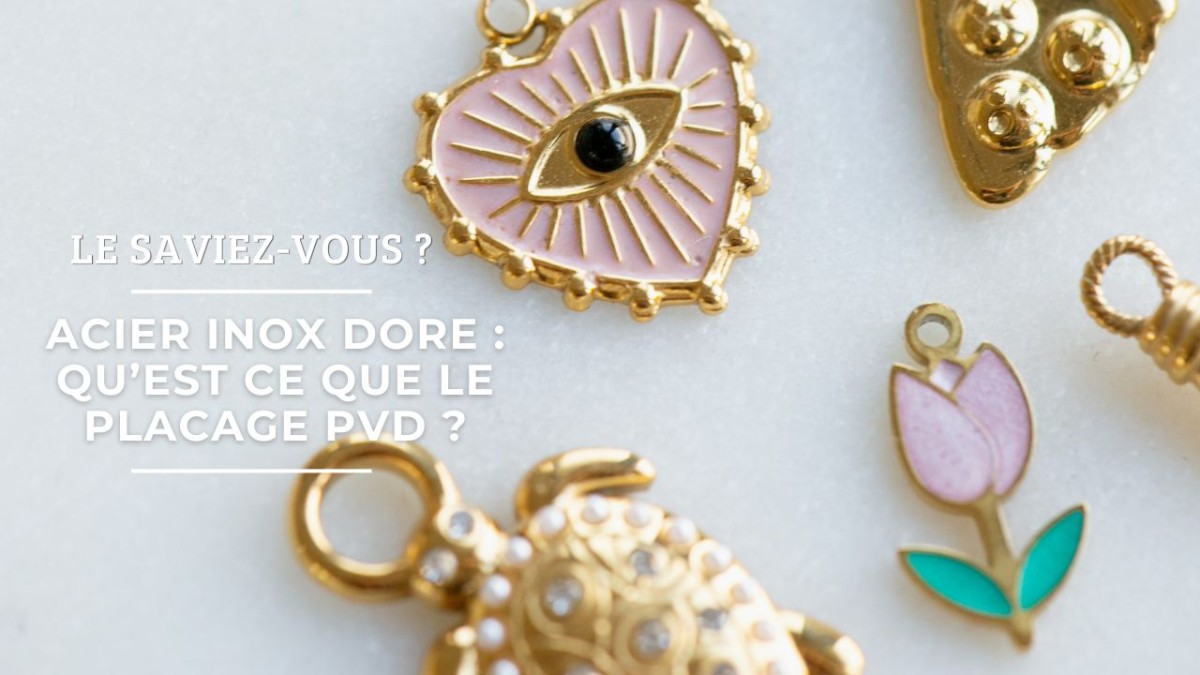
To understand why the color holds up so well, it all comes down to the technique used, and PVD plating is now the gold standard: unlike traditional electroplated gold finishes (such as a simple “flash” of gold), which sit on the surface and flake off quickly, the PVD (Physical Vapor Deposition) process vaporizes the metal (titanium nitride, gold, etc.) in a vacuum at the molecular level. The particles literally fuse with the structure of the stainless steel.
This improves:
- Resistance to friction and scratches: the atomic bond makes the coating extremely hard and resistant to everyday wear and tear (friction against clothing, skin, or other jewelry).
- Resistance to water and sweat: The PVD coating is unaffected by shower water or acidic sweat. It does not oxidize or cause the skin to turn green.
To learn more about gold-plated stainless steel, see our guide.
Result

Why doesn't stainless steel rust?
Stainless steel does not rust because it contains at least 10.5% chromium. Chromium forms an invisible, self-regenerating oxide layer on its surface. This layer protects the iron from oxygen and moisture.
Can stainless steel still rust?
Yes, under certain conditions. Salt, chlorine, harsh chemicals, or contact with iron particles can weaken the protective layer. The lower-grade stainless steels (201, 430) are the most susceptible. 316L is the most resistant.
How can you tell if a piece of jewelry is made of 304 or 316L stainless steel?
You can't tell just by looking at it. Please refer to the product sheet. A magnet can only be used to identify 430 stainless steel, which is normally magnetic. 304 and 316L stainless steels are not attracted to a magnet, or only very slightly if they have been machined.
Score of the sheet (0)
0/5
Be the first to write a review!
To go further


Questions (0)
You have a question about this sheet?
Ask our team and the people who have already tested it. The Perles & Co community is here to help!
Reviews (0)
Reviews are moderated before publication.
Credits
Perles & Co, Internet & E-Commerce company [26/11/2026] Any reproduction, representation, adaptation, in any form whatsoever, even partial, is prohibited, except for reproduction for private use not intended for collective use, representation in the family circle (art. L 122-5 CPI) and online publishing on condition that the source is mentioned and a link is included to the corresponding page of our site www.perlesandco.com.