Average Grades
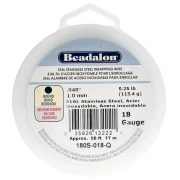
No fio fireline4LB Crystal , no site indica 0,10mm, na bobine por baixo p.ex Crystal aparece o valor 0.007, este valor nâo se refere a polegadas?
1 Answer
Show answers

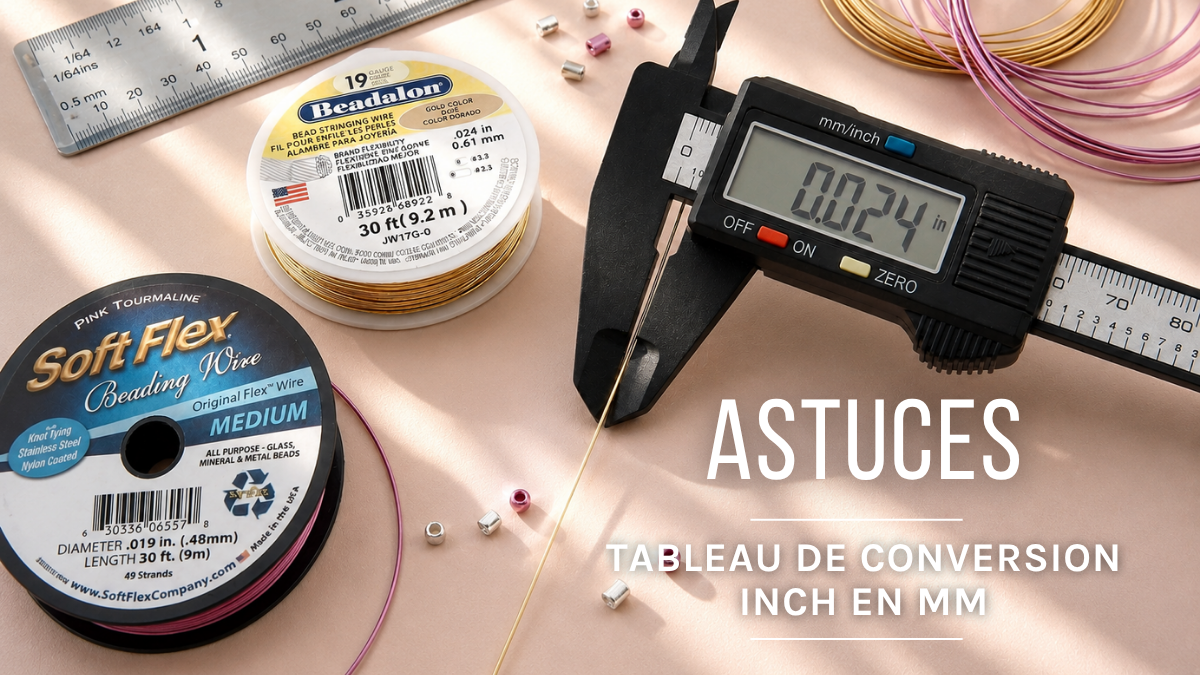
The inch is equivalent to 25.40 mm and is mainly used in countries like the UK and the USA for various measurements. To convert any measurement, simply multiply by 2.54 (to obtain centimeters) or by 25.4 (to obtain millimeters).
Do you often see measurements in inches on your metal or wire products and wonder what they correspond to in millimeters? This guide explains everything, and the conversion chart will help you with every order!
The inch is a unit of length dating back to the Middle Ages that corresponded to the length of a thumb. Although this measurement system has been phased out in many countries.
Today, the inch is still in use in several English-speaking countries, notably:
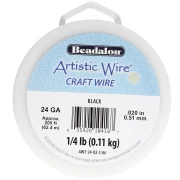
It is a measurement used for the diameter of wires, such as metal wires and cable wires—particularly by American brands like Soft Flex, Beadalon, or Artistic Wire—as well as for screen sizes, printer resolutions, and the sizes of certain clothing items, such as jeans. It is abbreviated with the symbol '' (double prime) or the two letters "in." You may also have seen it written as " inches"; this is simply the plural form of "inch."
The formula is simple:
To convert any measurement, simply multiply by 2.54 (to get centimeters) or by 25.4 (to get millimeters).
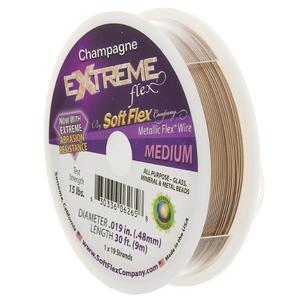
Example: a wire measuring 0.019 inches × 25.4 = 0.48 mm
| INCH (inch) | CM | MM |
| 1 | 2.54 | 25.40 |
| 2 | 5.08 | 50.80 |
| 3 | 7.62 | 76.20 |
| 4 | 10.16 | 101.60 |
| 5 | 12.7 | 127 |
| 6 | 15.24 | 152.40 |
| 7 | 17.78 | 177.80 |
| 8 | 20.32 | 203.20 |
| 9 | 22.86 | 228.60 |
| 10 | 25.4 | 254 |
| 11 | 27.94 | 279.40 |
| 12 | 30.48 | 304.80 |
| 36 | 91.44 | 914.40 |
| 1/4 | 0.635 | 6.35 |
| 1/2 | 1.27 | 12.70 |
| 3/4 | 1.905 | 19.05 |
| 1/8 | 0.3175 | 3.175 |
| 3/8 | 0.9525 | 9.525 |
| 5/8 | 1.5875 | 15.875 |
| 7/8 | 2.2225 | 22.225 |
| 1/16 | 0.15875 | 1.5875 |
| 3/16 | 0.47625 | 4.7625 |
| 5/16 | 0.79375 | 7.9375 |
| 7/16 | 1.11125 | 11.1125 |
| 9/16 | 1.42875 | 14.2875 |
| 11/16 | 1.74625 | 17.4625 |
| 13/16 | 2.06375 | 20.6375 |
| 15/16 | 2.38125 | 23.8125 |
| 1/32 | 0.079375 | 0.79375 |
| 3/32 | 0.238125 | 2.38125 |
| 5/32 | 0.396875 | 3.96875 |
| 7/32 | 0.555625 | 5.55625 |
| 11/32 | 0.714375 | 7.14375 |
| 13/32 | 0.873125 | 8.73125 |
| 15/32 | 1.031875 | 10.31875 |
| 17/32 | 1.349375 | 13.49375 |
| 19/32 | 1.508125 | 15.08125 |
| 21/32 | 1.666875 | 16.66875 |
| 23/32 | 1.825625 | 18.25625 |
| 25/32 | 1.984375 | 19.84375 |
| 27/32 | 2.143125 | 21.43125 |
| 29/32 | 2.301875 | 23.01875 |
| 31/32 | 2.460625 | 24.60625 |
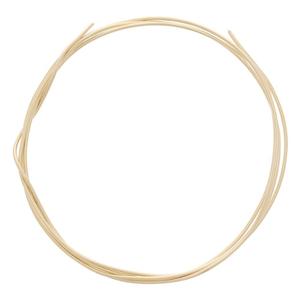
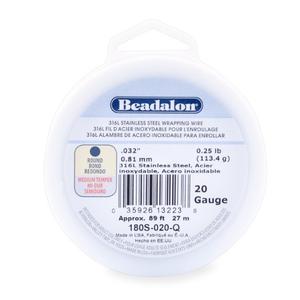
To better understand how to use this chart in your projects, here are a few examples taken directly from our catalog:
If you work with American wires, you’ll often see these two units side by side:
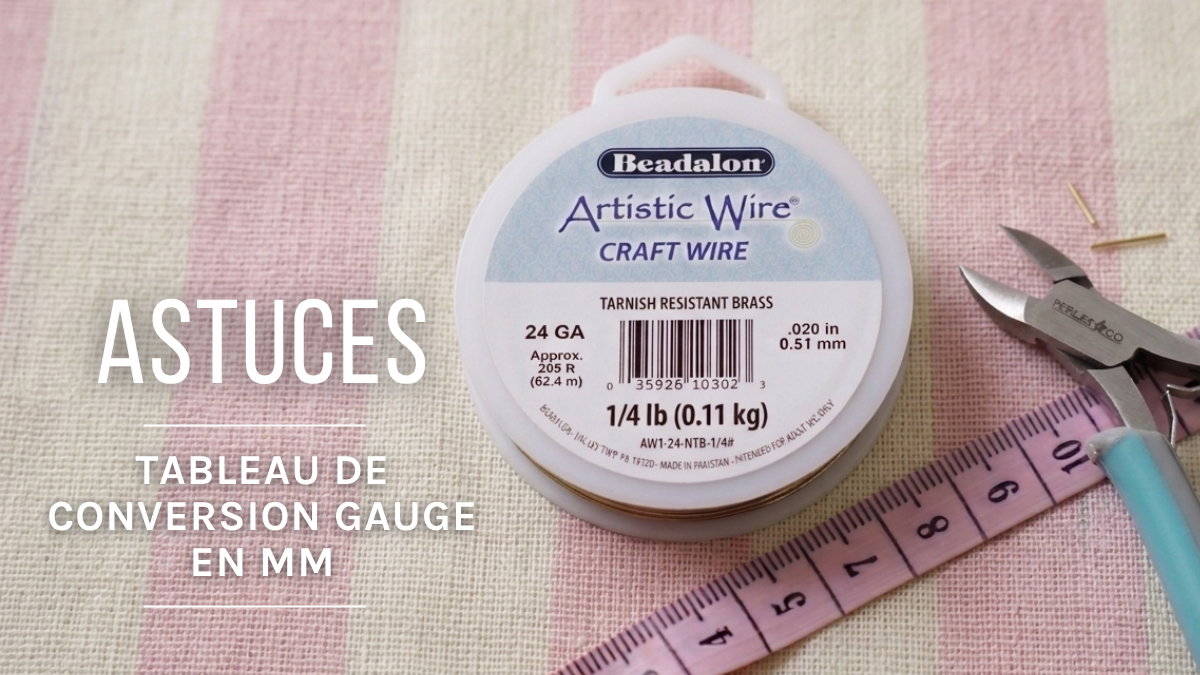
Both can be converted to millimeters: see our gauge-to-mm conversion chart to easily navigate between the two systems.
And if you’re wondering how to choose the right diameter for a stranded wire for your project, our guide on how to choose the diameter of a stranded wire will help you understand it even better.
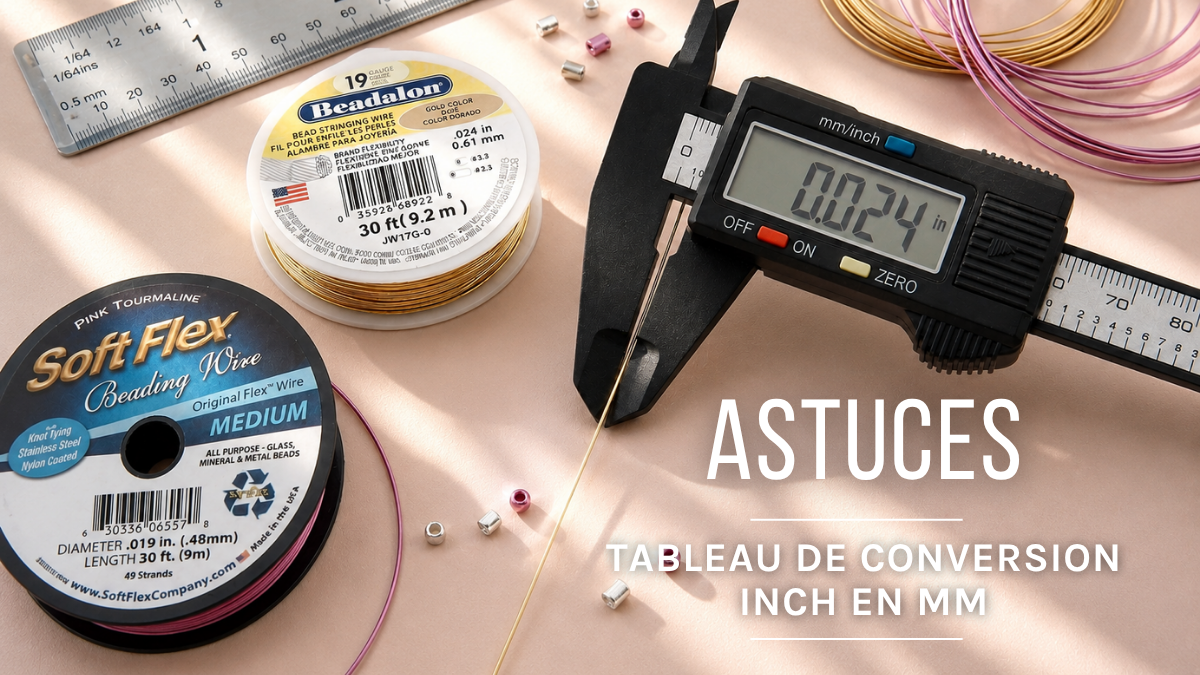
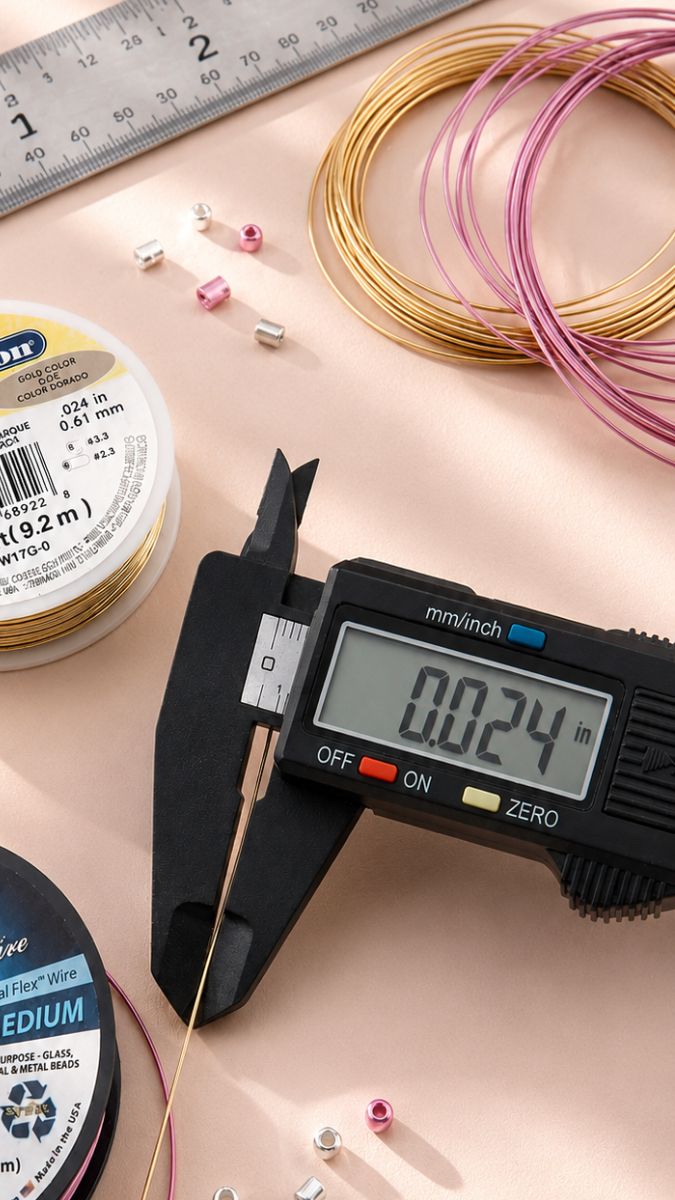

An inch corresponds exactly to 25.40 mm, or 2.54 cm. It's an Anglo-Saxon unit of measurement still widely used in the United States and the United Kingdom to express the diameter of wires, among other things.
Simply multiply the value in inches by 25.4 to obtain millimeters. For example: 0.025 inch × 25.4 = 0.635 mm. Our table above makes this calculation for the most common jewelry values.
These two units measure the same thing (the diameter of a wire), but in different ways. Inch expresses the measurement directly in decimal inches, while AWG uses an inverted scale (the larger the number, the thinner the wire). Both convert to millimeters.





Credits
Perles & Co, Internet & E-Commerce company [30/05/2026] Any reproduction, representation, adaptation, in any form whatsoever, even partial, is prohibited, except for reproduction for private use not intended for collective use, representation in the family circle (art. L 122-5 CPI) and online publishing on condition that the source is mentioned and a link is included to the corresponding page of our site www.perlesandco.com.