Average Grades
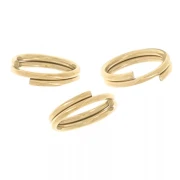
Merci pour ces explications, en effet j'ai enfin trouvé dans votre boutique des anneaux avec ce placage et le doré dure dans le temps là ou les autres deviennent argenté.

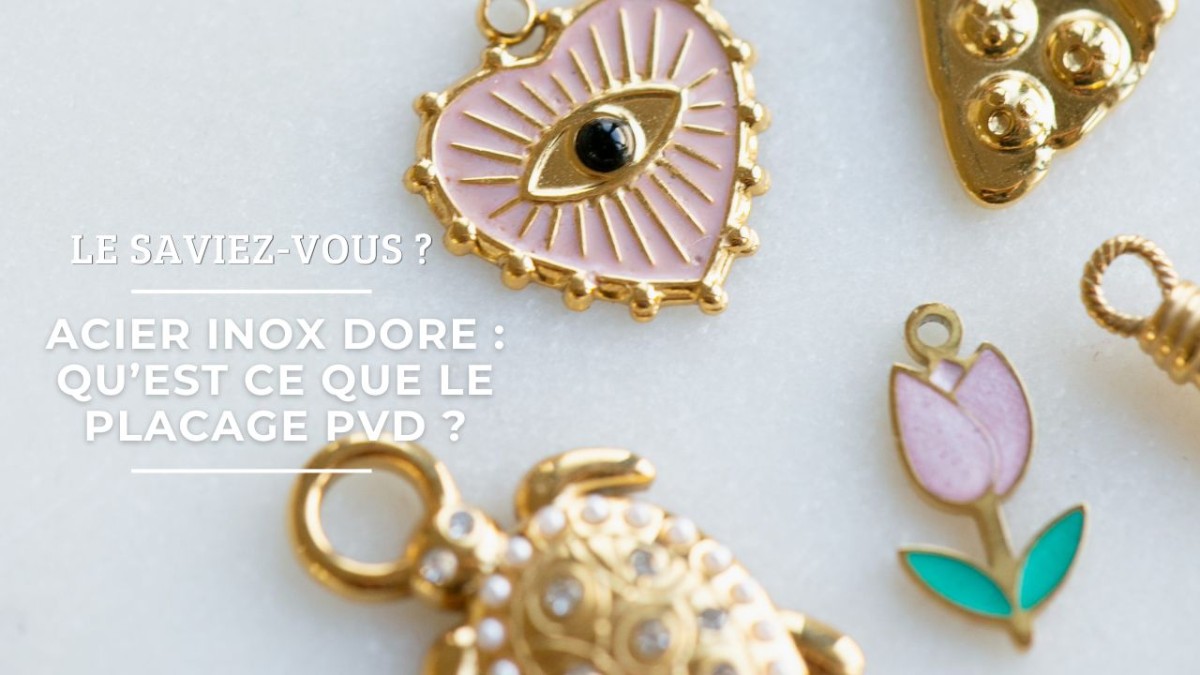
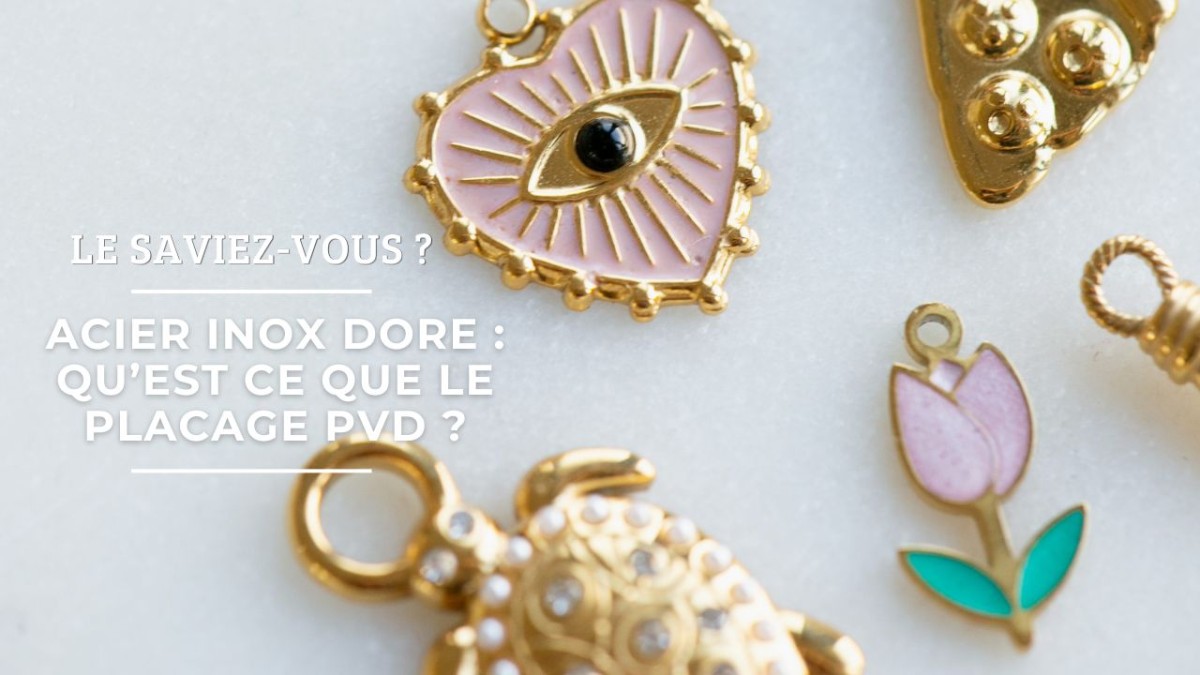
PVD (physical vapor deposition) deposits a very thin layer of metal onto stainless steel in a vacuum. For gold-plated steel, this usually involves a base layer of titanium nitride—which is very hard and already gold in color—sometimes covered with a thin layer of gold. The result is a gold plating that is much more resistant to friction, water, and sweat than traditional gold plating, even though it may scratch and fade over time.
A piece of gold-plated stainless steel jewelry that retains its color even when worn every day: that’s the promise of PVD coating. How does it work, how is it different from gold plating, and how long does it really last? Here’s what you need to know to choose your gold-plated stainless steel jewelry.
PVD stands for Physical Vapor Deposition. This acronym refers to a metallization method that involves the physical deposition of vapor through sputtering. A metal is vaporized in a vacuum and then deposited atom by atom onto the parts being treated, forming a very thin, highly adherent layer. This technique originated in industry and watchmaking, where it is used to color and protect watch cases. Today, it is widely used for gold-plated stainless steel jewelry.
There are several specific techniques for applying a PVD coating:
Many metals can be deposited using PVD (in fact, virtually all elements of the periodic table in their solid state). Typically, titanium and chromium are used as bases due to their high corrosion resistance. They are then coated with a layer of precious metal, such as gold, or metal alloys. The entire process is carried out in vapor form.
The process uses neither chemical baths nor water discharge, unlike traditional electroplating.
PVD can be applied to various metals and alloys that can withstand the pressure. But it is particularly effective on stainless steel.
Stainless steel is hard and stable: the titanium nitride layer adheres directly to it, without the need for a primer. On softer metals such as brass or zamak, an additional bonding layer is required, which increases the cost of the treatment. And if the gold plating wears off, the stainless steel underneath is exposed—not a metal that turns black or green.
The thickness of this coating on the stainless steel products we sell is not specified by the manufacturer. It can vary from 0.01 to several microns.
In the case of a steel base, the applied layer is titanium nitride (TiN). The golden hue remains stable: it does not flake off, and even if it may lighten slightly, it retains its golden appearance without taking on a silvery tint.


The entire process takes place in a vacuum chamber—a kind of sealed, airtight metal chamber. Inside this chamber is a rotating rack on which frames are mounted to hold the items to be coated.
Once the items are hung, the chamber is sealed, then evacuated of nearly all its air to reach a pressure of one hundred-millionth of atmospheric pressure and prevent the presence of impurities. Next, the deposition phase begins: the process gas is released through the chamber’s side walls. The carousel rotates at a steady pace, allowing the coating to be evenly applied and distributed over the products. When the process is complete, the frames are removed, followed by the items.
A quick reminder: What is electroplating? Sometimes incorrectly referred to as galvanization, electroplating is a method of plating by electrolysis. This method uses an electric current passing through a liquid bath to coat a metal object with a thin layer of precious metal or a metal alloy.
Finish | How It’s Made | Wear resistance | Price |
|---|---|---|---|
Flash plating | A thin layer of gold deposited by electrolysis | Low: wears off quickly with friction | € |
PVD-gilded steel | Titanium nitride (and sometimes a thin layer of gold) deposited in a vacuum onto stainless steel | Very Good: very hard coating, resistant to water and sweat | €€ |
Gold-plated | A thicker layer of gold deposited by electroplating (3 microns) | Good, but the gold remains soft and wears down at friction points | €€ |
Gold filled | Gold leaf mechanically bonded to a brass core | Very good: thick layer of gold | €€€ |
Solid gold | Precious metal | Durable, can be repolished | €€€€ |
There is no guaranteed lifespan: it all depends on how it’s used. A pendant lasts much longer than a ring or bracelet, which are constantly rubbing against other surfaces. Over time, the color may lighten slightly in the areas that see the most wear, without revealing any blackened metal. The coating can also become scratched when it comes into contact with hard or abrasive objects.
The main causes of wear on PVD gold plating are:
• repeated friction (rings, bracelets, clasps);
• abrasive or acidic substances (vinegar, lemon, household cleaners);
• impacts against hard surfaces.
Want to learn more about stainless steel? Check out our guide and technical data sheets to learn all about its specific characteristics. In fact, each product page clearly states whether the piece of jewelry is made of PVD-gold-plated stainless steel or not. All you have to do is browse our selection of findings and components to get started on your creations!
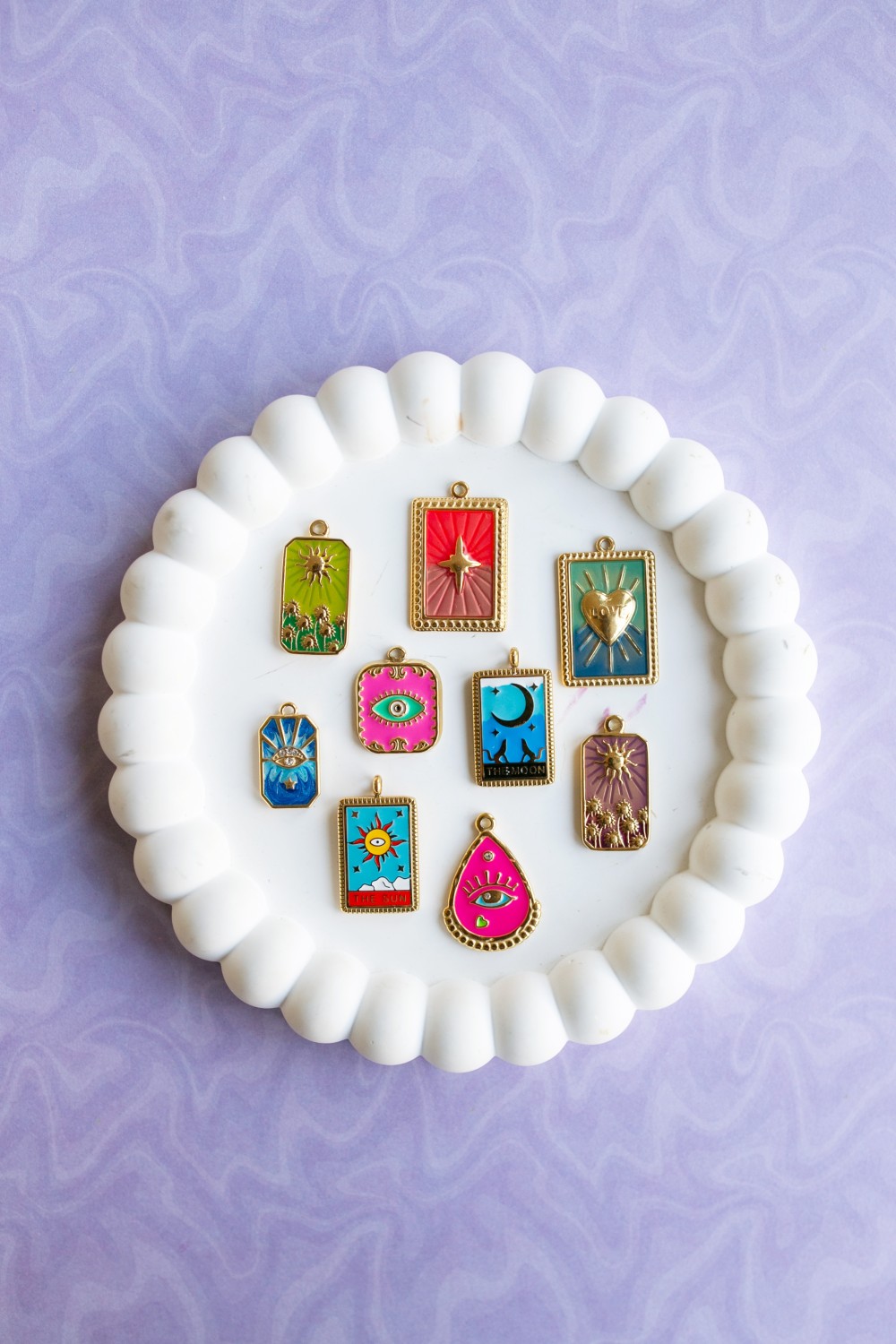

A PVD coating does not chip or reveal the metal underneath (the gold finish naturally tarnishes after 1 to 2 years). However, it can still be scratched by an abrasive or sharp object, just like any other metal coating.
Yes. PVD can withstand showering, sweating, and occasional swimming; rinse the jewelry with clean water after being in the ocean or a pool.
No. Over time, the color may fade in areas that are subject to friction, but the underside is still stainless steel, which does not tarnish.
Credits
Perles & Co, Internet & E-Commerce company [10/08/2026] Any reproduction, representation, adaptation, in any form whatsoever, even partial, is prohibited, except for reproduction for private use not intended for collective use, representation in the family circle (art. L 122-5 CPI) and online publishing on condition that the source is mentioned and a link is included to the corresponding page of our site www.perlesandco.com.