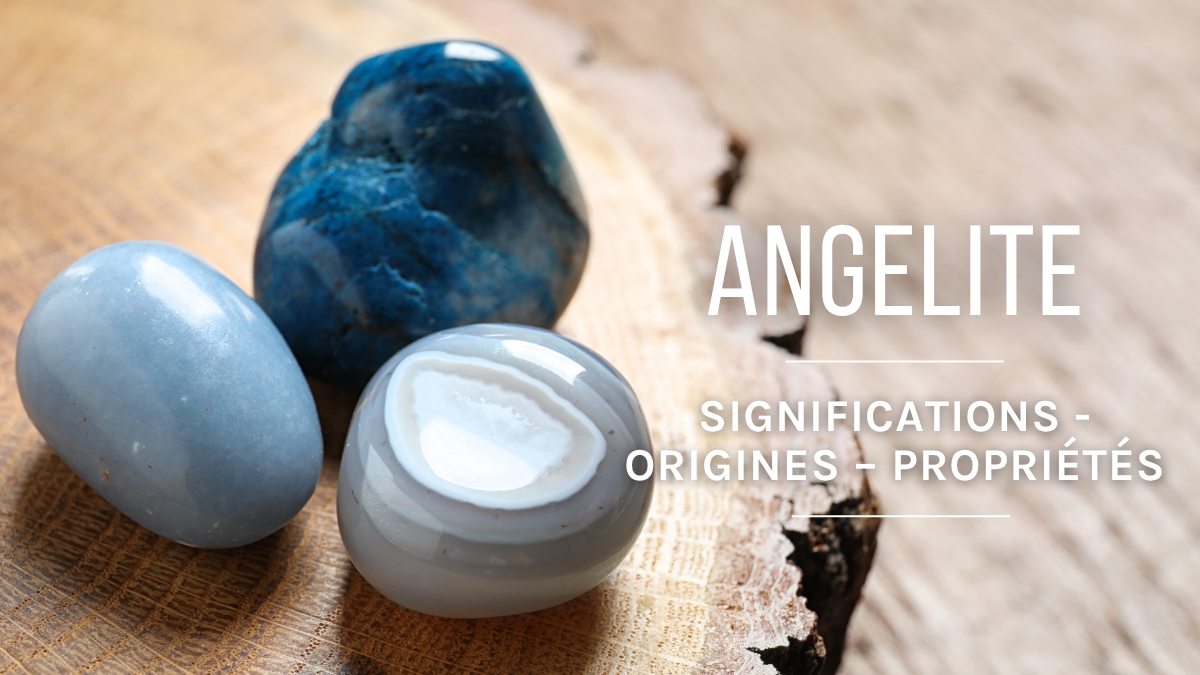
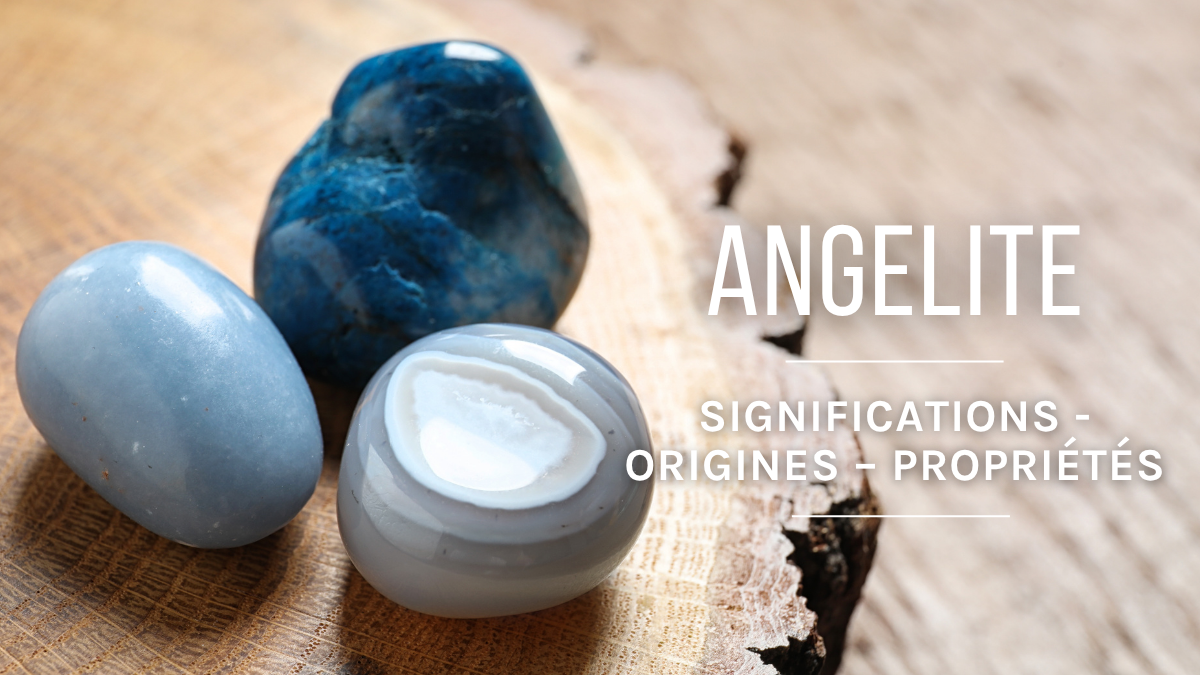
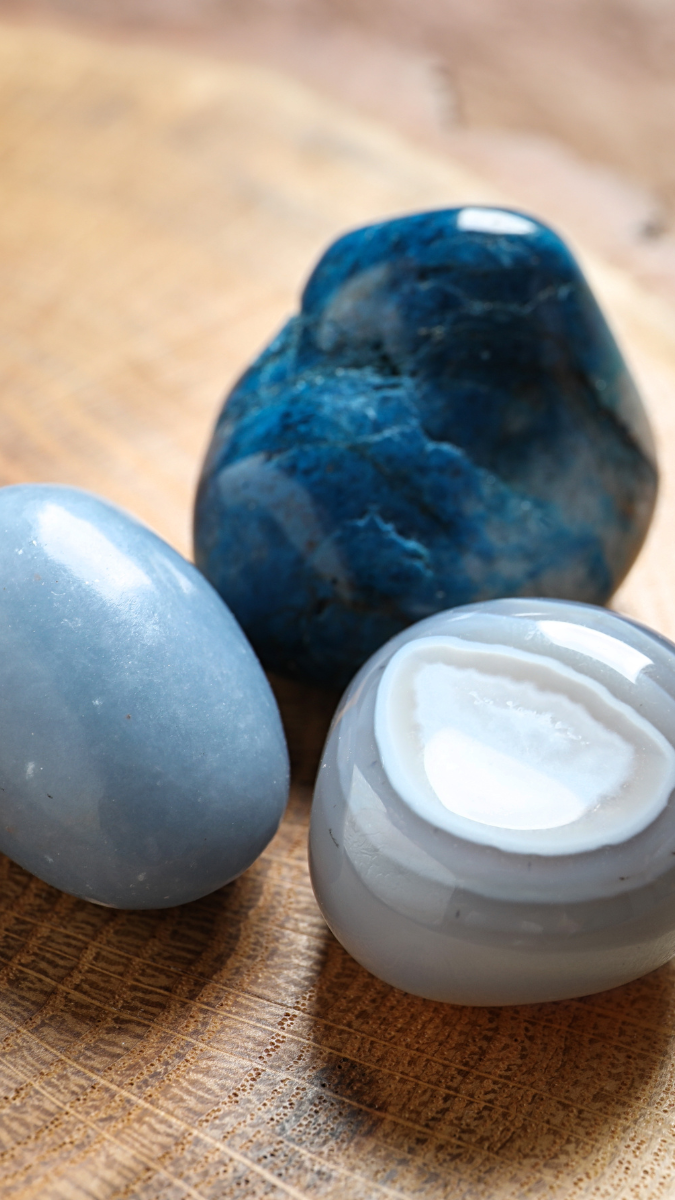
Angelite, known for its soothing sky-blue hue, stands out as a gemstone of rare beauty and unmatched softness. Used in jewelry for its delicate shades and subtle luster, this natural stone appeals to enthusiasts of crystal healing who seek to incorporate a symbol of calm and serenity into their creations.
Discover Angelite beads and jewelry components to craft natural stone jewelry. Get inspired by our tutorials!
What does “angelite” mean?
The name “angelite” comes from the Greek “anhudros,” meaning “without water.” The German mineralogist Abraham Gottlob Werner chose this name because the mineral’s composition contains no water.
It is also known as anhydrite.
The History of Angelite
Since its discovery is relatively recent, there are no known stories, myths, or legends associated with this gemstone.
What color is angelite?
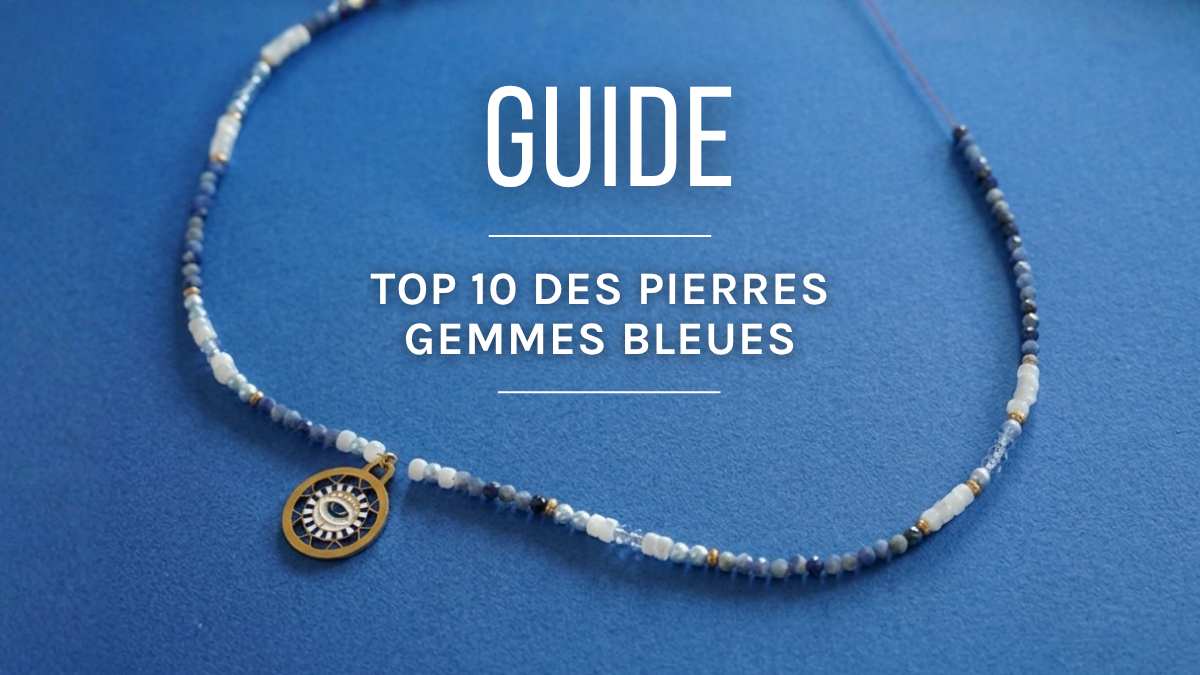
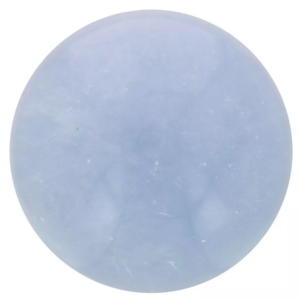
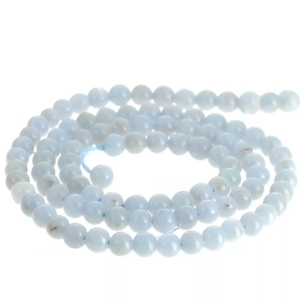
This gemstone is distinguished by its unique sky-blue color , which can range from pale blue to deep blue, including shades of lavenderblue.
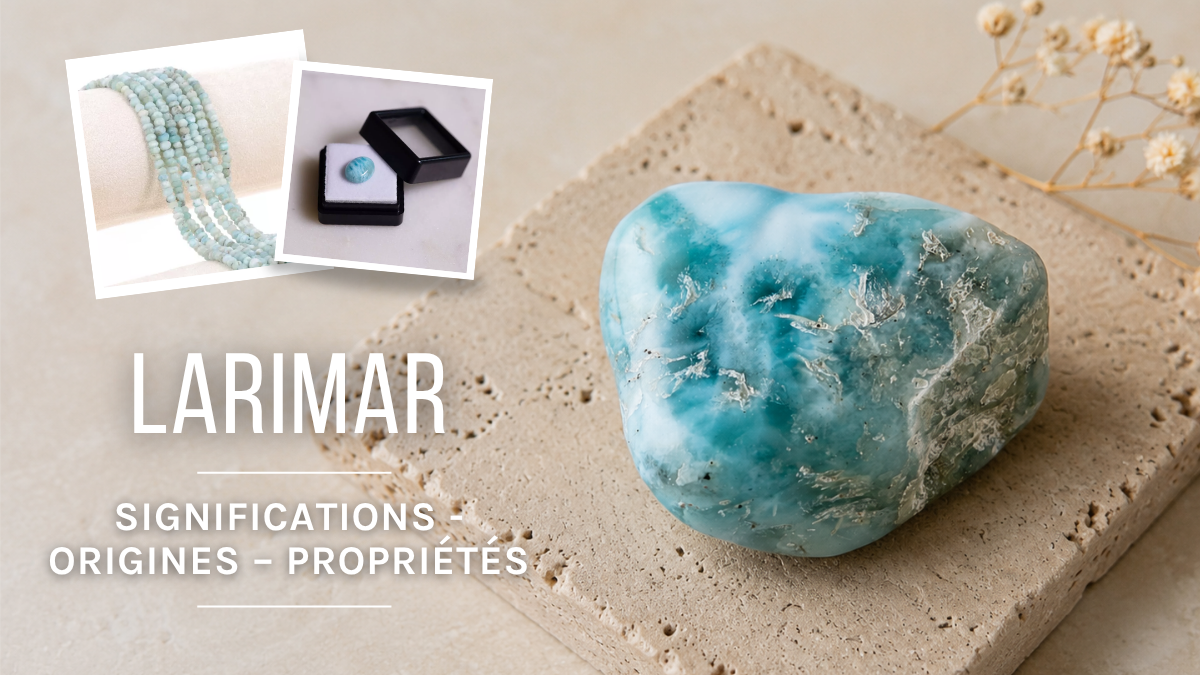
With its characteristic sky-blue hue, it is sometimes confused with other stones of similar color, such as larimar or blue calcite.

What are the properties of angelite?
Its hardness is fairly low on the Mohs scale, ranging from 3 to 3.5. This relatively low hardness means that this blue stone can be easily scratched or damaged by harder materials, requiring special care when handling, storing, and using it to create jewelry or decorative items. Its density ranges from 2.9 to 3 g/cm³, which classifies it as a relatively dense stone.
Where can angelite be found?
The main deposits of angelite are found in Germany, Egypt, Great Britain, Libya, Mexico, Peru, Poland, and the Dominican Republic.
What are the benefits of angelite?
In crystal healing, this natural stone is considered a stone of communication. It is said to promote communication and self-expression.
According to some beliefs, it brings inner peace and serenity, helping to reduce stress and anxiety.
Which chakra is associated with angelite? It is often associated with the throat chakra, promoting clear and compassionate communication, as well as the third eye chakra, which encourages intuition and spiritual perception.
It is the stone for those born under the zodiac signs of Libra, Aquarius, and Gemini.
Please note: Our gemstones are not sold for the purpose of crystal healing. Natural stones are in no way a substitute for medical expertise or medical treatment.
How do you recharge an angelite?
Crystal healers recommend regularly cleaning, purifying, and recharging natural stones so that they retain all their properties.
To recharge it, place it in the sunlight early in the morning or late in the afternoon, when the heat is gentle. You can also leave it out overnight under the moonlight, which will maintain its soothing energy.
How to use angelite?
Angelite pairs harmoniously with both silver and gold tones, offering a multitude of creative options for jewelry. It pairs beautifully with 925 Sterling Silver, stainless steel, gold-plated, or Gold Filledfindings, highlighting its celestial beauty.
Which stones pair well with Angelite? It can be complemented by several other natural stones, such asamethyst, sodalite, labradorite, rose quartz, moonstone, lapis lazuli, or rock crystal, to enhance or balance its effects in crystal healing.
However, it is not recommended to use stones whose energies may clash with or be too intense compared to the gentle, soothing vibrations of angelite. This is the case withblack obsidian,hematite, sunstone, garnet, or carnelian.