Average Grades
Free shipping on orders over 50€ up to 500g
French Online shop for beads and accessories for the creation of DIY jewellery and other creative hobbies
Log-in
0
Shopping cart
Shopping cart
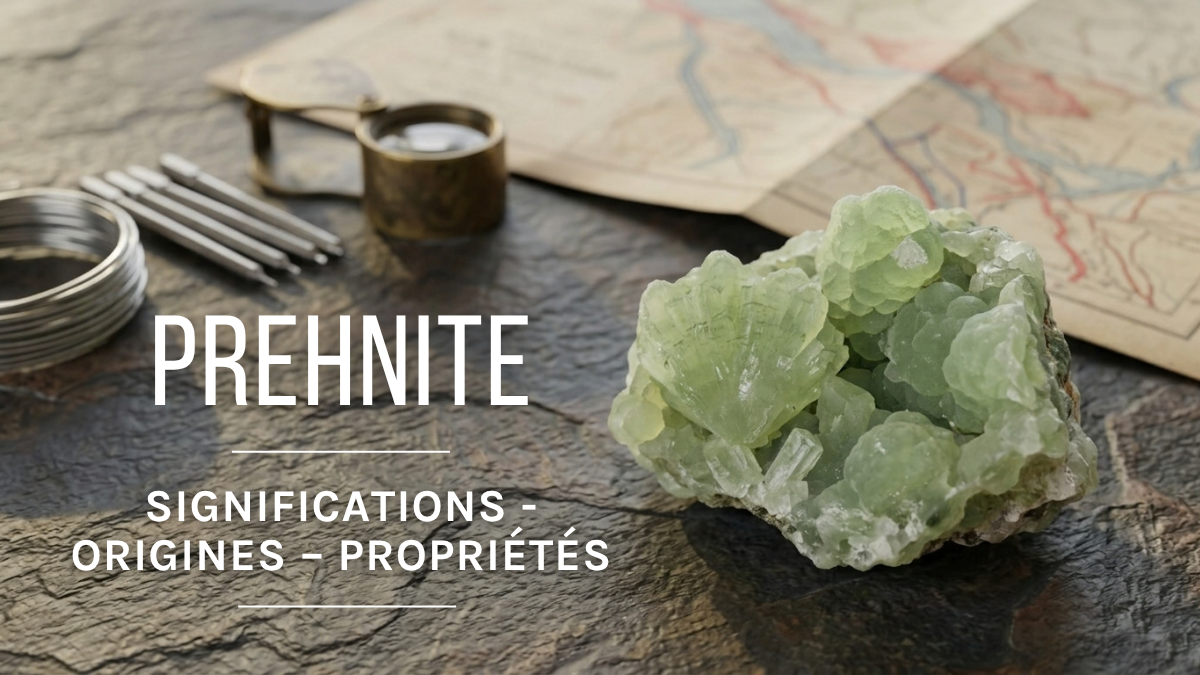
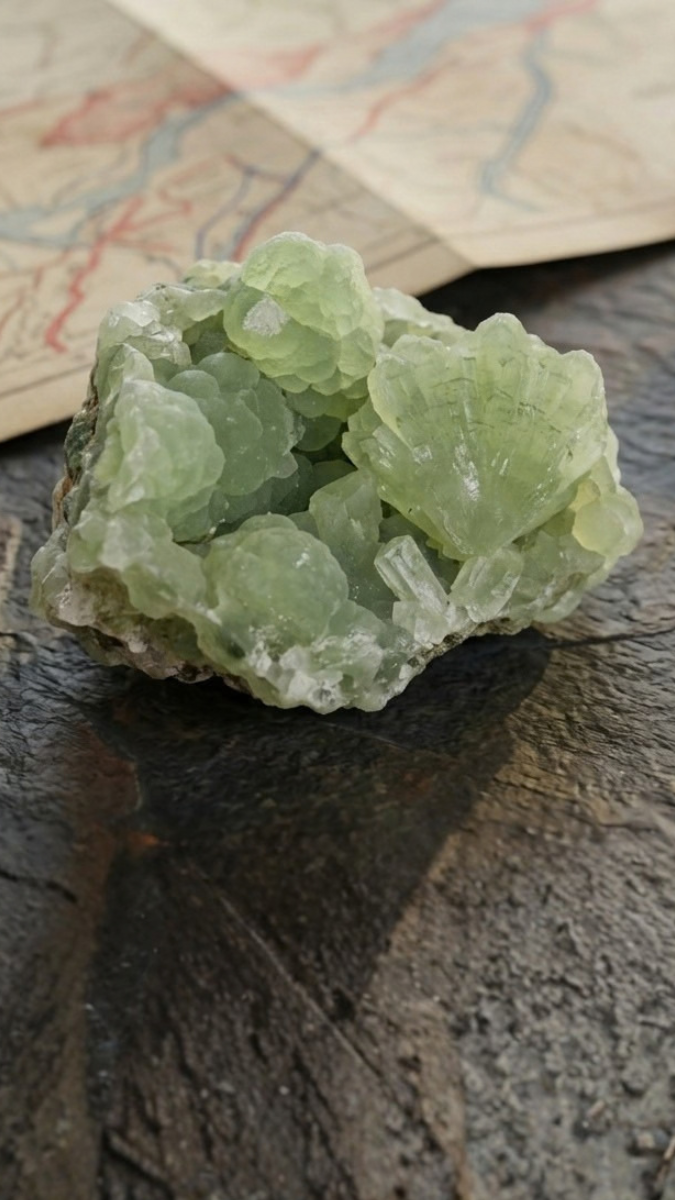
Prehnite, with its shades ranging from pale green to yellow-green, is a natural stone prized for DIY jewelry making. Found in various deposits, such as South Africa and Australia, it stands out for its subtle beauty and lightness, making it ideal for everyday wear.
Prehnite, a natural stone shrouded in softness and mystery, elegantly finds its place in the world of DIY jewelry making. Often overlooked, it reveals subtle shades ranging from pale green to yellow-green, lending handmade jewelry a touch of refinement and freshness.
With its subtle beauty and soothing properties, this gemstone is an endless source of inspiration. Let its natural serenity guide you as you create unique pieces using our selection of prehnitebeads and jewelry findings. Get inspired by our natural stone jewelry tutorials!
The name “prehnite” honors the Dutch commander Hendrik Von Prehn, who discovered this stone at the Cape of Good Hope in South Africa in the 18th century. The name was given to it by the German mineralogist Abraham Gottlob Werner in 1783.
In fact, this gemstone had already been discovered a few years earlier bythe French astronomer Alexis-Marie de Rochon. It was the French mineralogist Balthazar Georges Sage who first described it, naming it “Cape Chrysolite.” This name is now completely obsolete.
This gemstone, prized for its beauty and energetic properties, has endured through the centuries. However, its history is poorly documented, meaning we know very little about this natural stone.
The Māoriof New Zealand used it as an ornamental stone but also as amulets. They believed in its protective powers and its ability to strengthen the connection with nature.
The Aboriginal peopleof Australia believed that this green stone had the ability to absorb and release the sun’s heat. They used it to keep warm. They also believed it offered protection against nightmares.
Shamans in South Africa used it to make sound decisions to guide their people.
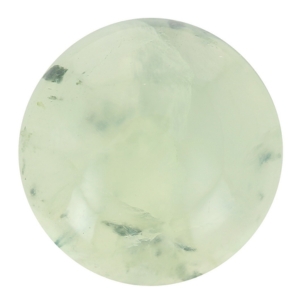
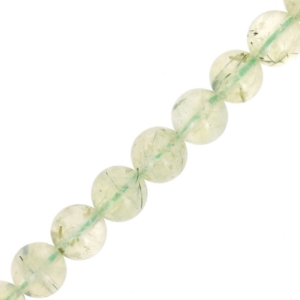

Prehnite captivates with its range of colors, primarily soft shades of green, sometimes with hints of yellow or blue. Its green color, reminiscent of the freshness of the first leaves of spring, evokes rebirth and renewal. It also contains epidote inclusions, which form small black streaks.
It is translucent to semi-transparent, which gives it an inner glow, making each stone unique.
Because of its color, it is often mistaken for chrysoprase or jade. Hence its other names, “Australian yellow jade” or “grape jade.”
With a hardness of 6 to 6.5 on the Mohs scale, this green stone combines strength and softness, making it perfect for creating a variety of jewelry pieces. Its density, ranging from 2.80 to 2.95 g/cm³, gives it a delicate and light presence, making it ideal for everyday wear.
Prehnite deposits are found throughout the world. It is found notably in South Africa, Australia, India, Scotland, Switzerland, France, Italy, Mali, Spain, China, and the United States.
In crystal healing, prehnite is considered a stone of healing and protection. It is said to promote serenity, reduce worry, and calm the mind. It is also associated with enhancing intuition and strengthening premonitory abilities. It is said to foster an optimistic outlook.
It is said to promote emotional healing, strengthen the connection with nature, and encourage a harmonious relationship with the environment and the people around us.
Which chakra is prehnite associated with? This natural stone is often associated with the heart chakra, the fourth chakra, which is linked to love, empathy, compassion, inner peace, and acceptance of oneself and others.
It is the ideal stone for the zodiac signs Leo, Virgo, Libra, and Sagittarius.
Please note: Our gemstones are not sold for crystal healing. Natural stones are in no way a substitute for medical expertise or medical treatment.
To care for prehnite and help it retain its full splendor and properties, it is recommended to clean, purify, and recharge it regularly.
Gently clean it withdistilled water (never tap water) or purify it withnatural incense such as white sage.
To recharge it, use the soft light of the moon to revitalize its energies. You can place it on a quartz geode to enhance the ritual.
Prehnite pairs harmoniously with cool-toned metals such as 925 Sterling Silver and stainless steel, or warm-toned metals like Gold Filled or gold-plated, highlighting its natural luminosity.
It can be combined with other stones to create jewelry that symbolizes balance and harmony, such asamethyst for spirituality or rose quartz for love.

Credits
Perles & Co, Internet & E-Commerce company [20/02/2024] Any reproduction, representation, adaptation, in any form whatsoever, even partial, is prohibited, except for reproduction for private use not intended for collective use, representation in the family circle (art. L 122-5 CPI) and online publishing on condition that the source is mentioned and a link is included to the corresponding page of our site www.perlesandco.com.

