Average Grades
Quale è la pietra dell' Ariete?
1 Answer
Show answers

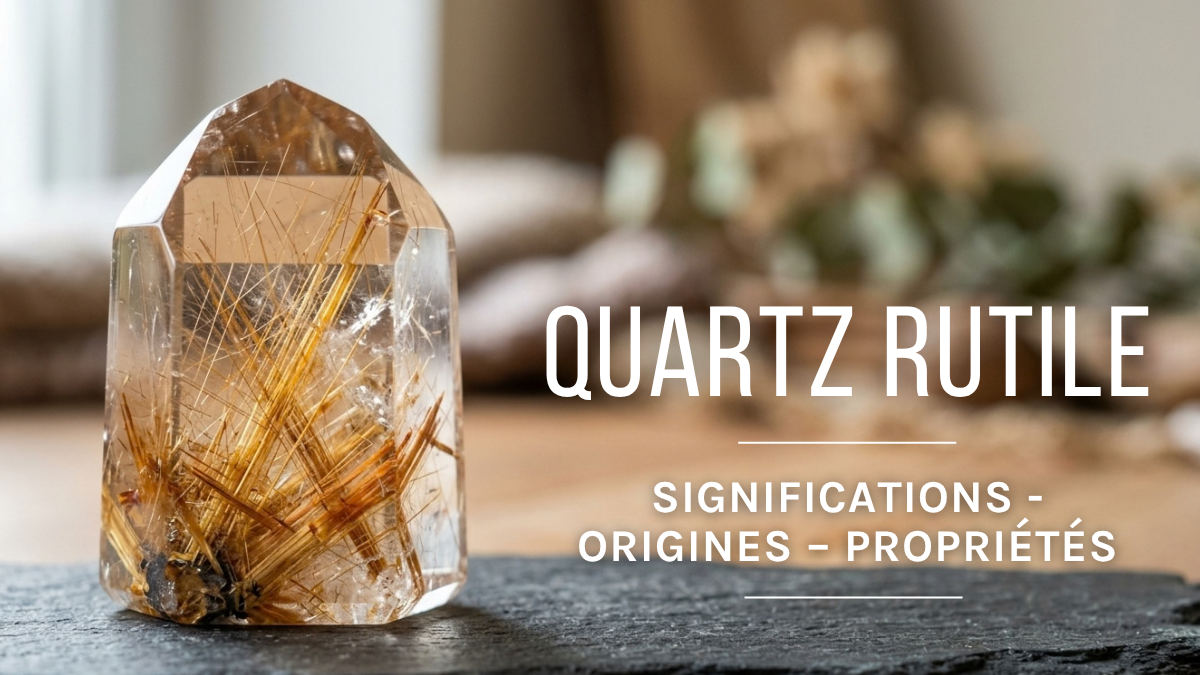
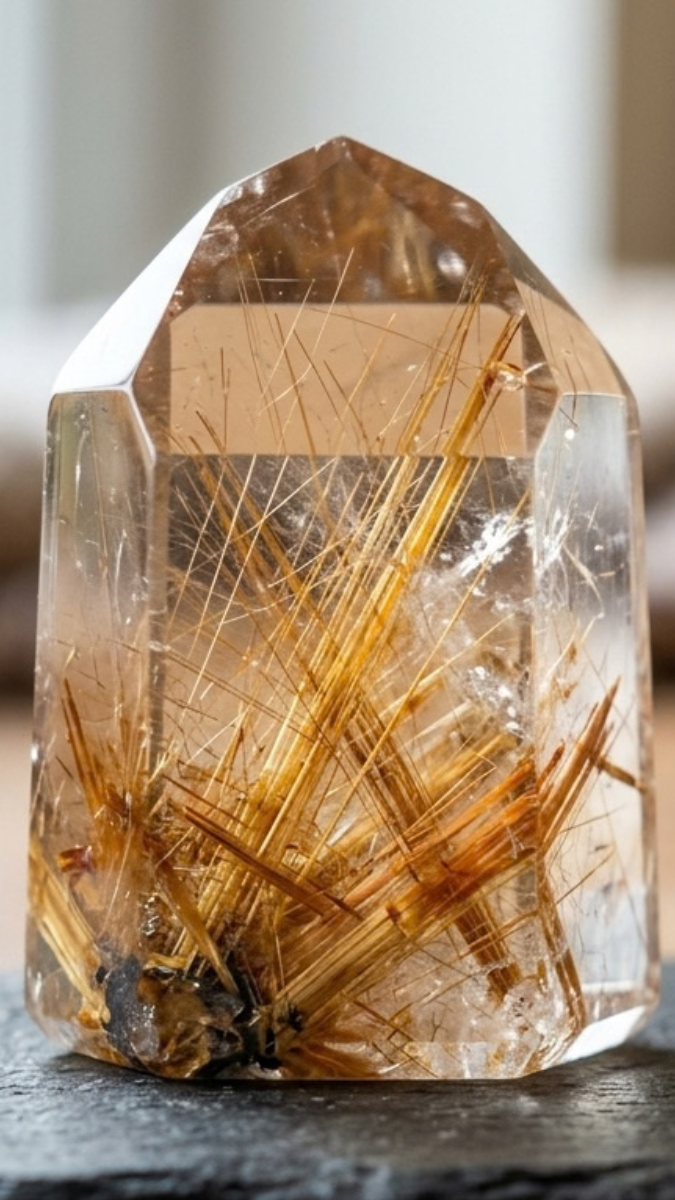
Rutile quartz is distinguished by its gold to silver inclusions, offering a unique aesthetic for your jewelry creations. Mainly mined in Brazil, this transparent stone, with shades ranging from gold to black, combines elegance and character, ideal for embellishing your handcrafted creations.
Renowned for its unique rutile inclusions, which range from golden to silvery, this natural stone offers a fascinating visual spectacle. It is the ideal stone for creating handmade jewelry, lending it natural elegance and unmatched charm. Let our natural stone jewelry tutorials guide you in creating extraordinary pieces with our rutile quartz beads and findings!
It was the German geologist Abraham Gottlob Werner who named it, drawing on the Latin word “rutilus,” which means “red,” due to certain specimens that feature intense red inclusions.
This fine stone (formerly known as a semiprecious stone) is also called “Angel’s Hair,”“Venus’s Hair,”“Hair Stone,”“Needle Stone,” or “Arrow of Love.”
Rutile quartz has been prized throughout history for its beauty and its purported metaphysical properties. As far back as ancient times, it was used to make jewelry, as well as for ornamental and decorative purposes.
In some beliefs, the golden inclusions were thought to be pieces of sunlight trapped within the stone.
In ancient cultures, it was often associated with wisdom and clairvoyance. Legends tell that warriors wore it as an amulet for protection in battle, and travelers wore it to guide them on their long journeys.
In the 19th century, it was used to craft magnificent jewelry.
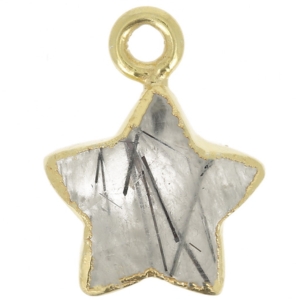
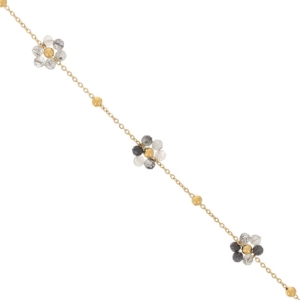
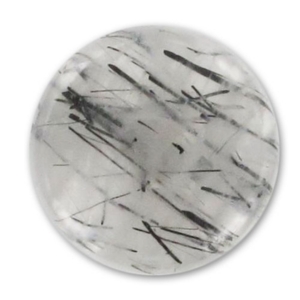
The quartz itself is generally transparentor slightly smoky in color and contains rutile inclusions. This transparency allows the inclusions to stand out visually and create an effect of depth and dimension. The fine, luminous rutile needles can form star-like patterns, complex networks, or simple filaments, offering a range of colors from brilliant gold to deep black:
These unique inclusions give each stone a captivating appearance. They add not only beauty but also character to the stone.
Likeamethyst, rock crystal, or citrine, this natural stone is part of the large quartz family. It has a hardness of 7 onthe Mohs scale, making it durable enough for use in jewelry. Its density is 2.65 g/cm³.
Deposits of rutilated quartz are found primarily in Brazil, but also in Australia, Spain, Kazakhstan, Norway, and the United States.
In crystal healing, rutilated quartz is known for stimulating creativity, strengthening willpower, and helping to overcome emotional challenges. It is often used for its positive energy and to promote mental clarity.
It is considered a positive stone that promotes well-being. It is said to ward off negative energy and protect the wearer from the evil eye.
It is also a useful stone for meditation.
Rutilated quartz is associated with the solar plexus chakra and the heart chakra. When worked with the solar plexus chakra, it is said to provide a sense of relaxation. When worked with the heart chakra, it helps develop empathy, solidarity, and compassion.
It is the birthstone for those born under the astrological signs of Gemini, Leo, and Virgo.
Please note: Our gemstones are not sold for the purpose of crystal healing. The effects of these stones have not been scientifically proven. Natural stones are in no way a substitute for medical expertise or medical treatment.
In crystal healing, it is essential to regularly cleanse and recharge natural stones so that they can restore their full benefits.
To purify your rutilated quartz, nothing could be simpler: soak it for a few hours in a container of clear water or use white sage to smudge it.
Finally, to recharge it, it’s recommended toexpose itto natural sunlight for a few hours.
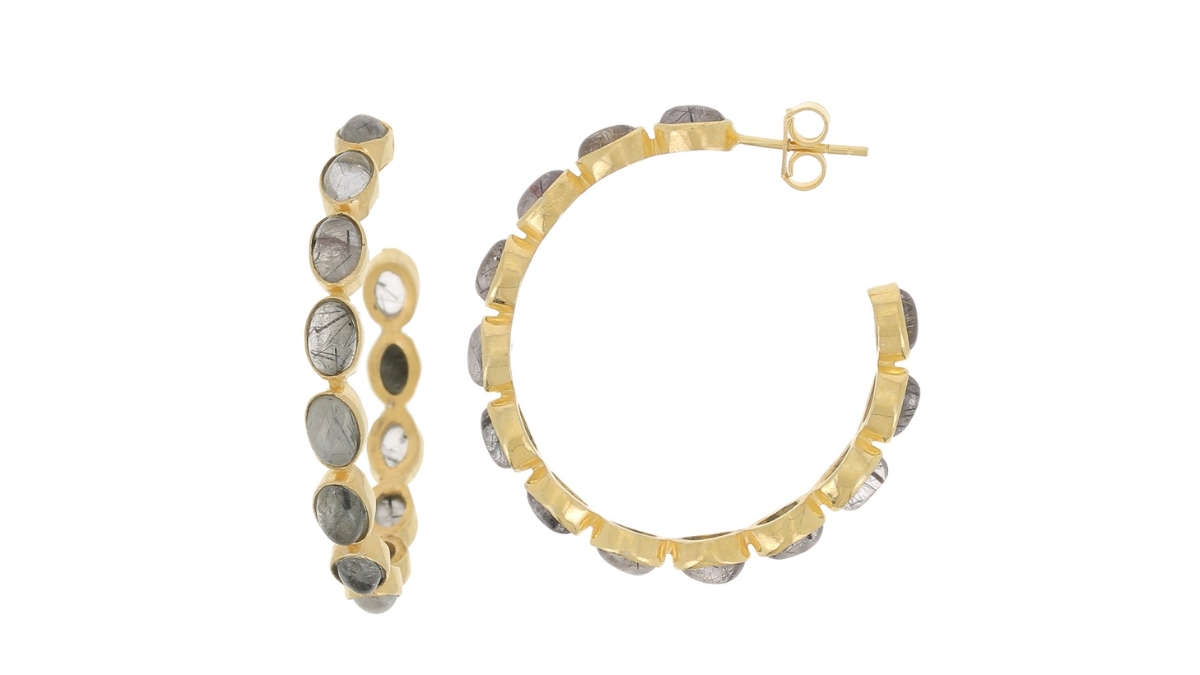
Its unique appearance will be enhanced with 925 Sterling Silver or stainless steel jewelry settings. Gold-plated and Gold Filled settings will give it a bold, elegant, and sophisticated look.
Which stones pair well with rutilated quartz? In crystal healing, rutilated quartz is paired with other stones to amplify or complement its properties.
Which stones should not be paired with rutilated quartz? Certain combinations of stones can create discordant or unbalanced energies. This is why crystal healers advise against pairing rutilated quartz with highly energetic stones, such asobsidian or black tourmaline, or with stones that have opposing energies, such as moonstone.
Credits
Perles & Co, Internet & E-Commerce company [06/02/2024] Any reproduction, representation, adaptation, in any form whatsoever, even partial, is prohibited, except for reproduction for private use not intended for collective use, representation in the family circle (art. L 122-5 CPI) and online publishing on condition that the source is mentioned and a link is included to the corresponding page of our site www.perlesandco.com.