Average Grades
Free shipping on orders over 50€ up to 500g
French Online shop for beads and accessories for the creation of DIY jewellery and other creative hobbies
Log-in
0
Shopping cart
Shopping cart
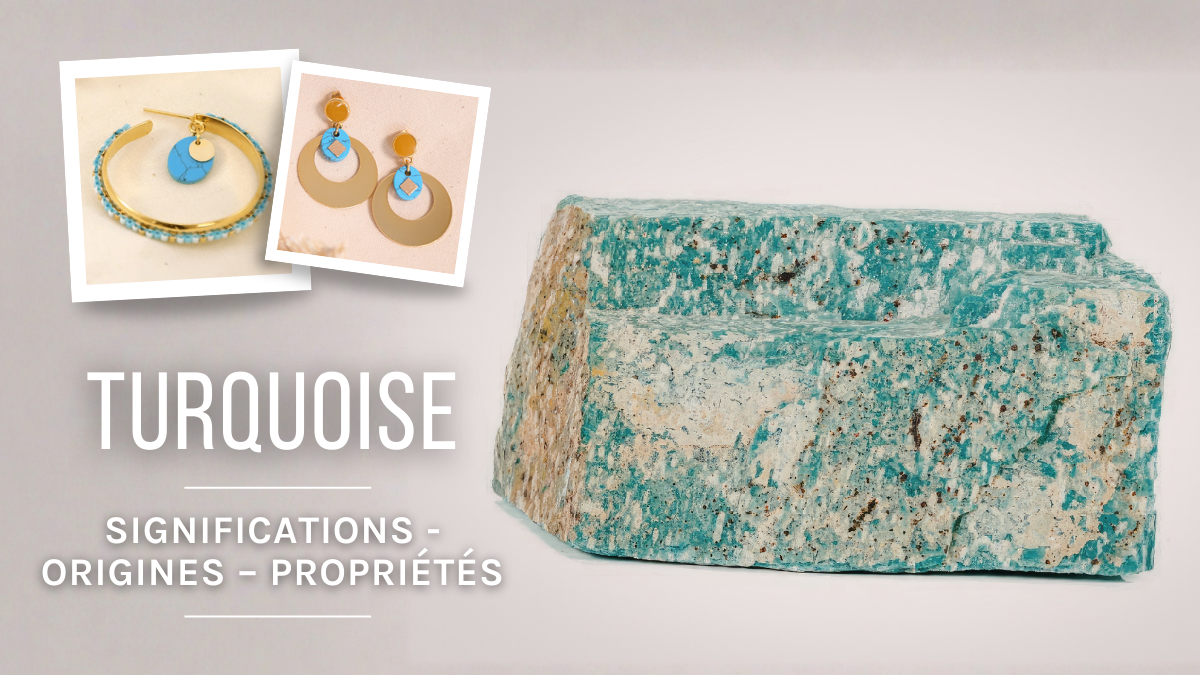
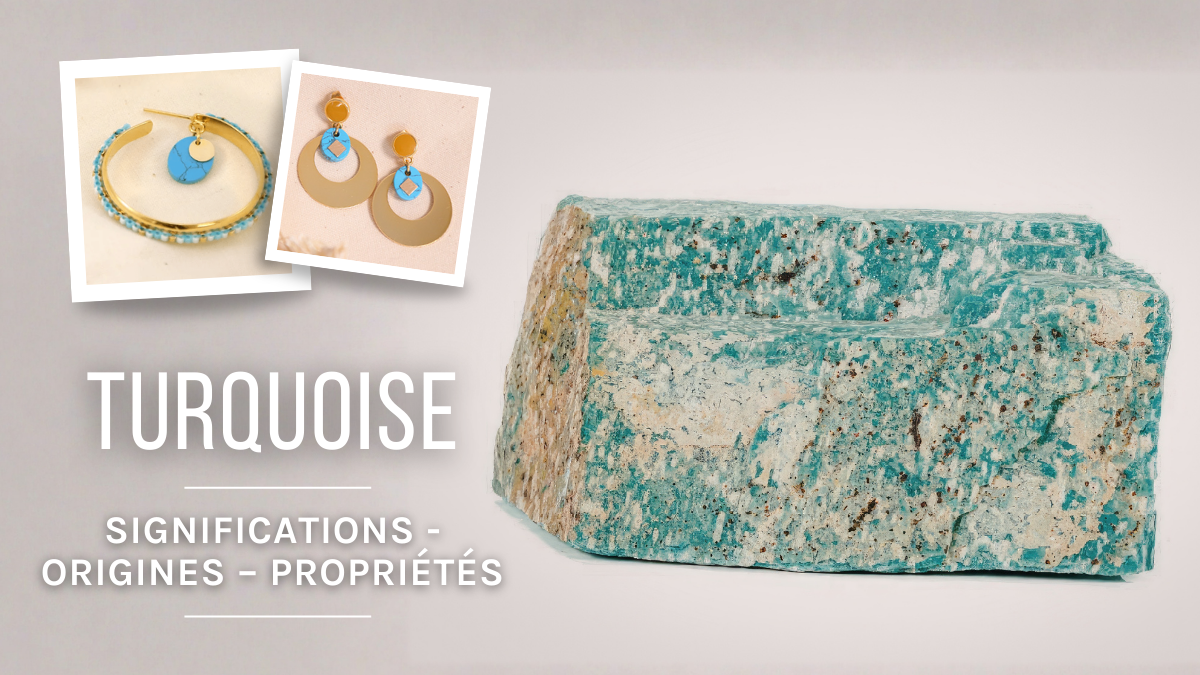
Turquoise, a prized gemstone, is distinguished by its blue or green color, depending on its composition, and is mainly mined in Afghanistan, Iran and the USA. Famous for its use in jewelry, it also evokes symbols of protection and courage in many cultures. For a unique piece of jewelry, explore our selection of turquoise components.
Turquoise is a very popular gemstone that has been used for centuries in the creation of jewelry and decorative items. It is highly prized for its attractive color and natural beauty.
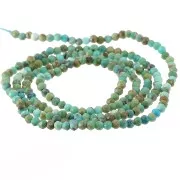
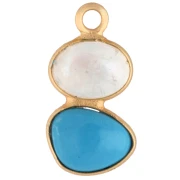
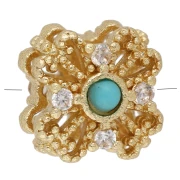
Why not make your own piece of turquoise jewelry? Check out all our turquoise jewelry components to create jewelry with natural stones. Get inspired
The name “turquoise” means “stone from Turkey.” This natural stone owes its name to a misunderstanding. When Venetian merchants introduced it to Europe, Europeans believed it originated in Turkey, when in fact it came from Persia. The Persians called it “Feroza” or “Firuze,” which means “victorious.”
Turquoise is a stone that was already being mined in ancient Egypt for jewelry and decoration. During archaeological excavations, turquoise bracelets were found on the arms of mummies. The oldest was discovered in Queen Zar’s tomb, where it served as a protective amulet. It dates back to more than 6,000 years before Christ.
Pharaoh Tutankhamun’s sarcophagus was set with numerous gemstones, such as lapis lazuli, amethyst, turquoise, and carnelian. His funerary mask also featured turquoise stones.
In Persia, this blue stone was used as currency, but also as a talisman to ward off the evil eye. It also adorned the turbans and rings of dignitaries, who used it as a seal.
The Tibetans and Indians believed in its healing properties and medicinal virtues. It was also a symbol of courage, devotion, and kindness.
For the Aztecs, it was a sacred stone. They used it along with other stones to decorate their ceremonial objects. They believed that turquoise was too powerful and that only the gods were capable of wearing it.
The Apaches believed in its protective power. Turquoise represented the goddess of change, also known as the “turquoise woman.” They believed it could guide hunters and warriors. That is why they attached a turquoise stone to their weapons, believing the stone would ensure they never missed their target.
For the Navajo, turquoise was pieces of the sky that had fallen to earth.
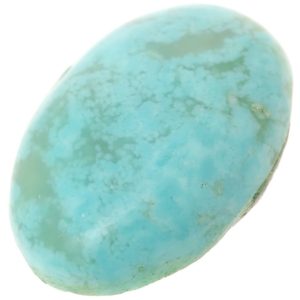

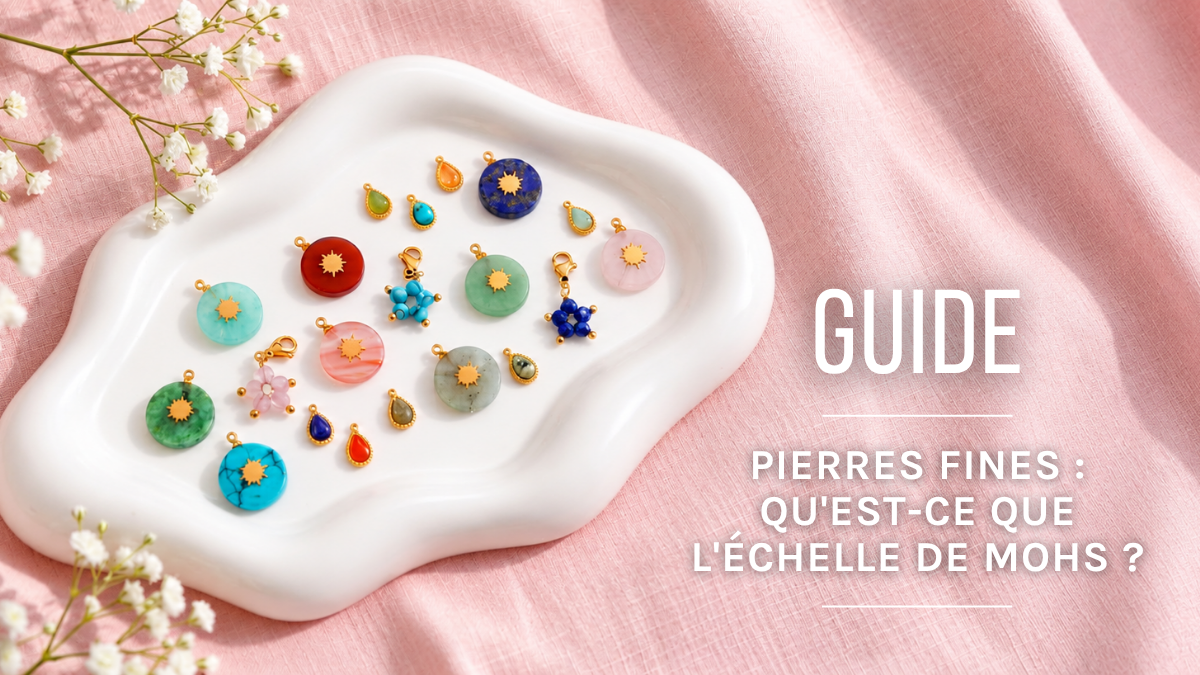
This blue stone has a hardness of 5 to 6 on the Mohs scale and a density of 2.6 to 2.9. Genuine turquoise is a relatively soft stone and can be prone to scratches if not handled with care. It is also sensitive to chemicals and prolonged exposure to direct sunlight.
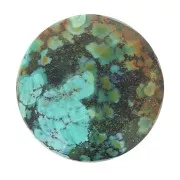
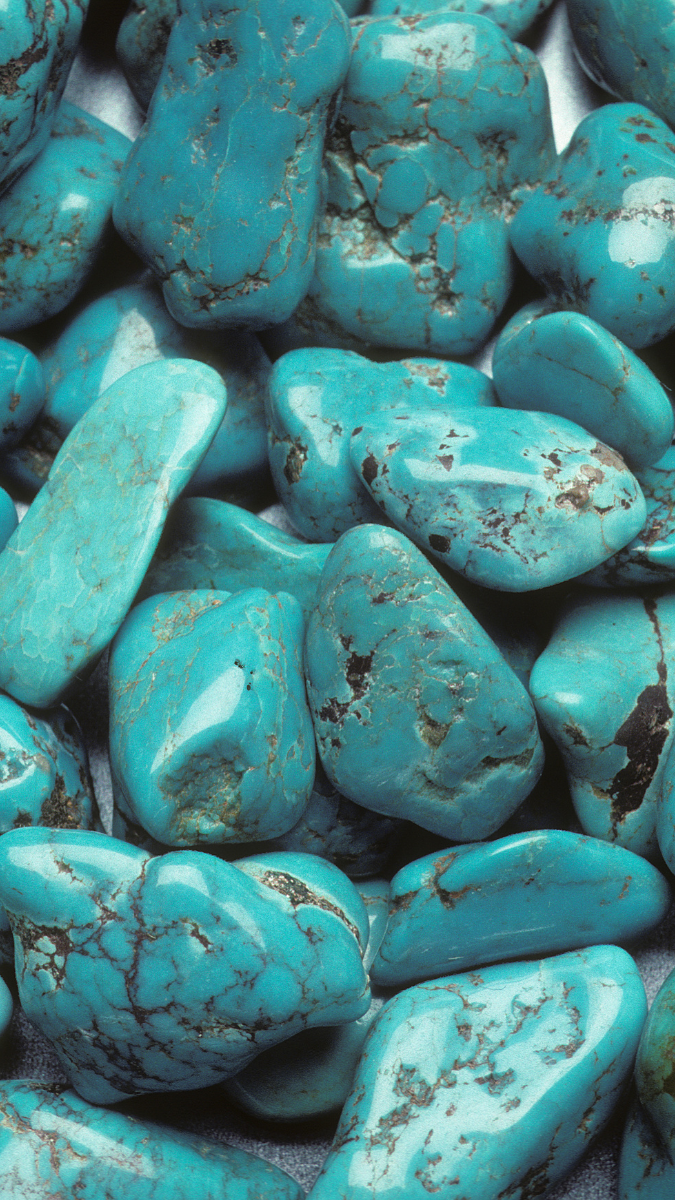
Turquoise blue or turquoise green? Well, both! In fact, the color of turquoise ranges from a bright light blue to a deep green. It all depends on the elements it contains: the bluer it is, the more copper it contains; the greener it is, the more chromium and vanadium it contains. The yellow tint is due to the presence of iron.
The brown and dark veins that wind through it are caused by the presence of other minerals, such as copper and iron, found in the cracks.
The main deposits are found in Afghanistan, Australia, China, the United States, France, Iran, Tibet, Israel, Mexico, and Tanzania.
In crystal healing, natural turquoise is known as a soothing and calming stone. It is said to increase empathy, foster personal growth, and help one let go in order to promote communication with others. It is believed to protect its wearer from negative energy.
Turquoise is associated with the throat chakra. It is said to promote spontaneity and honest, compassionate communication, boost self-confidence, help overcome shyness, and encourage creative expression.
When used on the Third Eye, it is said to enhance meditation.
Please note: Our gemstones are not sold for the purpose of crystal healing. The effects of these stones have not been scientifically proven. Natural stones are in no way a substitute for medical expertise or medical treatment.
To preserve its properties, turquoise must be cleaned and purified to remove impurities and negative energies that have accumulated. There are several rituals for cleansing it: by soaking it in a container of water, burying it in the ground, or using incense smoke.
Once purified, you can recharge it by leaving it overnight in the moonlight. To optimize the process, place it on a cluster of quartz or an amethyst geode.
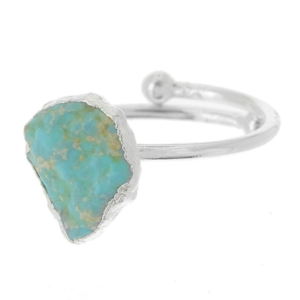
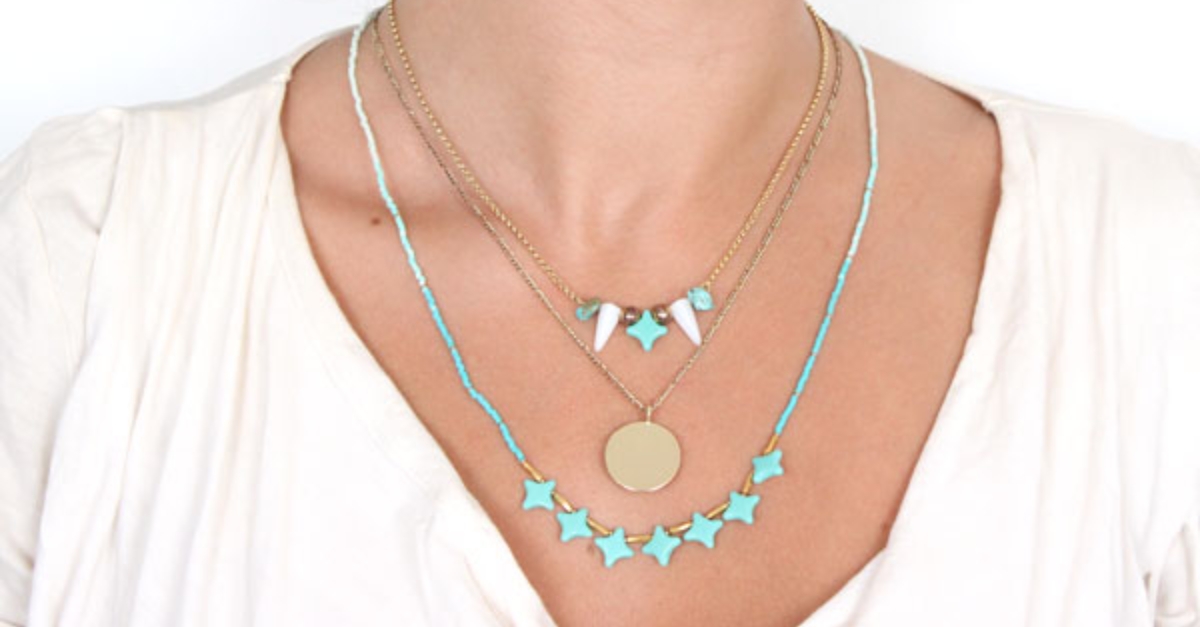
Whether in a ring, bracelet, necklace, or earrings, opt for cool-toned settings made of 925 Sterling Silver or stainless steel. They pair perfectly with the stone’s blue color. But if you’re looking for a piece with a sunny, luminous vibe, pair your turquoise with gold-colored findings made of Gold Filled (laminated gold) or gold-plated metal.
Which stones go well with turquoise? Although crystal healers recommend wearing turquoise on its own, you can pair it with gemstones that have similar energy, such as labradorite, aquamarine, lapis lazuli, or blue agate.

Credits
Perles & Co, Internet & E-Commerce company [01/01/2026] Any reproduction, representation, adaptation, in any form whatsoever, even partial, is prohibited, except for reproduction for private use not intended for collective use, representation in the family circle (art. L 122-5 CPI) and online publishing on condition that the source is mentioned and a link is included to the corresponding page of our site www.perlesandco.com.