| Type of Steel | Advantages | Disadvantages | |
201 stainless steel | - Less expensive than 304 or 316 stainless steel.
- A good alternative for people with nickel allergies.
- Easy to clean.
| - Lower corrosion resistance because it contains less chromium.
- Contains up to 7.5% manganese, which gives it a darker appearance.
- It is hard and therefore more difficult to work with.
- It tends to rust under certain conditions.
|  |
304 stainless steel | - The most common type of stainless steel.
- Heat-resistant.
- Low manganese and carbon content. It has a carbon content of 0.08%.
- It contains between 16% and 24% chromium and up to 35% nickel.
- Easy to clean.
- It contains more chromium than 316 steel.
- Very versatile.
- Resistant to sweat and chemicals found in cosmetics and perfumes.
| - It is more susceptible to corrosion from chlorides or saline environments (such as saltwater) than 316 stainless steel.
|  |
304L stainless steel | - "Low Carbon" version of 304 stainless steel.
- Similar to 304 stainless steel, but with a lower carbon content (0.03% for 304L stainless steel versus 0.08% for 304 stainless steel).
- Better resistance to intergranular corrosion after welding.
- Resistant to sweat and chemicals found in cosmetics and perfumes.
- Easy to clean.
| - Like 304 stainless steel, it is less resistant to highly corrosive environments than 316 stainless steel.
|  |
316 stainless steel | - Contains 2 to 3% molybdenum (a transition metal), which increases resistance to corrosion in chlorinated, iodinated, and polluted atmospheres.
- The second most common type of stainless steel.
- Stronger.
- Very good resistance to high temperatures.
Greater heat resistance, such as for hot welding. - Easy to clean.
- It is also known as marine-grade stainless steel. It resists corrosion caused by salt, seawater, chlorinated atmospheres, and other corrosive conditions typical of marine environments.
- Ideal if you want to swim in the pool or the ocean while wearing your jewelry.
- Hypoallergenic.
| - More expensive than 201 steel or 304 stainless steel.
- It contains more nickel than 304 stainless steel.
|  |
316L Stainless Steel | - "Low Carbon" version of 316 steel, offering better strength after welding.
- Similar to 316 steel, but with a lower carbon content (0.03% for 316L stainless steel versus 0.08% for 316 stainless steel).
- 316L stainless steel (the "L" stands for "Low Carbon") can be used for piercings after they have healed.
316 LVM steel (LVM stands for “Low Carbon Vacuum Melt”) is considered “medical grade.” It is the only type authorized for contact with a wound, as it contains less than 0.05% nickel. Hence the term “surgical steel.” It is therefore the only type authorized for piercings. - Hypoallergenic.
- It is also called marine-grade stainless steel. It resists corrosion caused by salt, seawater, chlorinated atmospheres, and other corrosive conditions typical of marine environments.
- Ideal if you want to swim in a pool or the ocean while wearing your jewelry.
| - Like 316 stainless steel, it is more expensive than 201 and 304 stainless steel.
|  |
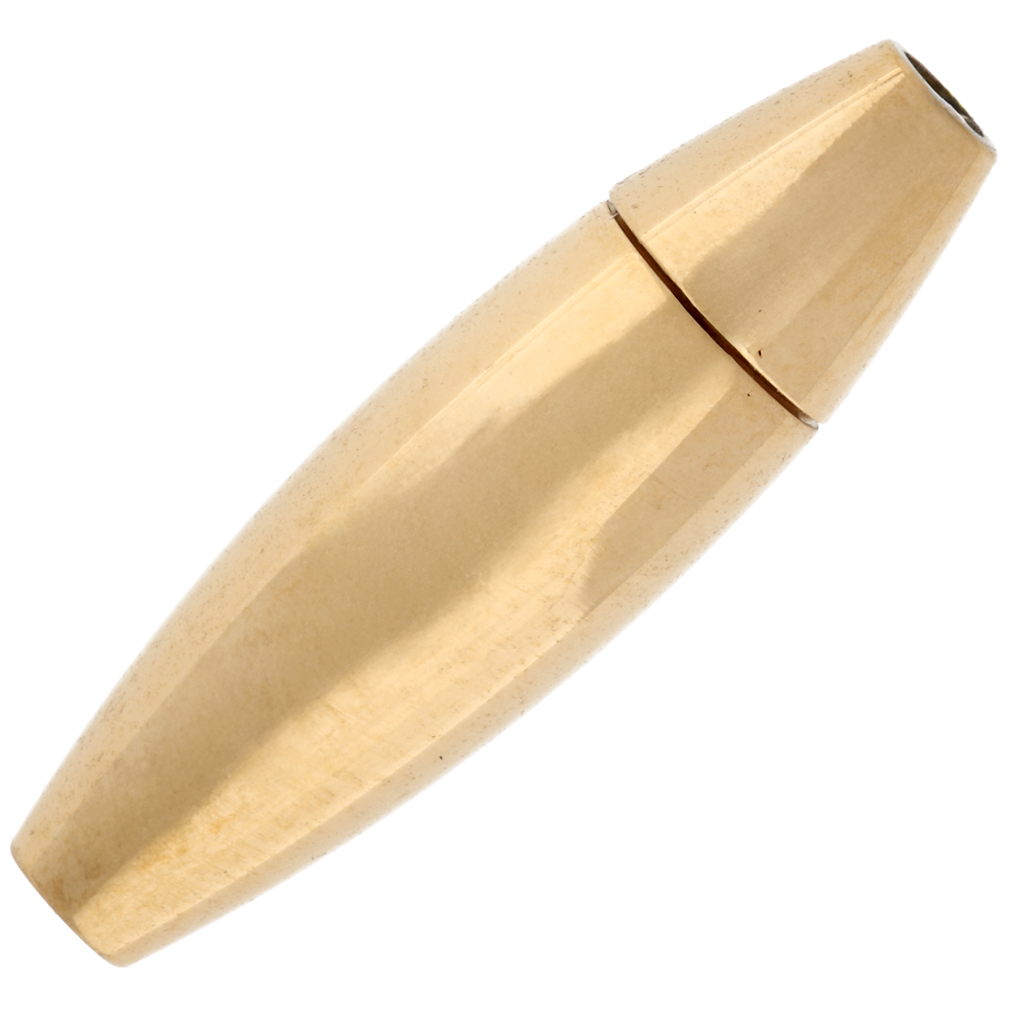
316F Stainless Steel | - Easy to machine (drilling, turning, bar turning), hence the letter F, which stands for Free Machining: a machinable version of 316, less common in finished jewelry but standard for small technical parts requiring bar turning or machining.
- Excellent corrosion resistance, similar to that of standard 316.
- Contains molybdenum, which makes it more resistant to moisture, sweat, saltwater, and certain chemicals than 304 stainless steel.
- Hypoallergenic for most users, although no material can guarantee a zero risk of allergy.
| - Corrosion resistance is slightly lower than that of 316L due to the added sulfur, which facilitates machining.
- Less common in jewelry
|  |
430 Stainless Steel | - It contains 18% chromium but no nickel, making it hypoallergenic.
- Easy to maintain.
| - Less corrosion-resistant than 300-series stainless steels.
- Less strong and more prone to deformation.
- Not suitable for use in marine or highly corrosive environments.
|  |
303 stainless steel | - Appearance similar to 304.
- Easy to machine (drilling, threading, fine cutting).
- Contains sulfur.
| - Lower corrosion resistance due to the presence of sulfur in its composition
- Not well suited for frequent use in contact with water
|  |
303L Stainless Steel | - Machinability equivalent to that of 303.
- Contains sulfur.
- "Low Carbon" version: better corrosion resistance than 303.
- Better balance between machinability and long-term durability.
| |  |