Why choose stainless steel?
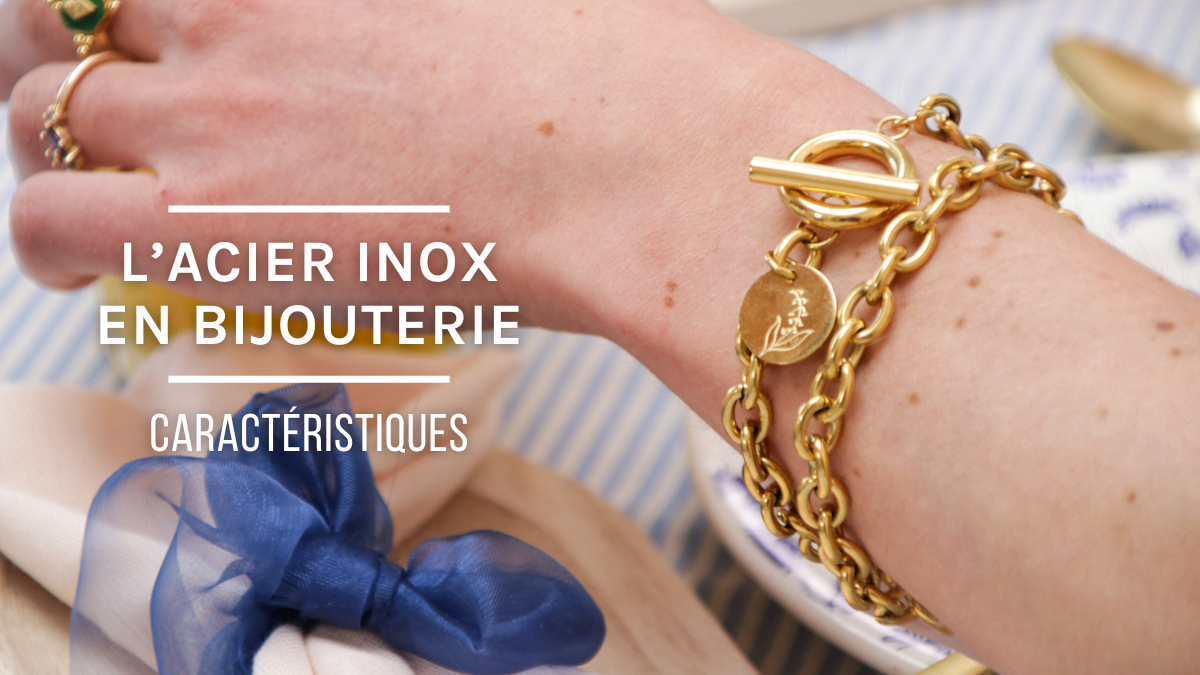
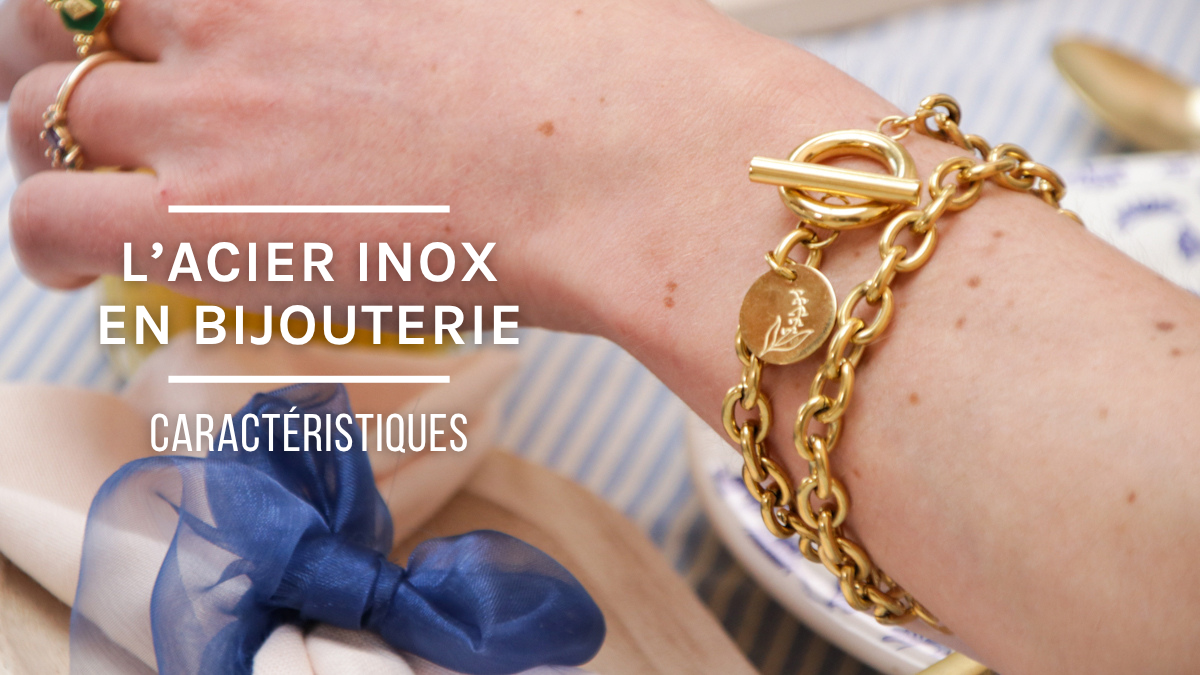
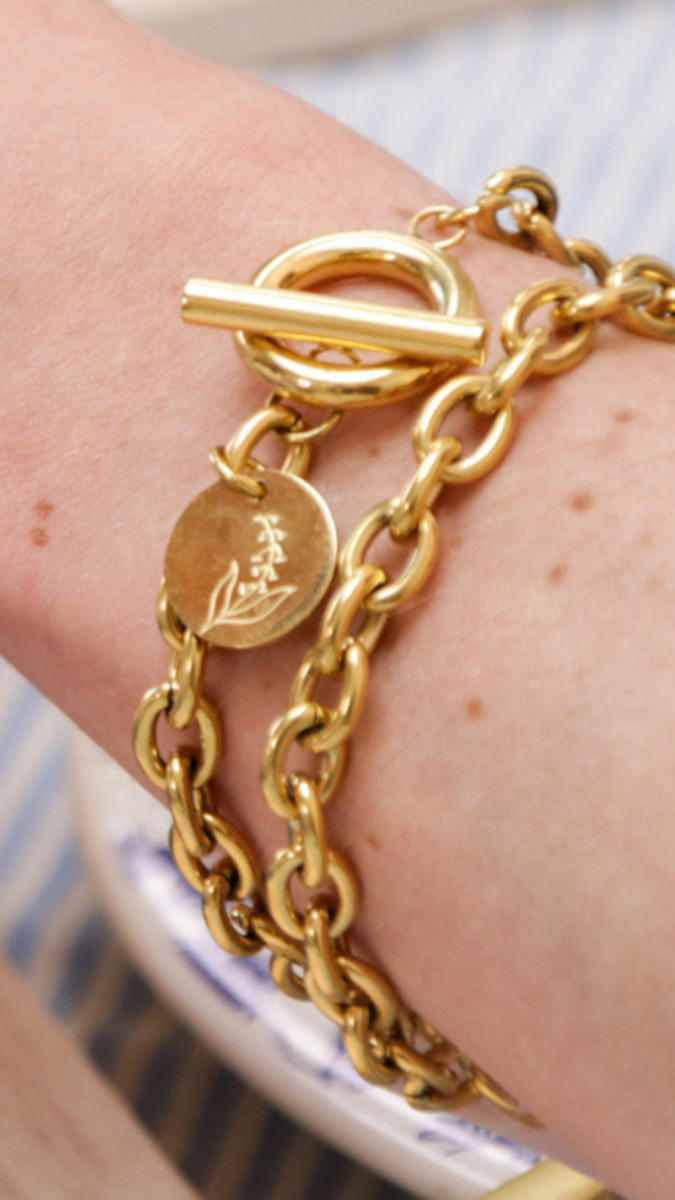
Many of the metal accessories sold on the Perles & Co. website are made of stainless steel.
It’s always the same concerns and questions: Does this item contain nickel? Is stainless steel durable over time? On our product pages, the label “nickel-free” indicates that the stainless steel product complies with REACH regulations. Although it contains nickel due to its composition, no nickel is released.
Here’s a quick rundown to keep you in the loop ;-)
1. What is stainless steel?
Stainless steel, also known as inox, is a metal widely used in all areas of domestic and industrial life due to its excellent corrosion-resistant properties.
It’s an alloy of iron, chromium, nickel, and carbon—all necessary to ensure the formation of a self-regenerating surface layer that makes it rust-resistant. There are several types of stainless steel: 201, 304, 316L, etc. All the differences are explained in our comparison chart.
2. What is the composition of stainless steel?
- Iron makes up more than 50%.
- Chromium and carbon. According to the European standard EN 10088-13, steel is classified as stainless steel if it contains at least 10.5% by mass of chromium and no more than 1.2% carbon, which prevents the formation of carbides that are detrimental to the material.
- Nickel.It homogenizes the alloy. It provides flexibility, malleability, and resilience (shape memory). Regulations are very strict for jewelry. The European Nickel Directive (94/27/EC, as last amended on September 27, 2004) requires that the nickel release rate be 0.5 micrograms per cm² (of the item’s surface area) per week for items in direct and prolonged contact with the skin. This migration limit is lowered to 0.2 µg/cm²/week for “piercings.”
This is why most nickel-containing alloys have been phased out. However, some are still permitted, such as stainless steels.
On our product sheets, you may have seen the notation “Nickel release: none.” This indicates that the stainless steel product complies with REACH regulations. Although it contains nickel due to its composition, no nickel is released. - Other elements:
- Manganese is a substitute for nickel. Certain series of stainless steel alloys have been developed to address uncertainties in the supply of nickel.
- Molybdenum and copper improve resistance in most corrosive environments, particularly acidic ones (such as sweat), as well as in phosphoric and sulfur-containing solutions.
- Tungsten improves the high-temperature performance of stainless steels.
- Titanium prevents changes in the metallurgical structure during hot working, particularly during welding, thereby preserving the steel’s stainless properties by preventing chromium depletion.
- Niobium has a much higher melting point than titanium and exhibits similar properties.
- Silicon also plays a role in resistance to oxidation.
3. What are the advantages of stainless steel?
Stainless steel offers several advantages:
- It is hot-workable and can be engraved (but avoid stamping it to prevent damaging the heads of your stamping tools).
- It is hypoallergenic. It does not cause skin reactions except in very rare cases.
- It is eco-friendly. Its environmental impact is low, thanks to responsible use, sustainable design, and effective recycling.
- It is virtually indestructible and does not warp.
- It requires little maintenance.
- It is infinitely recyclable.
4. Why does stainless steel rust?
In some cases, steel can oxidize (for example, at very high temperatures: over 800°C). Under normal conditions of use, the chromium oxide in stainless steel forms a transparent oxide film on the metal. This film acts as a barrier against anything that could cause oxidation (even if the metal is damaged, the protective barrier reforms).
Stainless steel with these details will not rust or turn black when exposed to everyday elements such as water, household cleaners, cosmetics, sweat, etc.
5. Can stainless steel be worn in water?
It all depends on the quality of your stainless steel jewelry! You can shower or take a bath while wearing your stainless steel jewelry without it being damaged. However, with certain types of stainless steel, it’s not recommended to spend extended periods in a swimming pool, as chlorine is very corrosive. It removes the invisible protective layer created by the chromium that protects the jewelry.
It’s also best to remove your jewelry before swimming in the sea or the ocean. Saltwater could cause the jewelry to tarnish and rust.
If you’re looking for stainless steel that’s resistant to chlorine and seawater, opt for marine-grade stainless steel: 316 and 316L stainless steel.