Average Grades
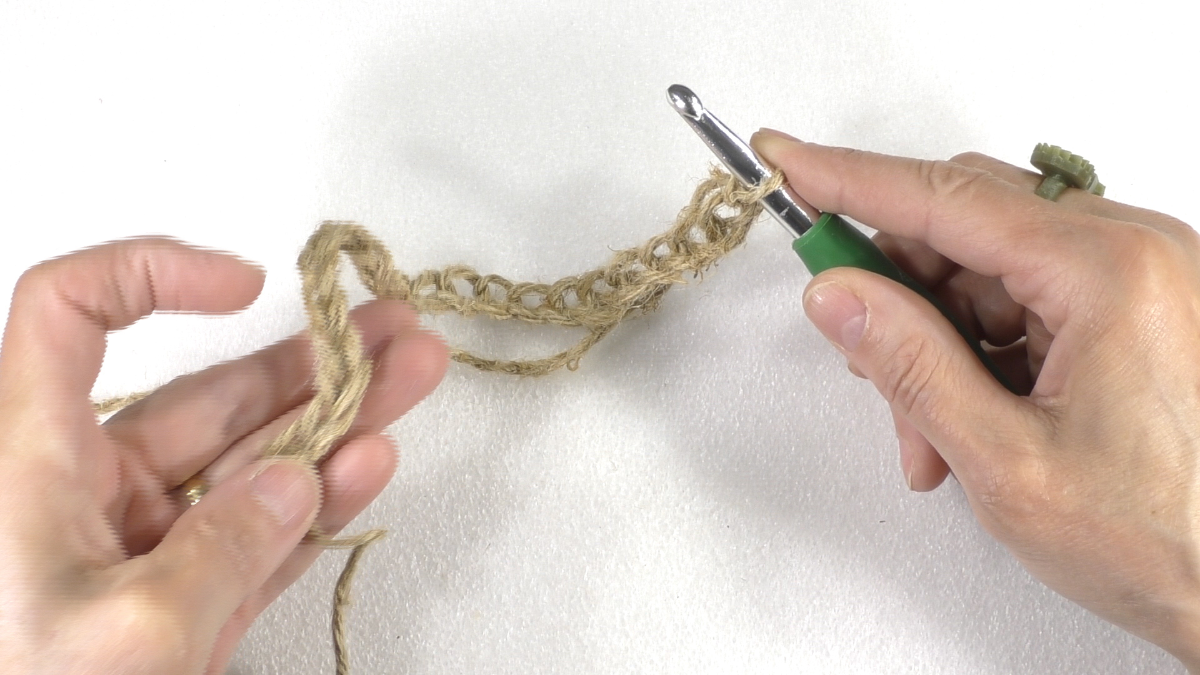
Take a #7 hook and the jute twine to make the base of the bag.
Make a noose, place it on your hook and make a 23 stitch chain.

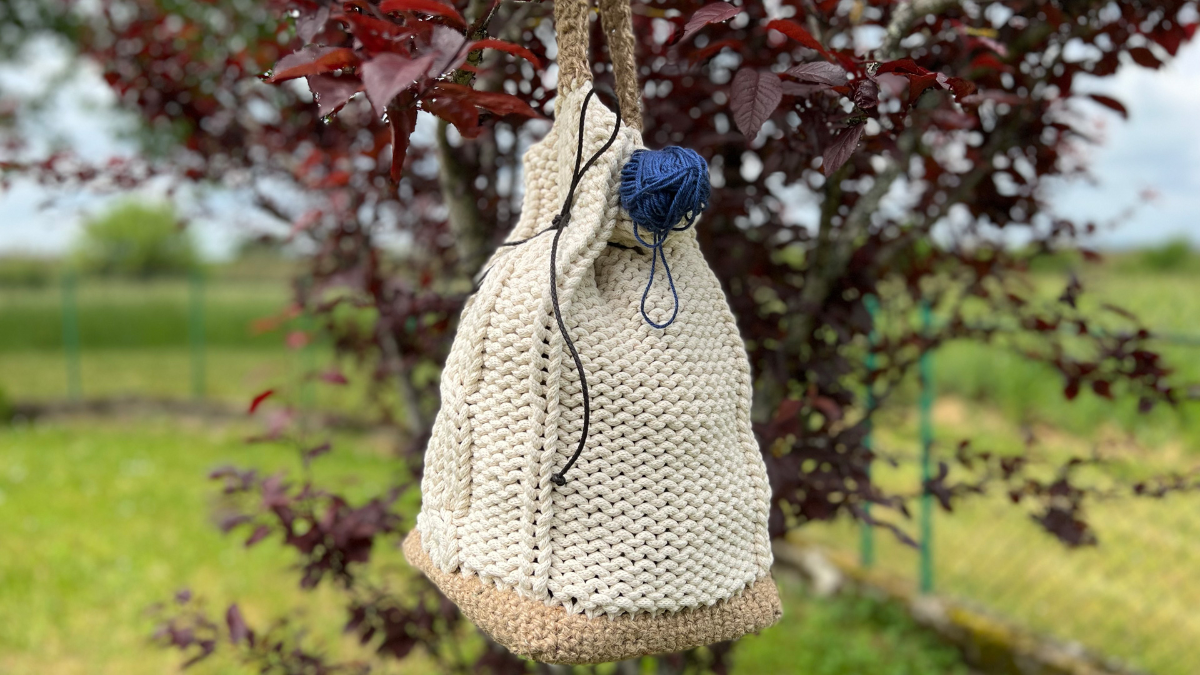
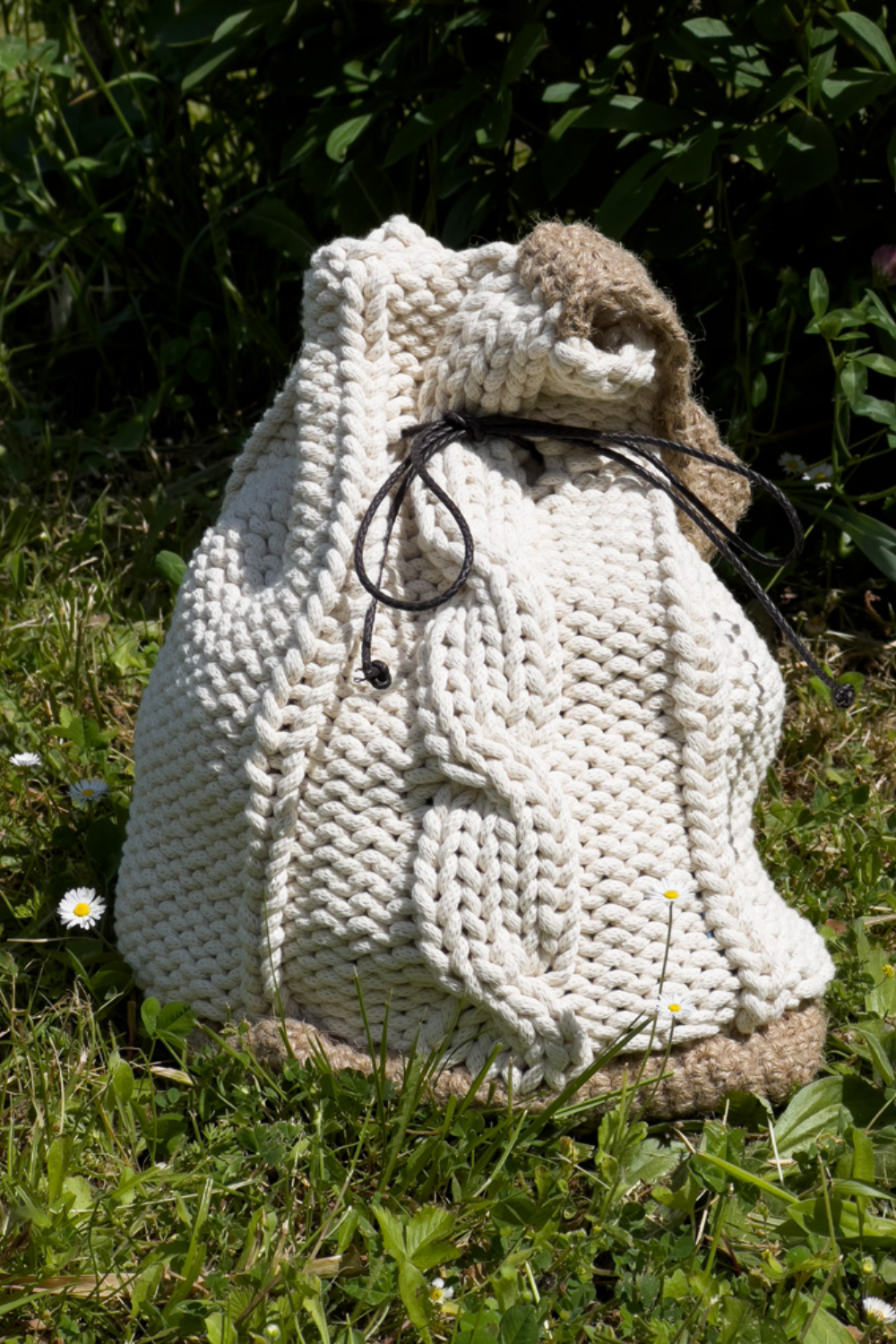
The base of the bag is made of crochet and string. Made of tightly woven mesh, it has a square shape for a stable base. The twine backing gives the bag strength and durability. The body of the bag is needle knitted with a coarse recycled cotton yarn. It can be knitted easily and quickly with n° 12 needles in reverse jersey and is decorated with 2 twists, one on each side.
This bag closes like a purse, with a knotted tie passed through a row of holes.
As a book bag or shopping bag, it will accompany you everywhere.
The video tutorial accompanies you through all the steps, explains the points of attention and gives you some tips for a successful realization
Take a #7 hook and the jute twine to make the base of the bag.
Make a noose, place it on your hook and make a 23 stitch chain.
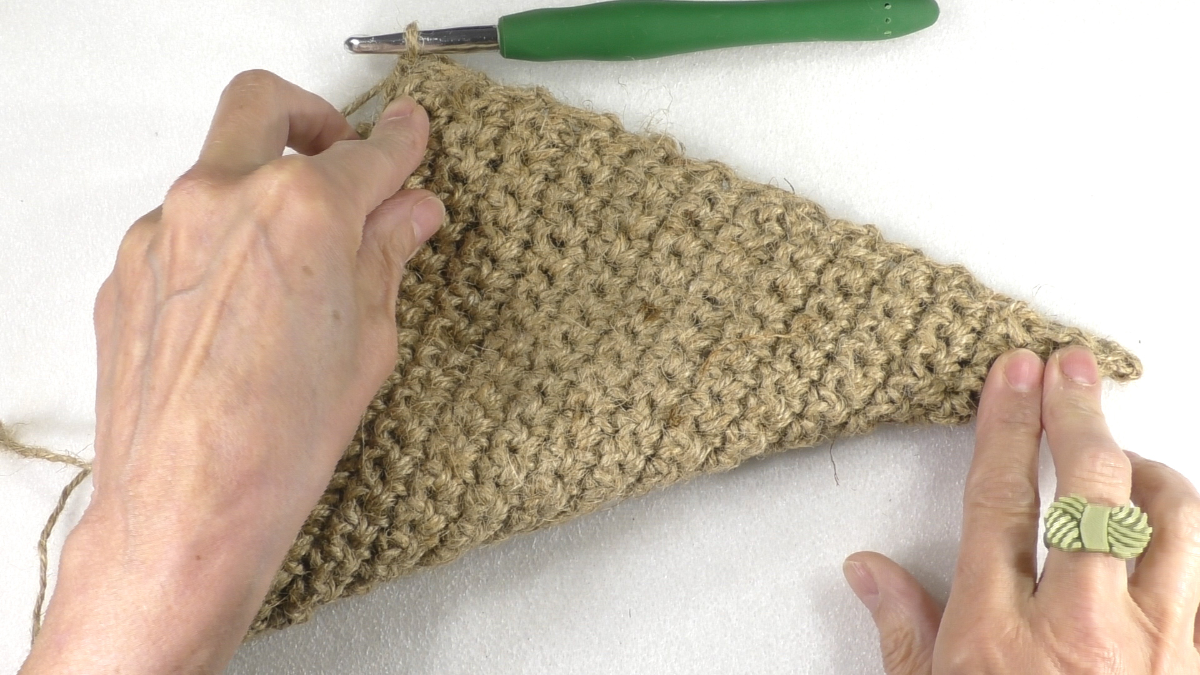
Make a square with tightly woven stitches.
Each row is 23 stitches long and the height of the square must correspond to the width.
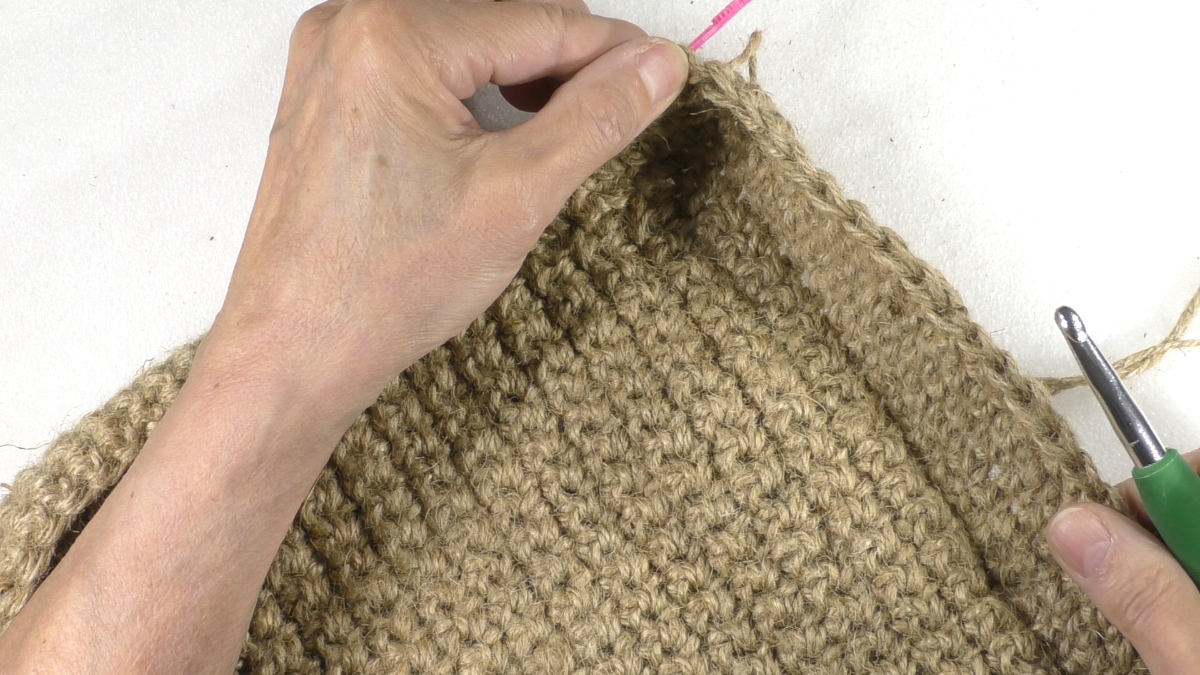
To make a string buttress at the base of the bag, crochet 5 rounds around the square.
Make 23 tight stitches on each side, placing the last of these stitches in the corner of the square. Stitch under the front strands of the edges.
For the first side, replace the first stitch with an air stitch and place a marker to indicate the beginning of the round.
Close the first round with a cast on stitch from this first cast off stitch. Your round is 92 stitches long.
After 5 rounds, cut the string and pull it out of the stitch to stop your work.
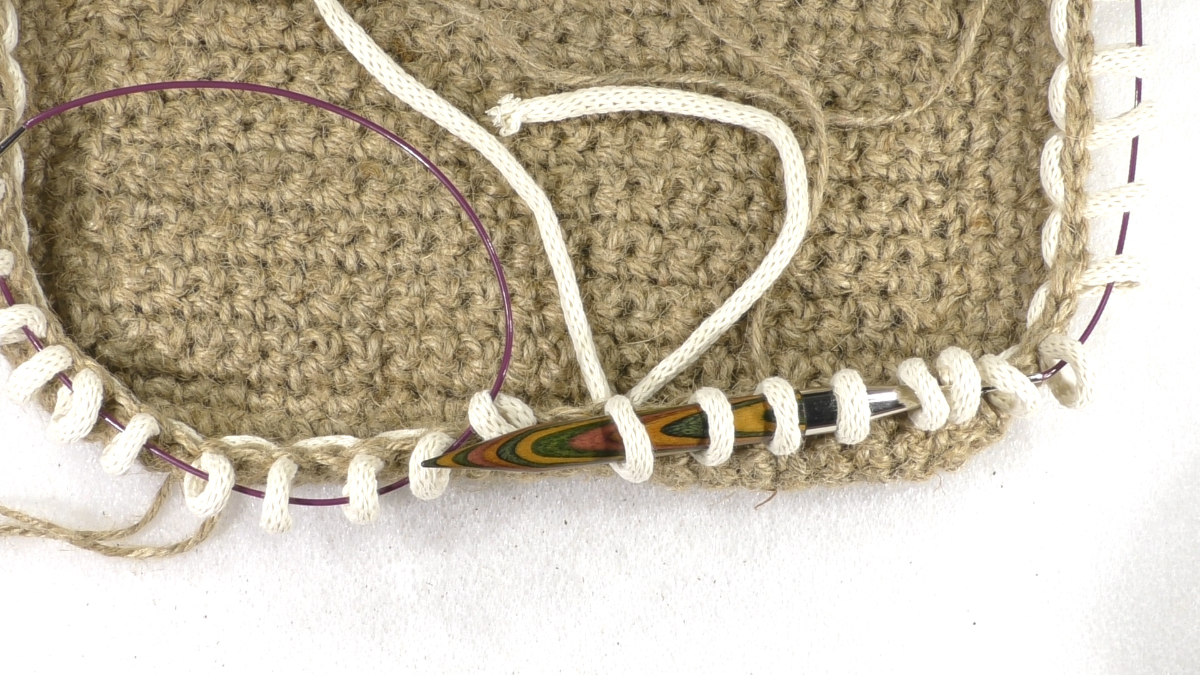
Take a spool of Nova Vita recycled cotton cord and a #12 circular needle.
Pick up 52 stitches all around the twine base, placing one stitch at each corner and starting in the middle of one side. Each side has 12 stitches between the corner stitches.
Use the hook to stitch through the base and bring up a loop of cord, which you then place on the needle.
After picking up the last stitch, place a marker to identify the beginning of the rows.
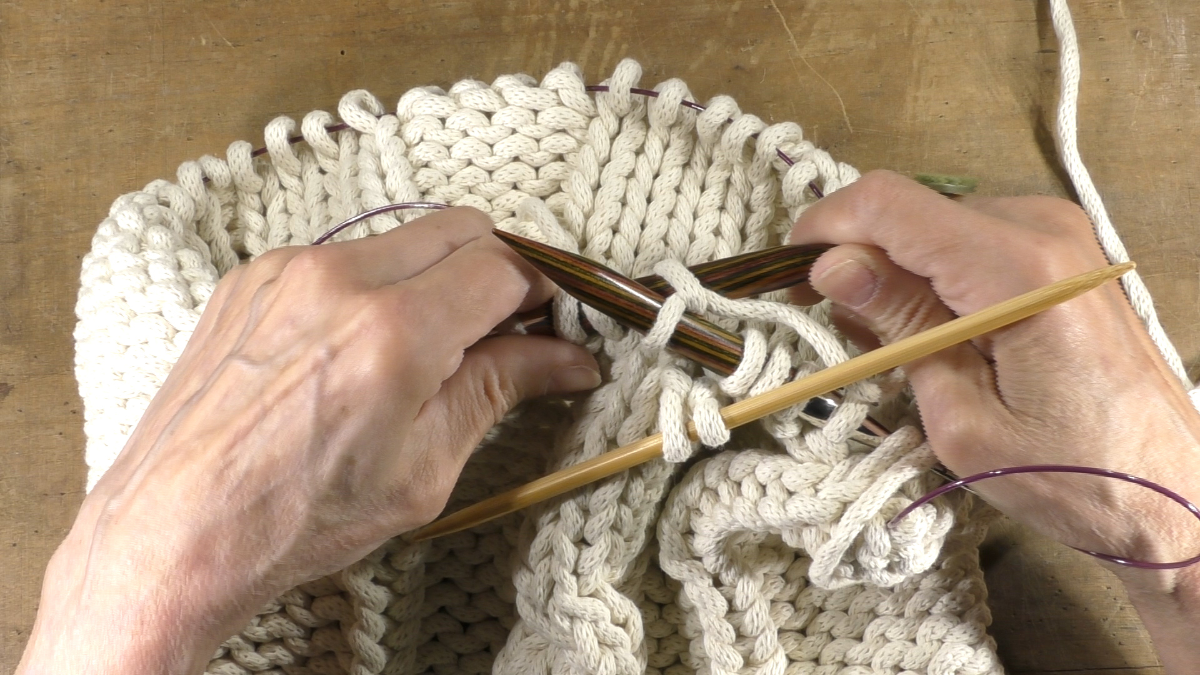
Knit the body of the bag. For each row make :
* On this part you will make a twist. The twist is made by crossing 2 stitches to the left over 2 stitches. Take a twisting needle or an auxiliary needle with a double point, put the first 2 stitches on this needle and place it in front of the work. Knit the next 2 stitches right side up, then knit the 2 stitches on the auxiliary needle right side up. The auxiliary needle can be thinner.
Make a first crossing after 4 rows and then every 8 rows.
Make 3 twisting crossings, then another 4 rows.
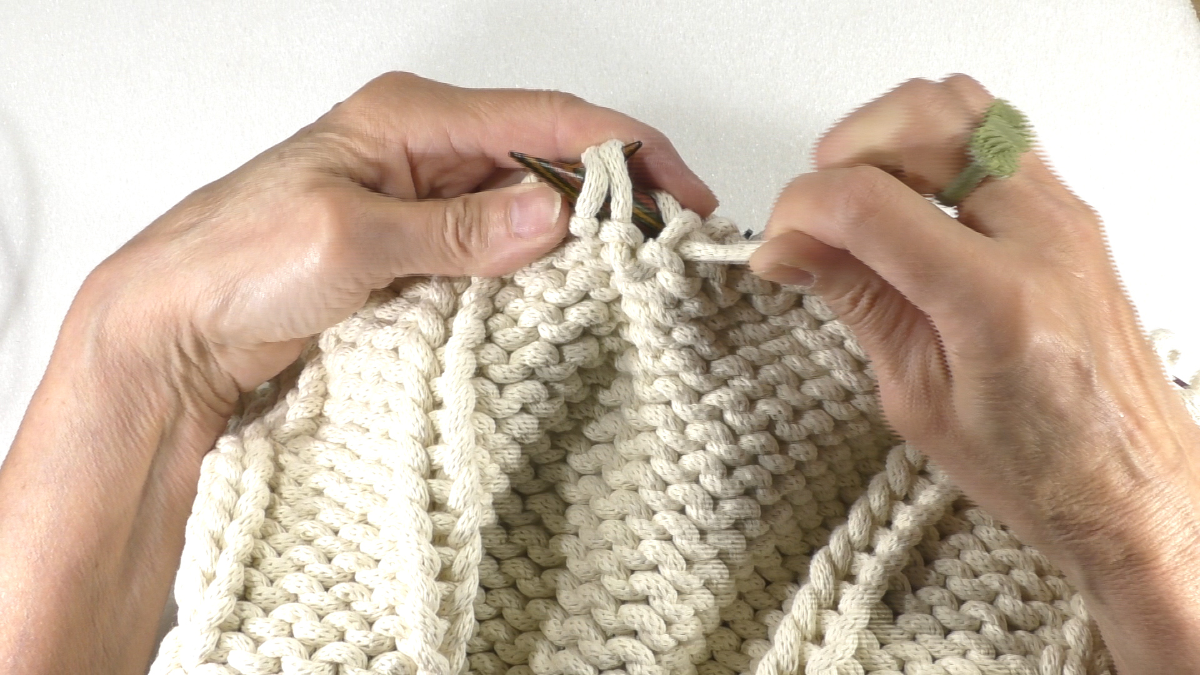
Make a row with holes. Divide 2 holes per side, for a total of 8 holes.
For each hole, knit 2 stitches together purl, cast on and knit the next stitch purl.
In the next row you will knit all of these stitches purl and a hole will form at that location.
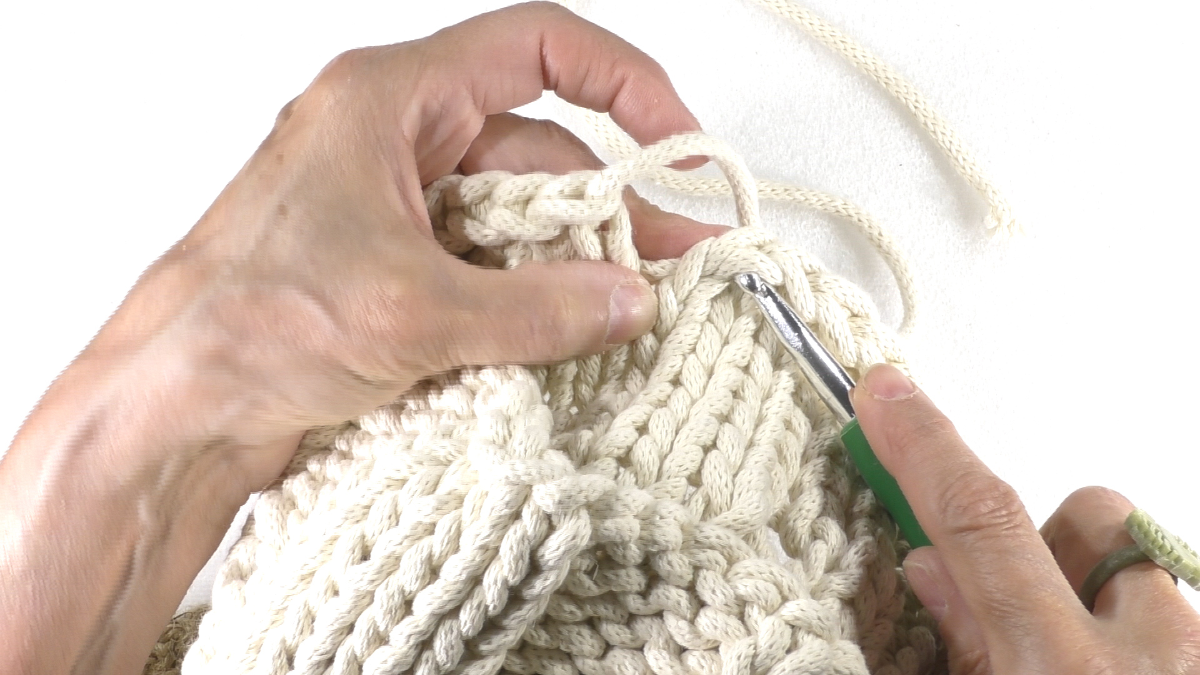
Make 6 rows over the holes and then stop your work by folding down the stitches in a final finishing row.
Knit each stitch as it comes up and as soon as you have 2 stitches left, fold over one.
At the end of the ending row, erase the break by using your hook to reform a chain stitch identical to its neighbors.
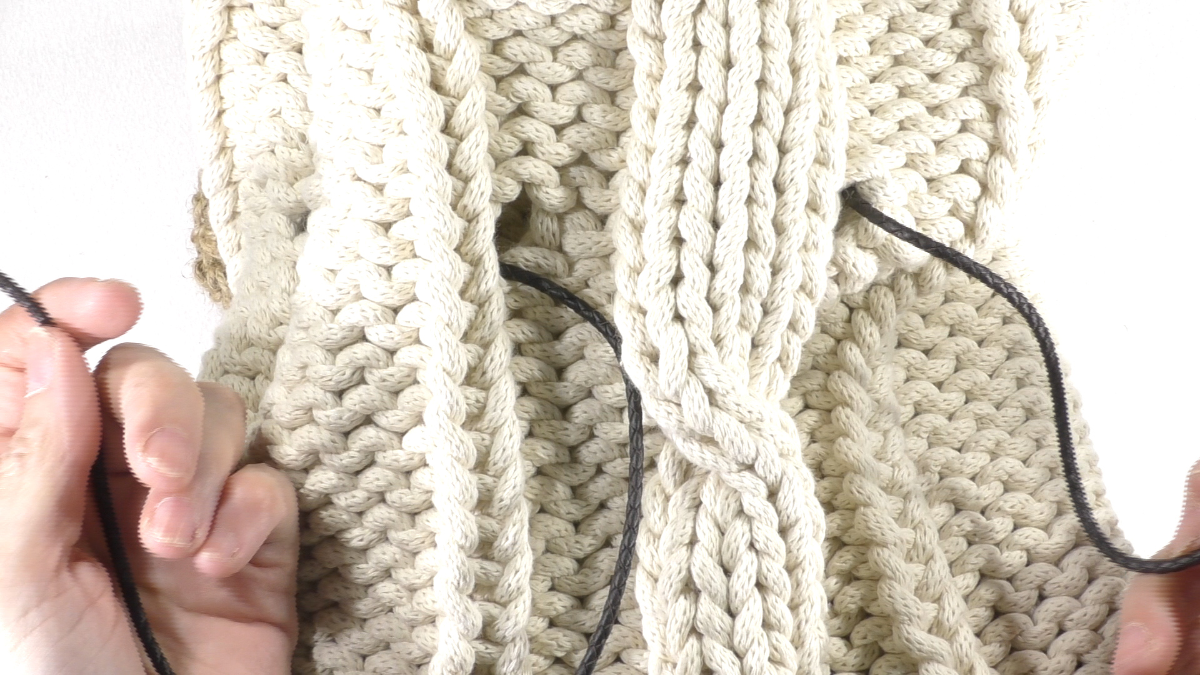
Put the leather lace through the holes. It will close the bag like a purse.
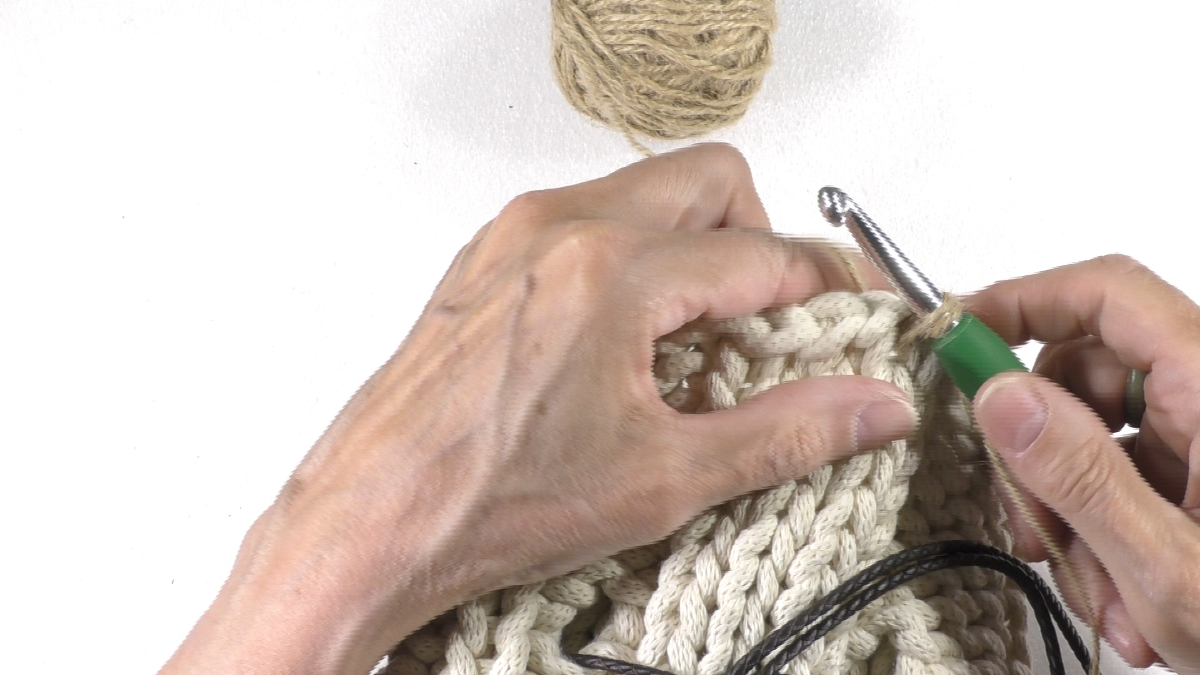
Use the remaining twine and hook #7 to make a loop.
Make 6 tight stitches centered over the twist.
Since the tight stitches are smaller than the stitches knitted for the body of the bag, make a tight stitch between each leg of the right side stitches.
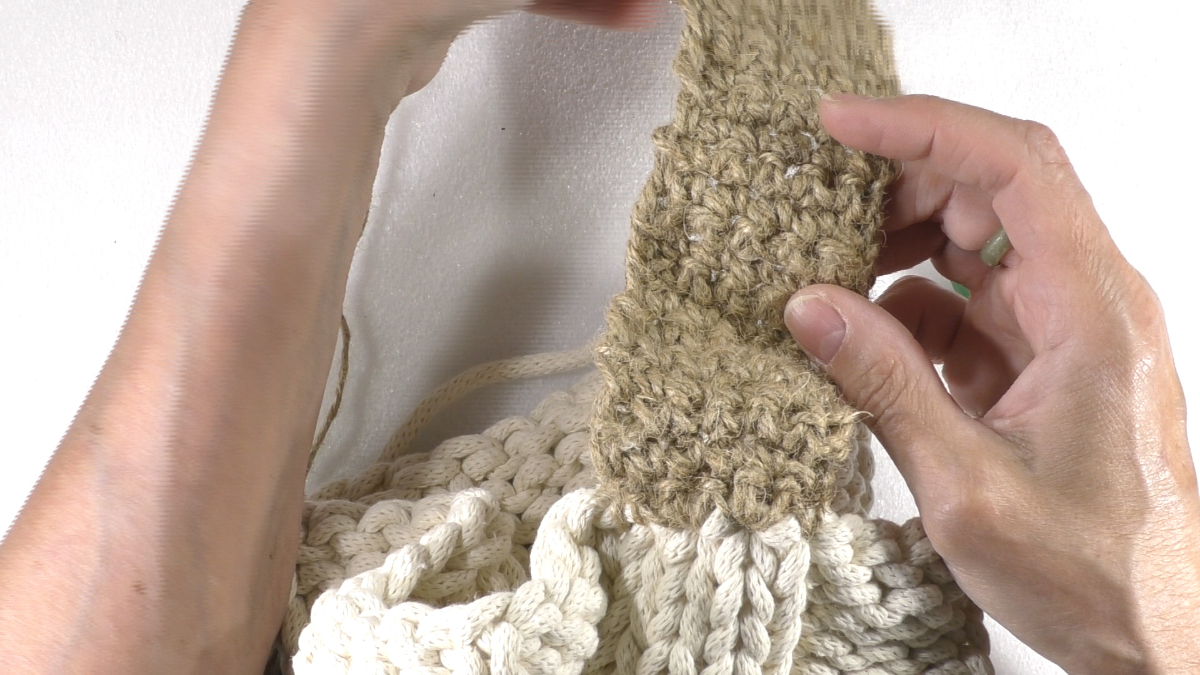
Make the loop by making rows of 6 stitches close together.
The loop is finished when you reach the end of the last ball of string. Keep a small length to attach the end to the opposite edge of the bag. The loop is about 40 cm long.
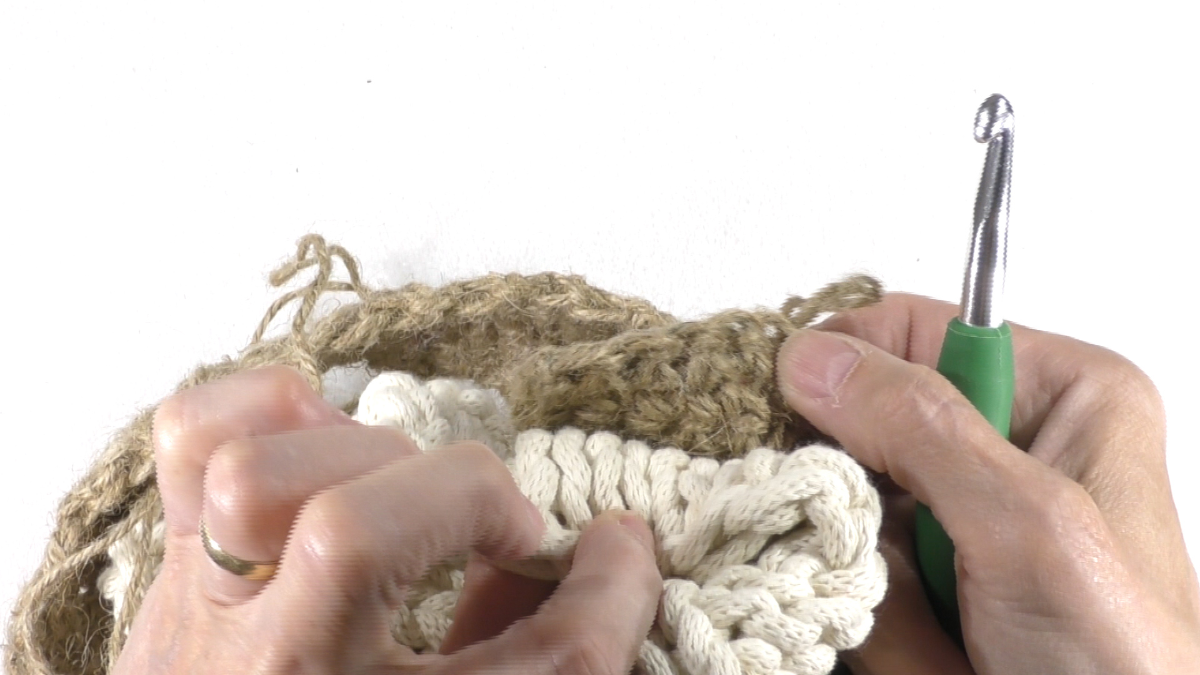
Attach the end of the loop over the other twist.
Place the 2 parts right sides together without twisting the handle. Stitch into the bag and then into the first stitch of the loop and make a tight stitch. Continue by stitching into the next stitches and make tight stitches. Since the bag stitches are larger than the handle stitches, stitch twice in the same bag stitch.
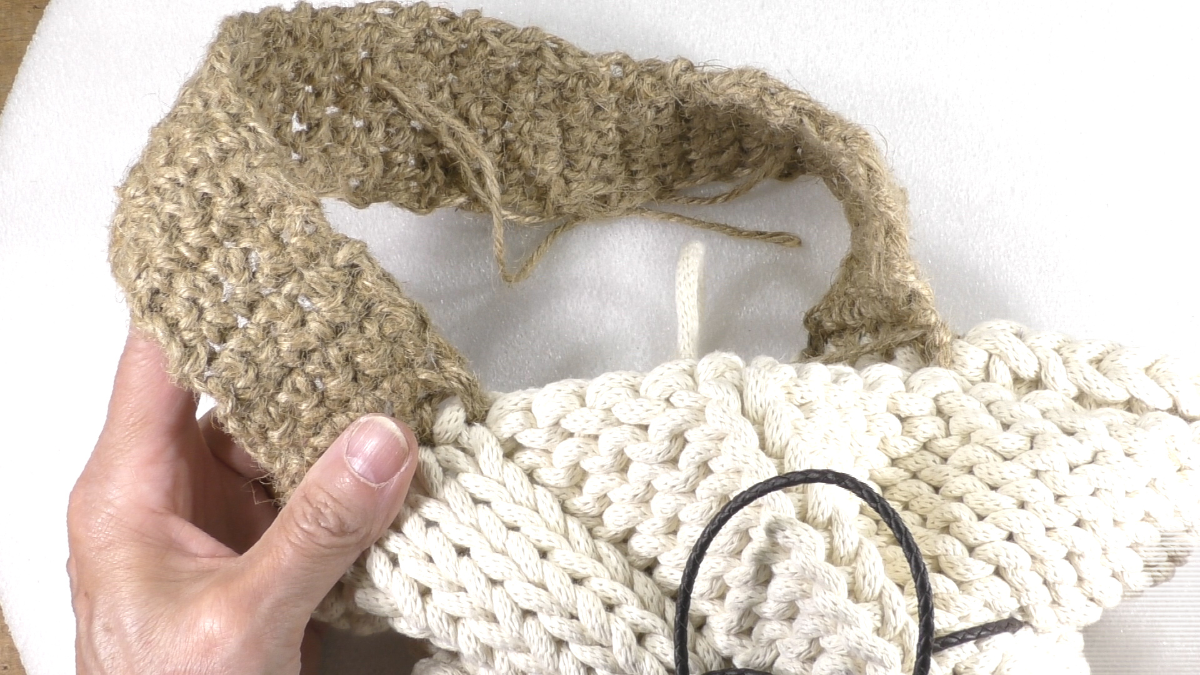
Pull in all the threads. If your wool needle is too thin for the cord, you can use your hook.






You have a question about this tutorial? Ask it to our team and the people who have already tested it. The Perles & Co community is here to help you!
Credits
Perles & Co, Internet & E-Commerce company [14/05/2022] Any reproduction, representation, adaptation, in any form whatsoever, even partial, is prohibited, except for reproduction for private use not intended for collective use, representation in the family circle (art. L 122-5 CPI) and online publishing on condition that the source is mentioned and a link is included to the corresponding page of our site www.perlesandco.com.

