How to recognize gold plating?
When you're buying jewelry components, you often read Gold finish ,Gold plated or Fine gold plated, but you don't know enough about the differences to be able to choose. We've decided to create this fact sheet to take a closer look at each of these terms, so that you can choose the components best suited to your needs.
For those of you who swear by gold, it's time to be relentless about finishes!
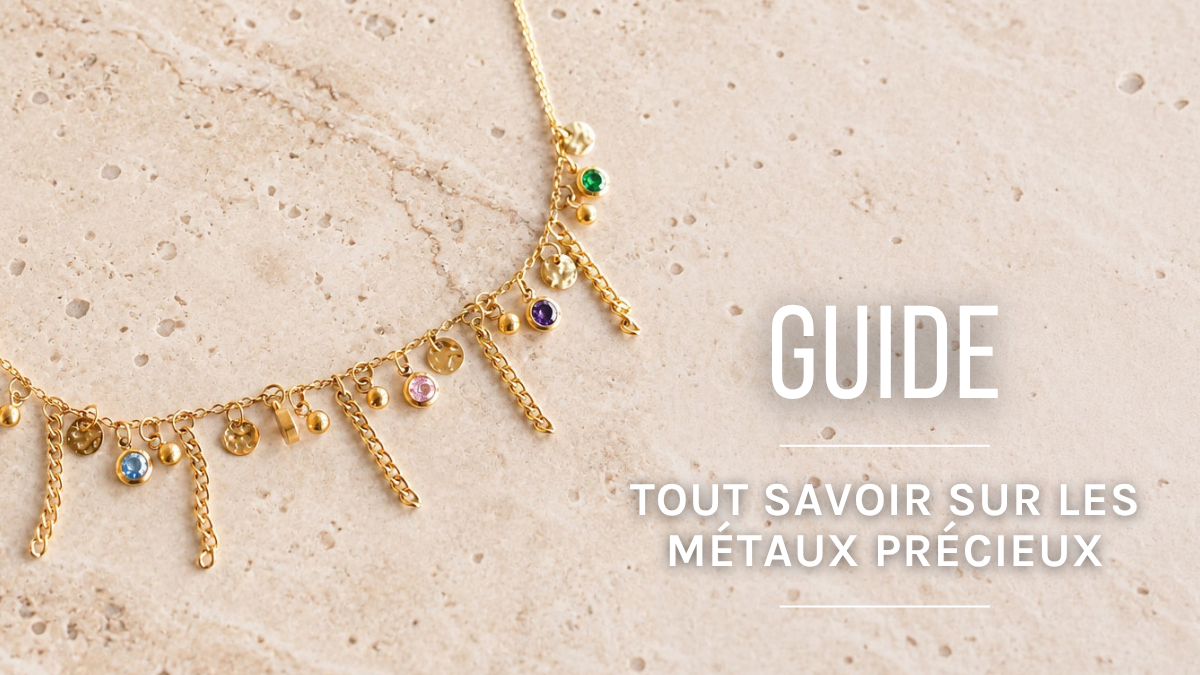
Gold is a precious metal. As for the other denominations (Gold plated, Fine gold plated 24K or Gold plated), these are finishes. In other words, a layer of gold or gilding, of varying thickness, is applied to a base metal.

What is gold-plated jewelry?
Gold plating is widely used in jewelry making, but the term is often misused.
It's an alloy of base metals, usually brass, coated with gold (between 14 and 18 carats) using an electrical or chemical process, on a layer at least 3 microns thick.
Gold-plated 925 Sterling Silver is also available.
Gold plating is indeed subject to legislation! To determine the quality of gold-plated jewelry, we look at the number of microns used (thickness of gold applied).
In fact, French law requires a plating thickness of 3 microns of gold to qualify as gold-plated.
A hallmark is not mandatory on gold-plated jewelry, but if one is applied, it will be square.
How do I clean gold-plated jewelry?
Gold-plated jewelry is more fragile than pure gold, so it must be cleaned with care and delicacy.
- A mixture of equal parts ammonia and water will be very effective, without being corrosive. Use a soft brush to clean all interstices, rinse with water and dry with a chamois cloth.
- The breadcrumbs will help extract dirt and shine your jewel.
Find all our gold-plated primers and components for your most beautiful jewelry.
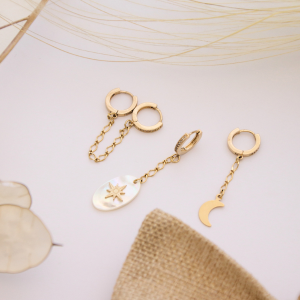

What is Fine gold plated 24 K?
Fine gold plated jewelry is covered with a thin layer of gold, but unlike gold plating, the plating layer is less than 3 microns.
There are no French regulations on plating thickness. Nevertheless, all our Fine gold plated products have a plating thickness of between 0.03 and 1 micron (often called "Flash").
To qualify as Fine gold plated, the plating must be24-carat gold.
As you can see, Fine gold plated 24K jewelry contains less gold and is therefore more fragile to wear. But it's also the lesser thickness of the gold that makes its price attractive.
925 Sterling Silver can also be Fine gold plated.
See all our Fine gold plated primers and components .


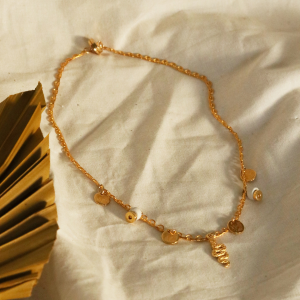
What is a gold finish?
Fine gold plated jewelry contains little or no gold (not enough to qualify as fine gold plated).
They are generally alloys of metals similar to gold in their golden yellow color, such as copper or brass.
You'll find Rose Gold, satin gold and matte gold.
See all our gold primers and components.


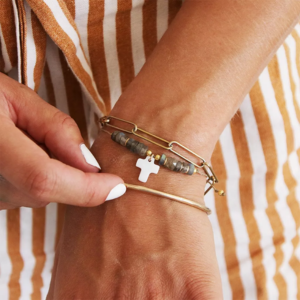
How do I store my costume jewelry?
Jewelry with a Fine gold plated 24Kfinish and gold-plated jewelry are covered with a thin layer of gold. To prevent this layer from fading, we advise you to :
- Storein a dry place. Do not store in the bathroom! Ideally, store them in a small pouch.
- Avoid contact with water. Do not bathe or shower in them.
- Remove your jewelry when playing sports.
- Avoid contact with cosmetics (soap, perfume, cream, etc.).