What is a precious metal?
Precious metals have always fascinated people with their beauty and uniqueness. But what is a precious metal? It is a particularly rare metal with significant economic value and distinctive characteristics, such as rhodium, platinum, palladium, ruthenium,osmium, iridium,gold, orsilver. They are also known as “ noble metals.”
Each metal is unique.
1. Precious Metals
Gold
Although it is not the most expensive, gold is the most coveted precious metal. It can be yellow, white, or rose-colored depending on the metals it is alloyed with.
When pure, it contains 99.9% gold. This is known as 24K gold, whichis durable but soft and malleable. For jewelry, it is alloyed with silver, copper, palladium, or zinc. These metals give it strength and color. This is what is known as18K gold or 750/1000 gold.
The fineness indicates the proportion of pure gold, expressed in thousandths or carats:
- 24 carats: 999/1000, very rare in everyday jewelry
- 22 karats: 916/1000
- 18 karats (750/1000): 75% pure gold, the most common fineness in France
- 14 karats: 585/1000
- 9 karats: 375/1000
Gold jewelry weighing 3 grams or more bears a hallmark. For 18-karat gold made in France, the hallmark is an eagle’s head. The scallop shell indicates 14-karat gold, and the clover indicates 9-karat gold. To learn how to recognize them, check out our guide to jewelry hallmarks.
To address the scarcity of gold, more and more jewelry is being made from recycled gold.
925 Sterling Silver
Silver has a minimum purity of 92.5% pure silver. It is called925Sterling Silver or 925Silver.
Since silver is very soft, it is alloyed with 7.5% other metals to make it suitable for jewelry making.
When a piece of silver jewelry weighs 30 grams or more, it must bear the “Minerva’s head” hallmark. The 925 Sterling Silver hallmark is stamped on the piece to indicate that it is indeed 925 Sterling Silver.
As with gold, more and more jewelry is being made from recycled silver.
Vermeil
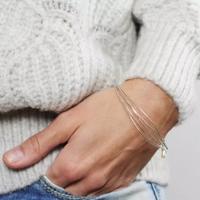
Vermeil jewelry is 925 silver plated witha layer of gold at least 5 microns thick. Aesthetically, it has the color of gold but at a much more affordable price.
Since it is considered a precious metal in its own right, it is subject to strict customs regulations. It must bear the government hallmark “V, ” the manufacturer’s or importer’shallmark, as well as the “Head of Minerva” hallmark.
2. Metal Plating
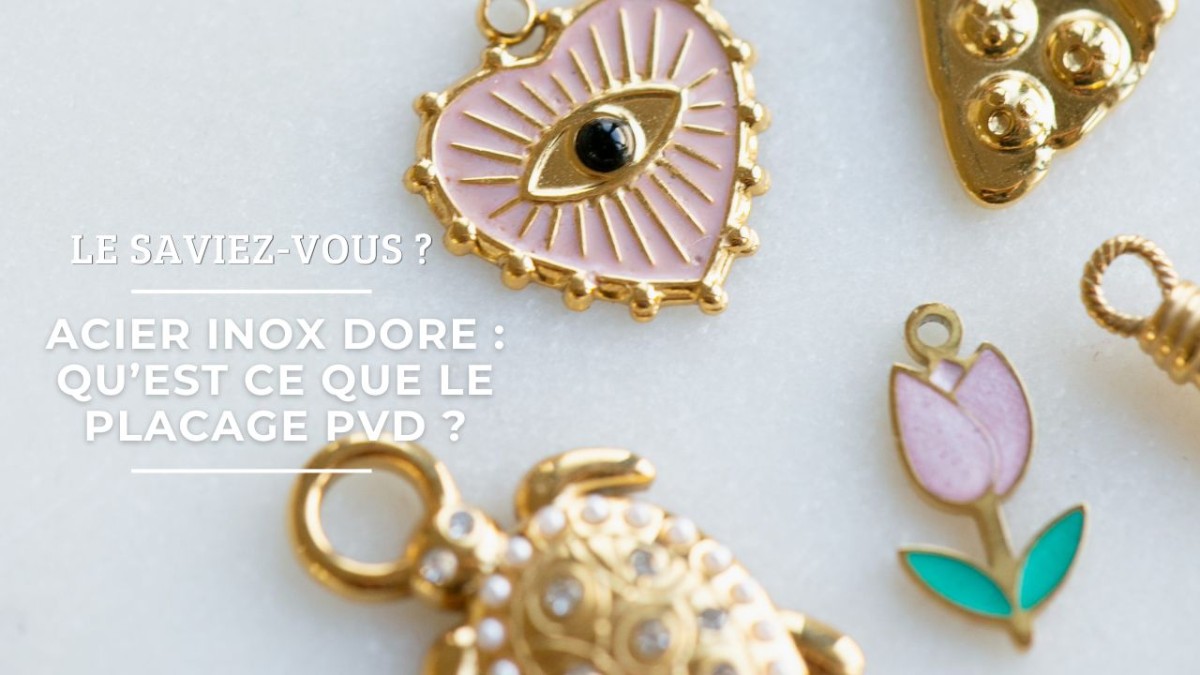
Metal plating is performed using a technique called electrolysis, also known as electroplating. This process involves coating objects or jewelry with a thin layer of metal. Precious metals such as gold, silver, or rhodium are most commonly used.
The items are immersed in a bath containing metal particles through which an electric current is passed. The piece of jewelry, attached to a cathode, receives ions from the anode, which deposit the chosen metal over its entire surface.
This process, based on the principle of electrolysis, creates an aesthetic effect. It also forms a protective barrier over the base metal,preventing the jewelry from oxidizing.
The quality of a jewelry plating is directly linked to two main factors:
- The choice of process based on the base metal. For example, an item made of zamak must undergo an intermediate copper plating before being silver-plated. This “buffer” plating allows the silver to adhere better to the jewelry.
- The thickness of the plating: the thicker the plating layer, the more resistant it will be to wear and oxidation. Thickness is measured in microns (1 µ = 1/1000 mm). It is determined by the duration of the plating bath.
Silver-plated / silver-finished
There is no hallmark specifically identifying silver-plated items. Thus, the terms “Silver-Plated Metal,” “Silver-Plated,” or “Silver-Lined” can all mean the same thing.
Nevertheless, the following criteria are generally accepted:
- Silver-colored metal: unless marked “925 Sterling Silver,” costume jewelry labeled “silver” or “silver-colored” is made of a silver-colored metal.
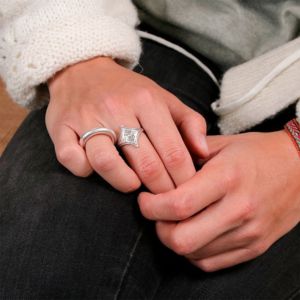
- Silver-plated: This refers to a base metal covered with a thin layer of silver. French law requires a minimum silver plating thickness of 10 microns for the item to be recognized as silver-plated.

Gold-plated / gold-colored
There is also no hallmark of guarantee for gold-plated items. The following criteria apply:
- Gold-colored metal: Unless labeled “gold-plated,”costume jewelry described as “gold-colored” or “gold-colored metal” is made of a gold-colored metal.
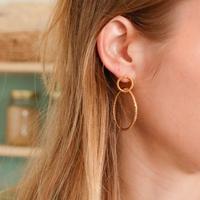
- Fine gold plated or “flash gold”: This consists of a metal base covered with a thin layer of pure gold. Its thickness ranges from 0.3 to 1 micron.
- Gold-plated: French law requires a minimum gold layer thickness of 3 microns, applied to a base metal such as silver or brass, for the item to be classified as gold-plated.


Rhodium-plated / rhodium-coated
A distinction is made between rhodium-plated and rhodium-coated metal:
- Rhodium-plated: With its high hardness, rhodium offers good protection against wear and oxidation. Thus, a layer between 0.7 and 1 micron is sufficient. However, it is more expensive than silver-plated jewelry.
- Rhodium-plated metal: Rhodium-plated jewelry is coated with an alloy that has the color of rhodium but generally does not contain rhodium.

Gold Filled / Silver-Filled
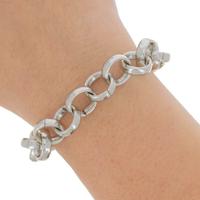
Gold filled is a process applied to a metal (often a brass base) that involves mechanically applying a layer of gold alloy of varying fineness. The weight of the gold alloy accounts for 1/20 of the total weight of the product. Gold-filled is a recyclable metal.
What are the differences between Gold filled and gold-plated? Check out our article “Gold Filled vs. Gold-Plated.”
Silver-filled uses the same process as Gold Filled. However, in this case, pure silver is used.