Average Grades
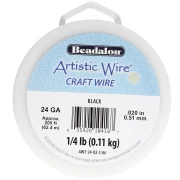
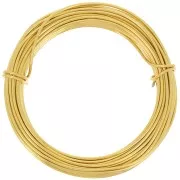
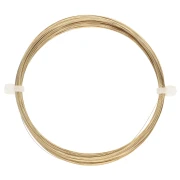
Bonjour, quelle est la différence de dureté entre un fil en acier et un fil de même diamètre en gold-filled dur ?
1 Answer
Show answers

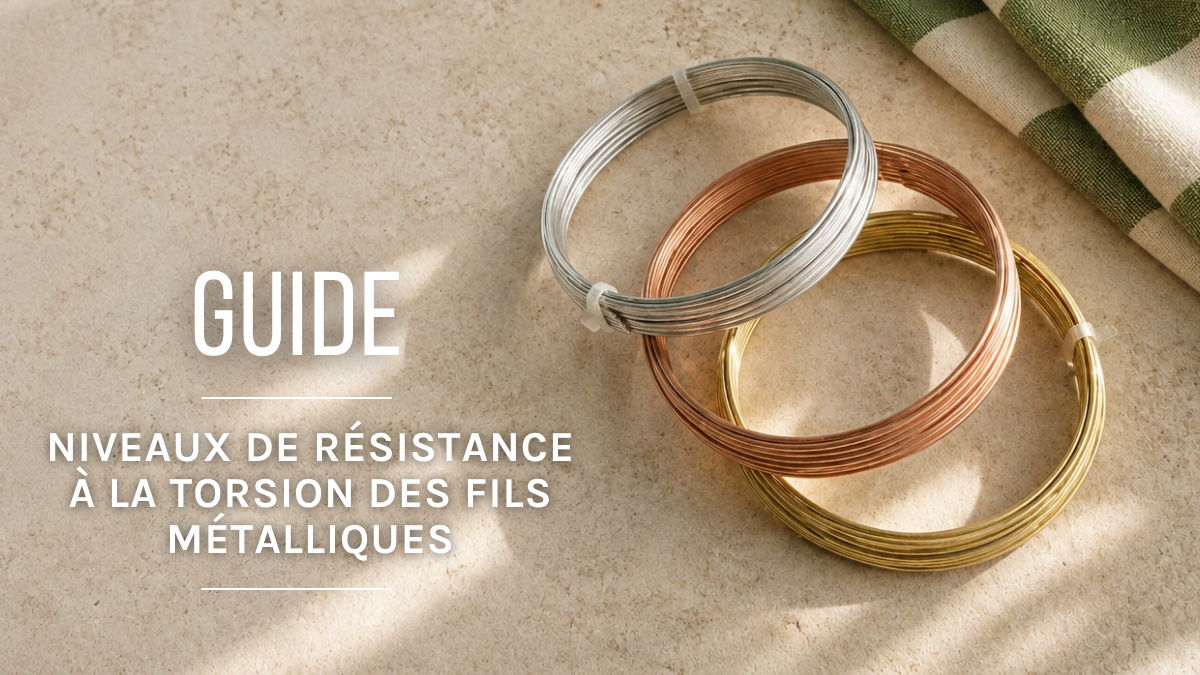
Metal hardness is measured on a specific scale, which allows for comparing the strength of materials. This table lists the hardness values for various metals, making it easier to choose the right one based on your needs for specific applications. For applications requiring high strength, choose metals with a higher hardness on the scale.
Beyond a metal’s position on the hardness scale, two other factors come into play regarding its ability to withstand torsion:
Hardness refers to the state of a wire, regardless of the metal it is made of:
Semi-hard 925 Sterling Silver wire, for example, does not hold up well when twisted around itself multiple times into a small diameter: it becomes brittle and breaks. The same metal in a hard version and with a thicker diameter (about 1 mm for studs or rings) will hold up much better.
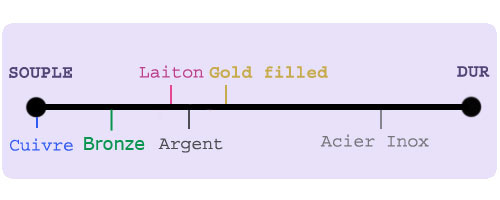 Note that the hardness scale is provided for reference only, and that the wire’s temper and diameter also influence its level of strength.
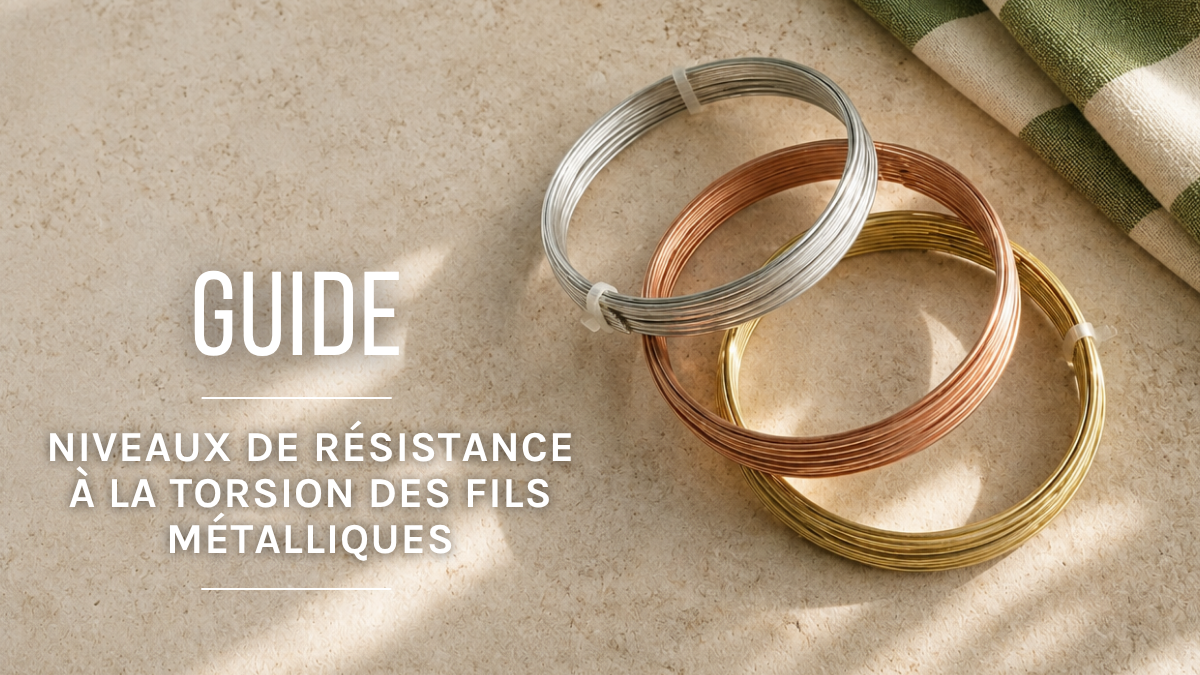
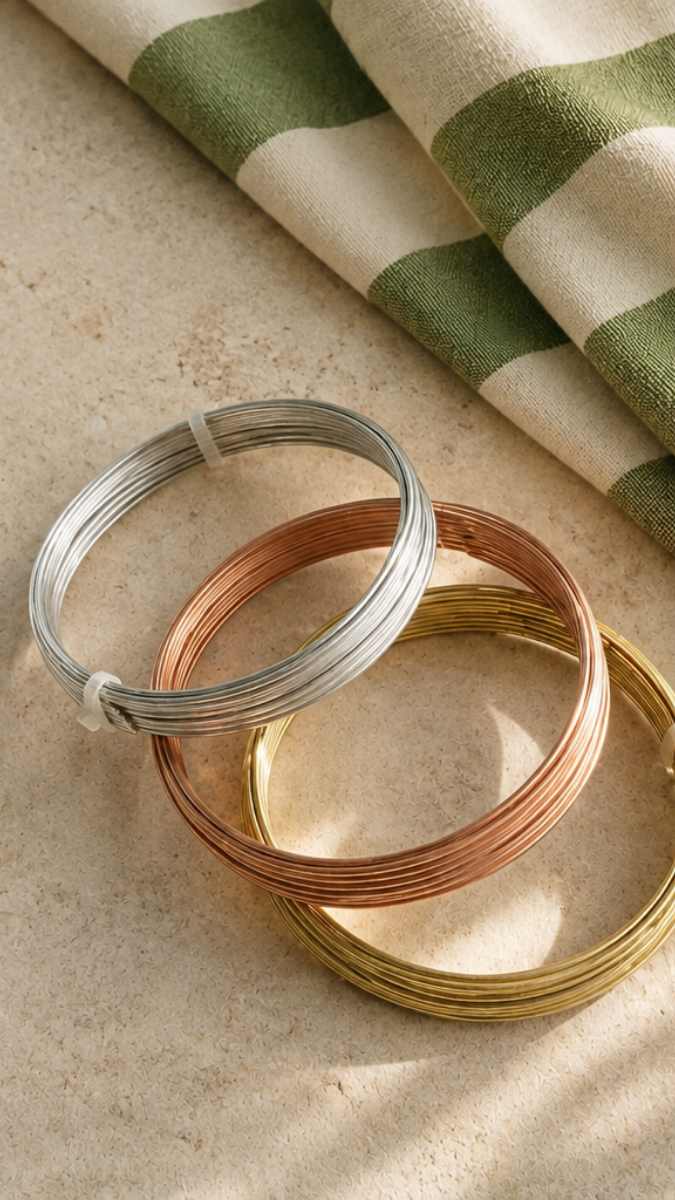
Unsurprisingly, not all metal wires perform equally well under repeated twisting. From the most flexible to the hardest:
(Note: Aluminum does not appear on this scale, as it is too soft and malleable to be compared to the other metals based on this criterion.)





Credits
Perles & Co, Internet & E-Commerce company [20/07/2026] Any reproduction, representation, adaptation, in any form whatsoever, even partial, is prohibited, except for reproduction for private use not intended for collective use, representation in the family circle (art. L 122-5 CPI) and online publishing on condition that the source is mentioned and a link is included to the corresponding page of our site www.perlesandco.com.