Welding, drilling, cutting, hammering... how do you work with stainless steel?
You’ve asked us many questions about making stainless steel jewelry. How do we work with this metal? What tools do we use? Is it difficult? In her workshop, our artisan jeweler Lucie decided to test five techniques for working with stainless steel for you: welding, cutting, drilling, hammering, and engraving. Here’s what she learned!
1. Can stainless steel be welded in jewelry making?
> Torch brazing:
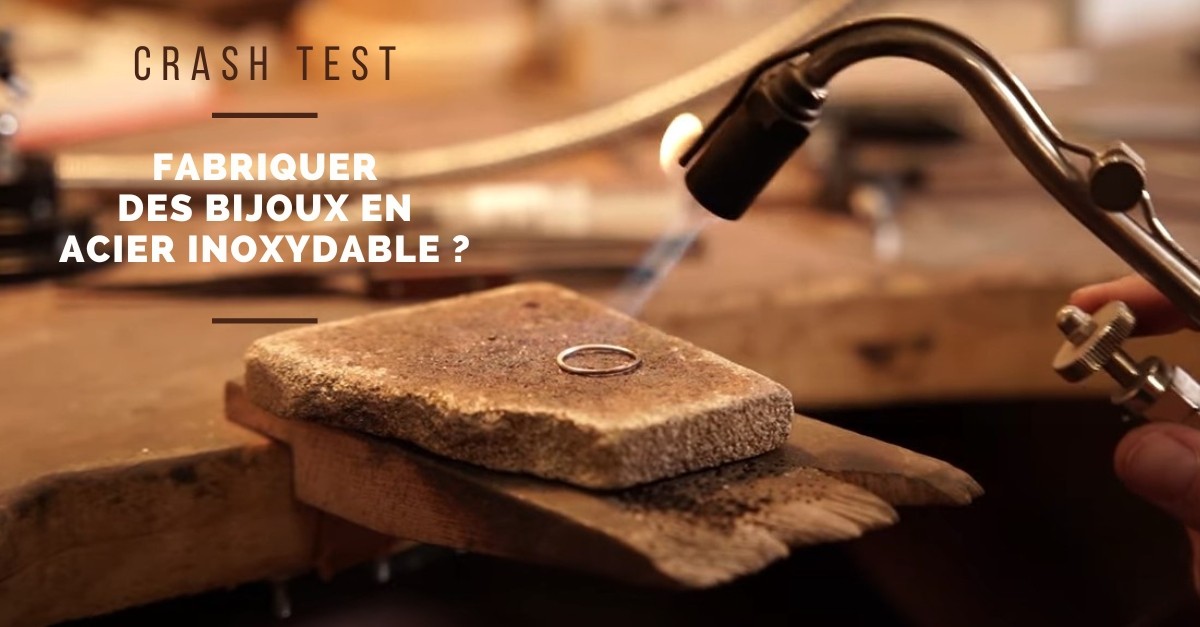
My first test involved soldering stainless steel rings. First of all, it’s important to know that some types of stainless steel are easier to solder than others.
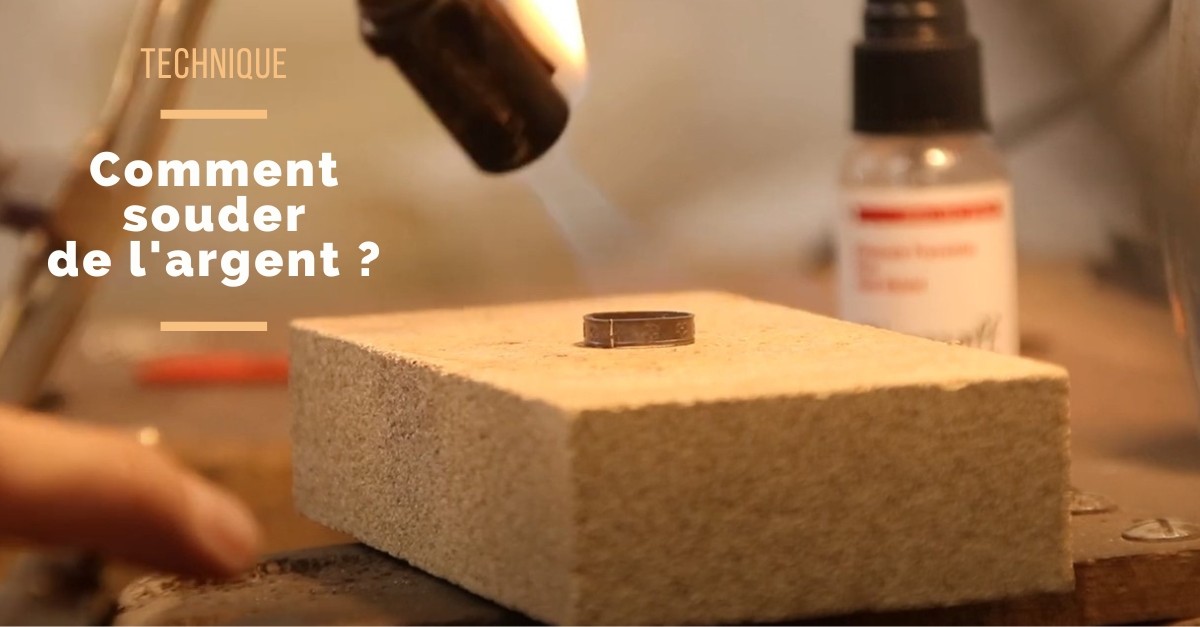
I used a torch and silver brazing rod. This first attempt was successful: I had no trouble brazing the rings.
Things got a little complicated, though, when I tried to remove the oxidation and traces of borax. When I scraped at it, nothing happened. The sulfuric acid used in traditional jewelry-making wasn’t enough. The result: my ring remained hopelessly black!
So I thought about other techniques I could use:
I tried brushing it, but all my efforts proved futile. After a while, still no results! I gave up and moved on to something else.
Next, I tried polishing it with Lustrebar clay, and little by little, I started to see results. However, it took me a long time to polish just one ring to remove the marks and oxidation. With a great deal of patience and a lot of elbow grease, I barely managed to restore the steel’s original color.
It’s important to note that heating stainless steel can alter its rust-resistant properties. In fact, it’s an alloy composed of iron, chromium, and other metals. Chromium creates a passive layer of chromium oxide on the surface, which is what protects it from oxidation. When it’s heated to high temperatures, this protective layer can be compromised, leading to oxidation or decarburization.
As for gold-plated stainless steel, the color changes significantly when heated, and this change is irreversible.

> Micro-welding:
There are other welding techniques for stainless steel, such as arc welding, TIG welding, and PUK welding. However, these techniques require specific skills and experience to achieve high-quality results. And, above all, they require specialized equipment. Before you get started, ask yourself: Are you really ready to make such an investment?
I had the opportunity to teststainless steel welding with an Orion mPulse, amicro-welder featuring a pulsed arc welding system. It’s perfect for making small, quick welds on rings, for example. However, the machine comes at a certain cost, so you need to be confident before investing in this type of equipment.

2. Working with Stainless Steel Using Traditional Jewelry-Making Techniques
> Cutting with a wire saw
For my second experiment, I wanted to see if I could cut stainless steel with a hacksaw without breaking the blades.
Result: It’s not impossible, but it’s not as easy as it sounds! Once again, it’s a laborious and very time-consuming process. Since steel is a very hard metal to cut, it’s really not pleasant to work with. Plus, the saw blades wear out very quickly.
Conclusion: If you take your time, it’s doable. But I don’t recommend it at all.
It is possible to cut steel with a laser using special—but expensive—machines. This is primarily a technique used by industry to cut large quantities of stainless steel parts.
> Drilling Stainless Steel
For my third test, I tried drilling into stainless steel. Once again, I found it very labor-intensive! On my first attempt, I broke my drill bit in the pendant I was making.
In fact, you really have to take your time (and, believe me, it takes a long time) and keep the drill bit lubricated at all times. And then, maybe—with a little luck—you’ll finally manage to drill through the metal.

> Hammering
Hammering involves adding texture to metal. For my fourth test, I wanted to see if I could hammer stainless steel with a hammer.
It’s possible, but to do it, you have to anneal the steel to make the metal more malleable. For steel, this technique is called annealing.
Then, to restore the steel to its hard state, you need to harden it—a heat treatment designed to make it harder. To do this, you must immediately immerse it in water or oil after annealing. You must then let it cool on a jeweler’s pile.
This technique poses two problems:
1. It’s important to know that when steel is heated “to red-hot,” its properties are completely altered. That’s why annealing steel is not recommended.
2. When heated, the steel will turn black. It will then need to be polished (remember my first point).
> Engraving on Stainless Steel
Last experiment: engraving on stainless steel. I had previously tried various metal engraving techniques, including those on stainless steel. To see this experiment through, I repeated the test using punches: same result! It is possible to punch stainless steel, even if it’s less easy than with 925 Sterling Silver and other metals, such as gold-plated or Gold Filled...
The only drawback—and it’s a significant one—is that the punches are likely to wear out very quickly. That’s right—as we’ve mentioned, stainless steel is a hard metal. The solution would be to anneal it. But as I said earlier, this can alter the steel’s properties, such as its hardness.
So I’d rather advise against stamping steel. On the other hand, if you really want to engrave stainless steel, it’s best to use your Dremel.
3. Creating Stainless Steel Jewelry Without Soldering
Our advice: Reserve soldering for metals that lend themselves to it, such as 925 Sterling Silver or Gold Filled. For stainless steel, assembly produces a strong and durable result:
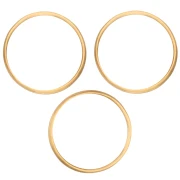
• 316L stainless steel jump rings, securely closed with two flat-nose pliers
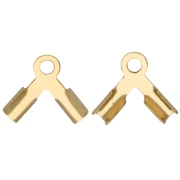
• Crimp beads and bead caps, to secure clasps and wires without heating
• Clasps, Lobster Clasps, and chains pre-assembled at the factory
Find them in our stainless steel findings and stainless steel rings. To cut a wire or open a large link, see our technical guide on which pliers to use for stainless steel.
4. Why Choose Stainless Steel?
Stainlesssteel is an alloy of iron, chromium, nickel, and carbon. We’re seeing it more and more on earrings, necklaces, bracelets, and rings. And it’s no surprise that it’s so popular for DIY costume jewelry—it has nothing but advantages!
It doesn’t rust, doesn’t tarnish with use, is water-resistant, and costs less than gold or silver. It comes in silver and gold finishes and requires very little maintenance. On our product pages, the term “nickel-free” indicates that the steel complies with REACH regulations: it contains nickel but does not release it. To choose between 304 and 316L, see the different types of stainless steel.




-.jpg "How to solder gold filled (rolled gold)?")


-.jpg "How to make an emerger (a fly)?")