Average Grades
Wie kann ich sehr kleine feine Perlen auf ein dehnbares Band auffädeln, ohne eine Fädelnadel zu benutzen?
1 Answer
Show answers

To string beads on a fraying cord, you can use simple methods: wrap scotch tape around the end of the thread, slightly melt the end of a synthetic thread, use a soft split needle, or create your own needle with wire. Each method has its advantages depending on the type of cord used, and it's advisable to choose the one that best suits your specific needs.
Sometimes things aren't as simple as they should be. Who would have thought that you'd be on edge just trying to string beads on a wire? It doesn't make it easy! Why does this thread keep trying to annoy you by unraveling? Keep calm, take a deep breath, we will find a solution to your problem.
Threads and cords are very often made of several small braided or knitted threads. It is therefore normal that they separate from time to time.
There are several ways to make stringing beads easier depending on the material of the cord. Here are 4 ways to string beads on a fraying cord. Hopefully one of them will help you.
The first method is to wrap a small piece of tape around the cord. The video above shows you how to do this.
Cut 1 cm of tape, lay the edge over the end of the cord with the tape sticking out about 5 mm above the end of the cord. Wrap the tape 2 or 3 turns tightly and cut it off at the tip. The tape should always extend beyond the end of the wire.
This technique makes it easier to pass a cord through a bead with a hole that is not smooth and will tend to snag and damage the end of the cord.
Masking tape or washi tape is less sticky than traditional tape. It is therefore possible that they do not hold well on the cord.

This method is only possible with synthetic threads, because they melt in the heat. Natural yarns such as cotton, linen, silk and many others burn when in contact with a flame. So this will not solve the problem.
For synthetic yarns, place the flame of a lighter under the yarn end and melt it slightly by bringing the yarn closer to the flame. Before doing so, wet your fingers with water to avoid any risk of burning, then, before the thread hardens again, smooth it with your index finger and thumb. Cut the thread and repeat if necessary until the thread end is a nice compact point.

There are needles that are very flexible and split lengthwise. This allows you to slip in any type of thread, but avoid cords larger than 0.5 mm. This method has the disadvantage of doubling the size of the thread to be passed through the beads.
For example, if you want to pass a 0.4 mm thread, your bead will have to have a hole larger than 0.8 mm. This type of needle is more fragile so don't force it if it doesn't fit.

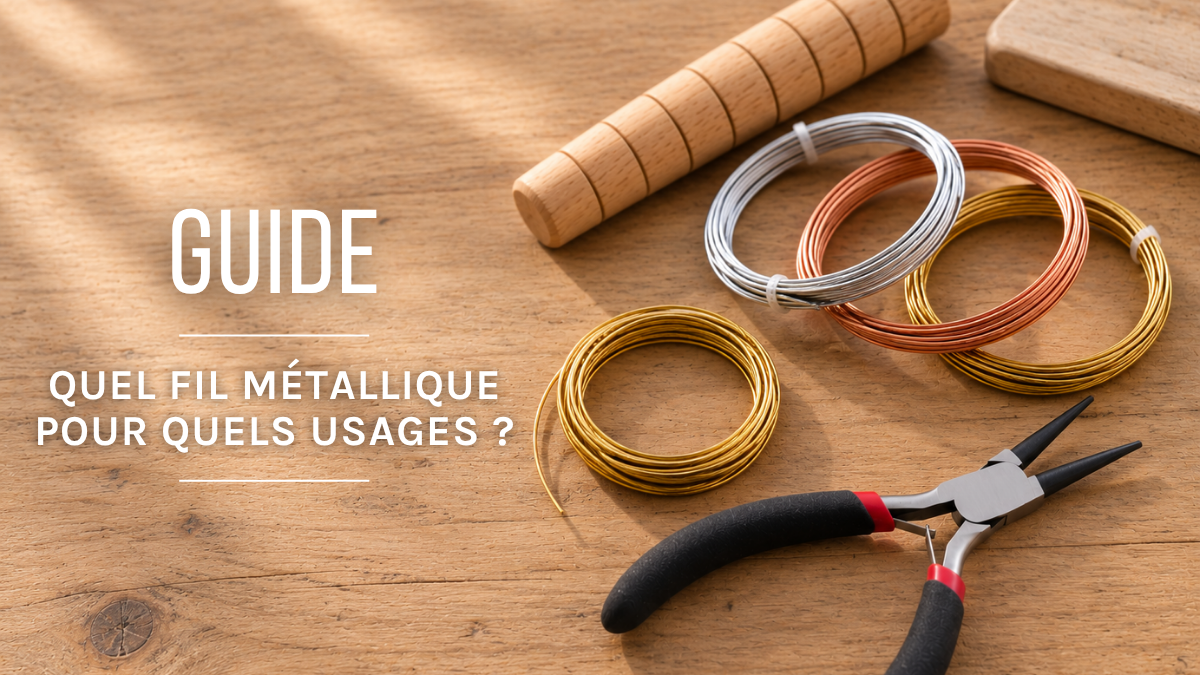
You can create your own needle by wrapping a piece of DIY wire around the thread. However, you need the wire to be large enough for the wire to catch around.
Form a loop on the wire and twist the two ends together. Pass the wire through the loop and continue twisting the two ends of the wire to decrease the size of the loop and make your needle thinner. Once you've passed the beads through, you can cut the wire end off.

Do you have any other tips that we haven't covered here? Feel free to share your own tips in the comments on this page!




Credits
Perles & Co, Internet & E-Commerce company [27/10/2021] Any reproduction, representation, adaptation, in any form whatsoever, even partial, is prohibited, except for reproduction for private use not intended for collective use, representation in the family circle (art. L 122-5 CPI) and online publishing on condition that the source is mentioned and a link is included to the corresponding page of our site www.perlesandco.com.