Average Grades
Quel fil peut remplacer
Le fil élastique silicone Elastop 0.5 mm ou 0.6 mm
Le fil élastique silicone Elastop 0.5 mm ou 0.6 mm
3 Answers
Show answers


Elastic threads come in three main types: nylon/silicone, multi-strand and sheathed, each with its own specific features. Multi-strand wire offers greater elasticity and resistance, ideal for lightweight creations, while sheathed wire is perfect for hair accessories thanks to its softness. Choose your wire according to the size and weight of your beads to guarantee the durability of your creations.
There are three main families of elastic threads, each with its own qualities and shortcomings. This technical data sheet will help you find the type of elastic thread best suited to your creation, as not all elastic threads are suitable for all uses or all creations. Many parameters need to be taken into account: The type of elastic thread, the size of the bead hole and the weight of the beads.
Questions to ask yourself before buying elastic thread:
Are you going to use it for a bracelet, necklace, hair accessory or other? Small or large beads? Light or heavy? Are you going to need a needle or are you going to string the beads by hand?
💡 If you want to go further, take a look at our article on the 3 best elastic threads for your jewelry!
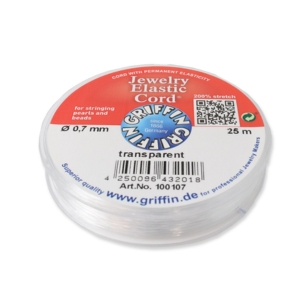
Nylon or silicone elastic thread: these two threads have the same appearance and are available in the same sizes. Silicone wire deteriorates slightly less quickly over time than nylon wire. In terms of elasticity and resistance, the differences lie mainly in the brands' different manufacturing processes, and little in the material itself. Nylon yarns are available in transparent and colored versions. The different color pigments can also affect the chemical composition of nylon and thus influence its elasticity or durability, hence the differences in quality that can exist from one color to another for the same brand.
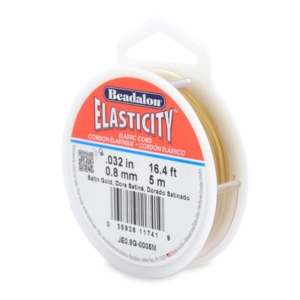
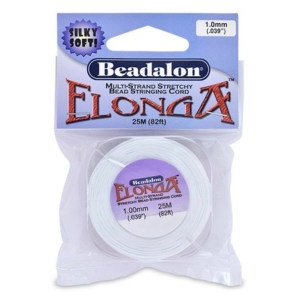
Multi-strand elastic yarn: This is an elastic yarn composed of several elastic threads. More elastic than nylon or silicone thread, it's also considered more resistant, because even if one of the threads breaks, the bracelet won't break immediately thanks to the other threads, unlike silicone and nylon thread, which break all at once. This also means that when the wire begins to wear, small elastic threads will start to emerge from the bracelet. It's more elastic, so deforms less quickly than nylon or silicone wire, provided you use small, light-weight beads. Because of its elasticity, it is not suitable for bracelets with heavy beads. It can be used for multi-row elastic creations, but care must be taken not to weaken the thread with the needle when weaving the beads together.
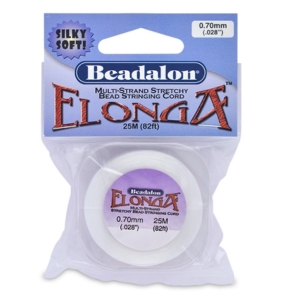
Sheathed elastic thread: This is an elastic thread surrounded by non-elastic thread. It is highly elastic, but relaxes fairly quickly over time. It is best suited to the creation of hair accessories, as its sheathing of synthetic or cotton thread glides through without damaging the hair. It can also be used by children to create jewelry, as it is easier to handle and knot.
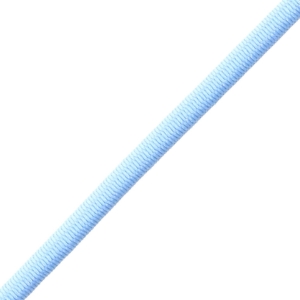
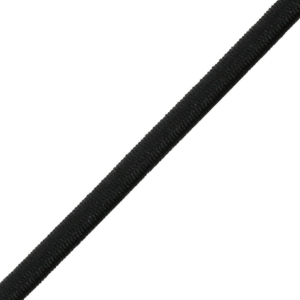
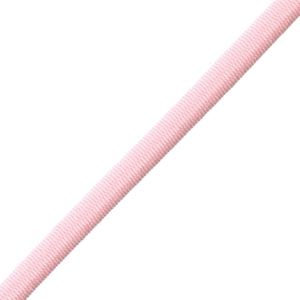
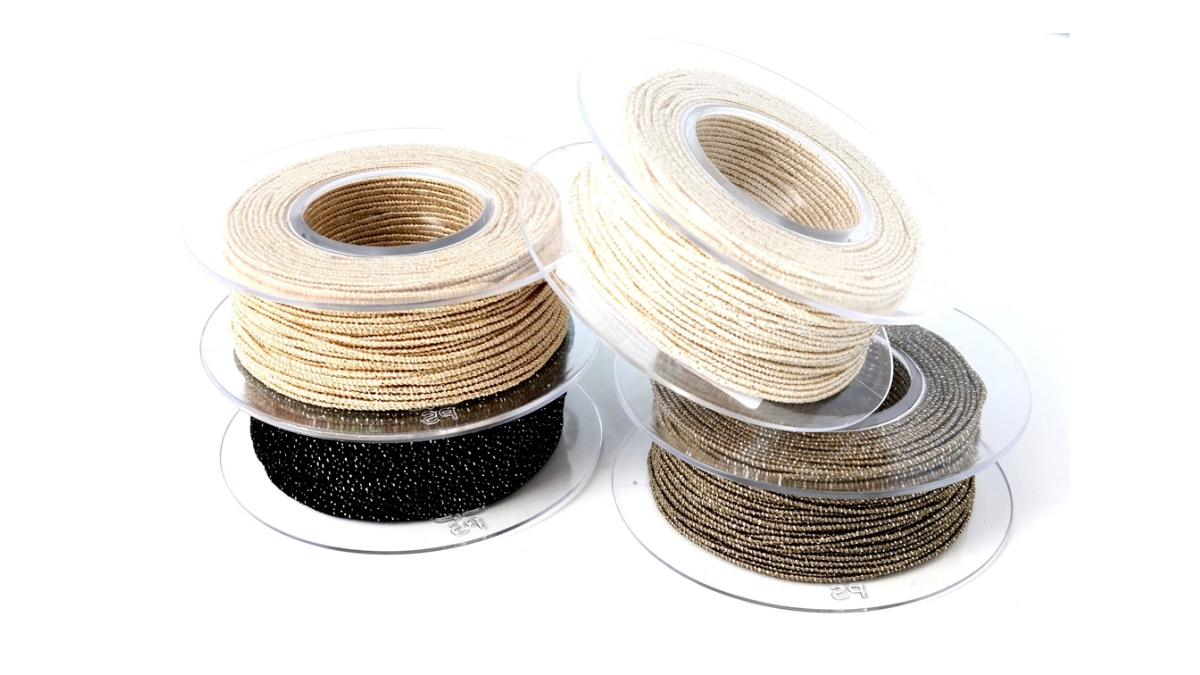
Bliss Elastico elastic thread: a very pretty elastic thread for use as a decorative element in a creation. Similar in composition to sheathed elastic thread. It is best suited for stringing a single bead or charm, or for linking a spacer. It can also be crocheted by experienced crocheters for elastic creations or used for decoration. Similar strength to gimped wire, but sensitive to friction.
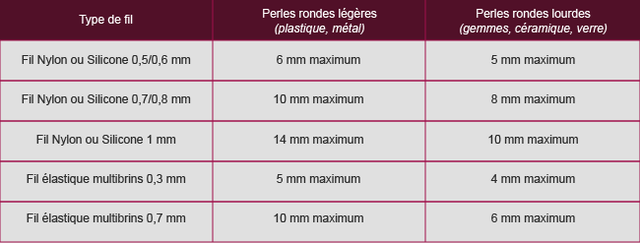
Recommended bead sizes. You can choose to use larger beads than recommended, but the heavier the beads and the thinner the wire, the faster your bracelet will lose its elasticity. Use the largest thread size possible, depending on the size of the hole in the beads. If you need to use a needle, you can take a thinner thread and double it.
Now that you know the different types of elastic thread and their uses, find out which is the best!


Credits
Perles & Co, Internet & E-Commerce company [22/07/2020] Any reproduction, representation, adaptation, in any form whatsoever, even partial, is prohibited, except for reproduction for private use not intended for collective use, representation in the family circle (art. L 122-5 CPI) and online publishing on condition that the source is mentioned and a link is included to the corresponding page of our site www.perlesandco.com.