How to weave Miyuki heart-shaped beads?
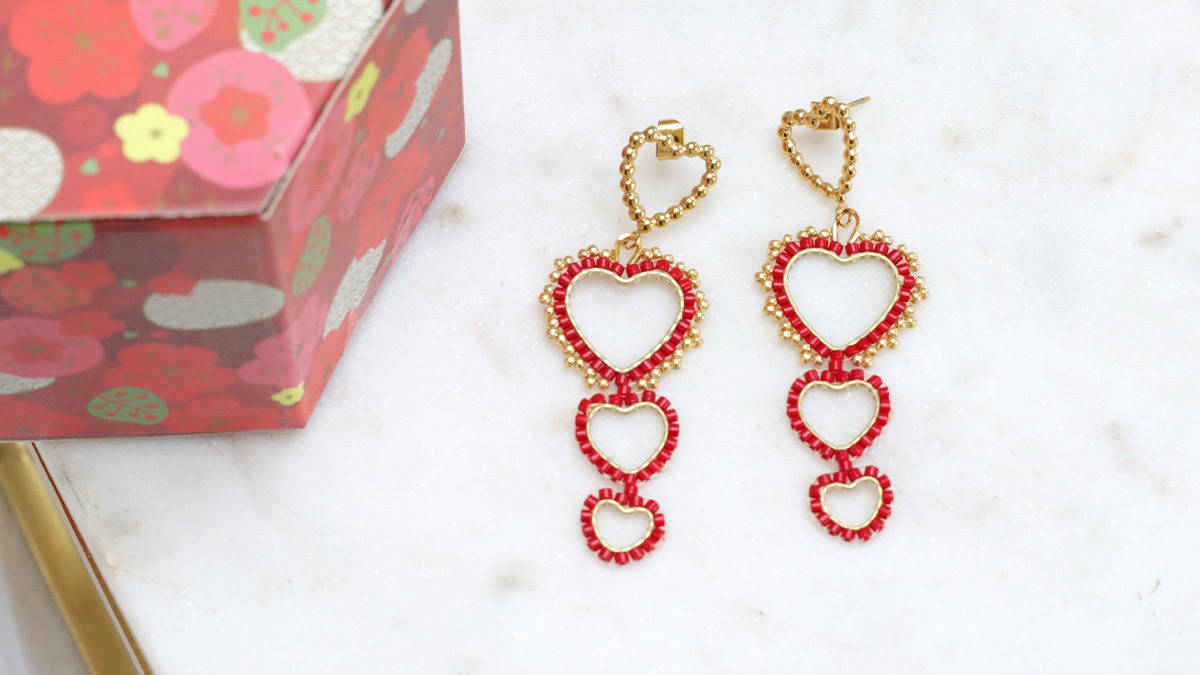
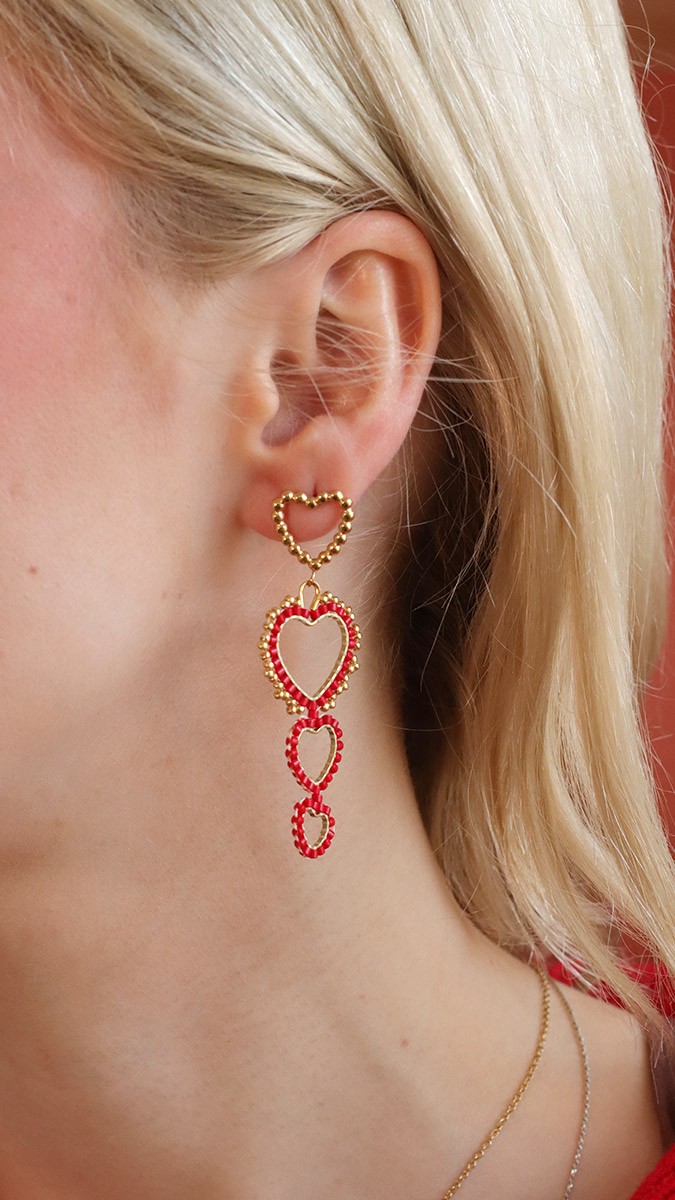
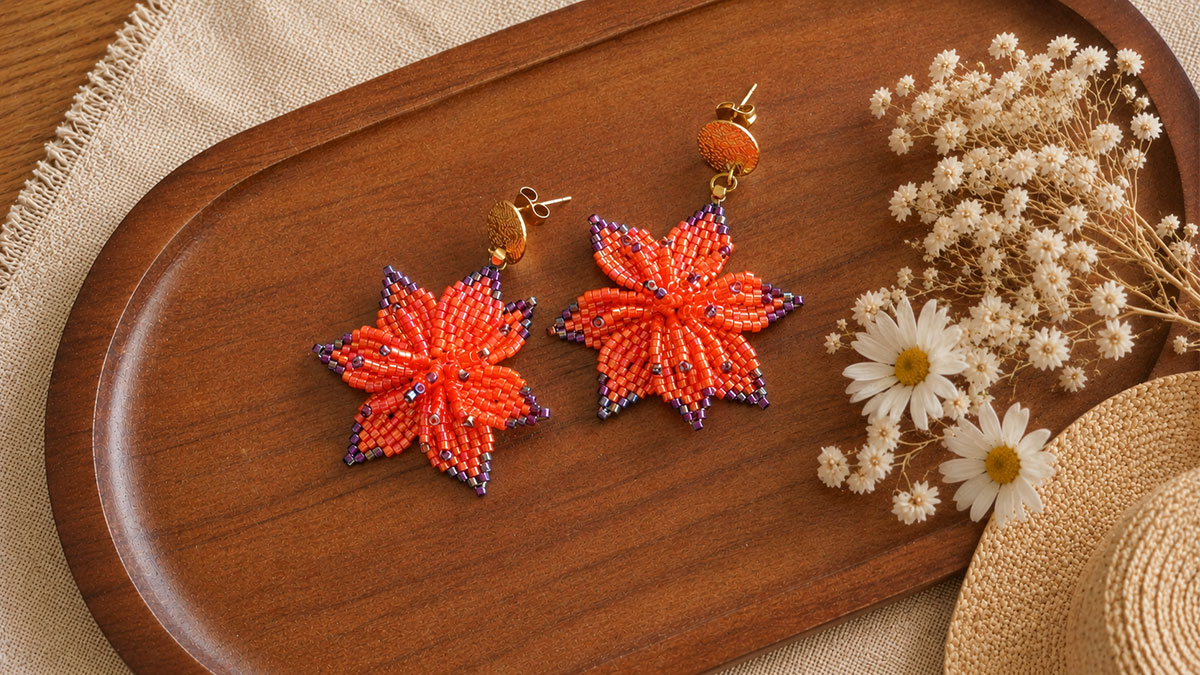
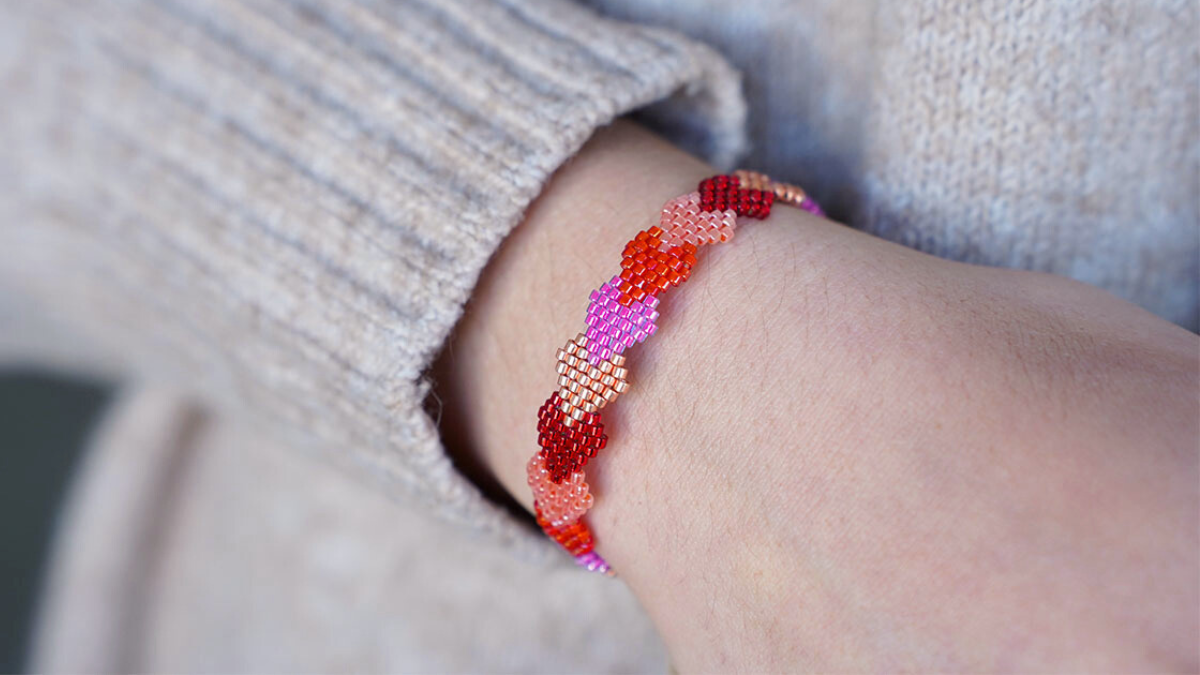
Have you ever woven Miyuki Delica 11/0 beads around a ring? If you're not familiar with this technique, it's called Brick Stitch. Brick stitch is a technique for weaving beads using a needle to attach beads to a support. The support can be a line of beads or a bead-weaving ring. I'm talking about a ring here, but these hollowed-out metal supports for bead weaving can have lots of different shapes: drops, squares, diamonds and, in the case of this tutorial, hearts! In this video, we'll weave Miyuki Delica beads on hollowed-out metal hearts using Brick Stitch.
This tutorial is pretty easy to do once you've tried brick stitch weaving. If you're new to the technique, you may find this tutorial a little more challenging. Nevertheless, the pattern remains quite simple, as there is only a single row of Miyuki beads woven around the hearts and a second row of Miyuki seedbeads size 15/0 added to each pair of beads on the larger heart. To attach the weave to the earrings, I used wire protectors. These small bridge-shaped metal elements are more commonly used for cabled wire and to make beaded necklaces or bracelets. For some time now, they have been diverted to be used as hanging supports in bead weaving. They have the advantage of protecting the wire from friction, while preventing it from slipping out of the ring of the earring or clasp.
In the video, the thread used is Miyuki Beading Thread in Semolina color. This is the wire whose color is closest to the raw brass of the hearts. It is not the strongest wire. If you're looking for a wire that won't fray, choose Fireline 0.10 mm. However, this wire is white and will show through on brass. You'll find this other wire option in the variation section of the hardware list. You'll also find a more oxidation-resistant version of wire protection in gold filled, as well as decopatch varnish that can be used to glue knots and hold wire ends in place.