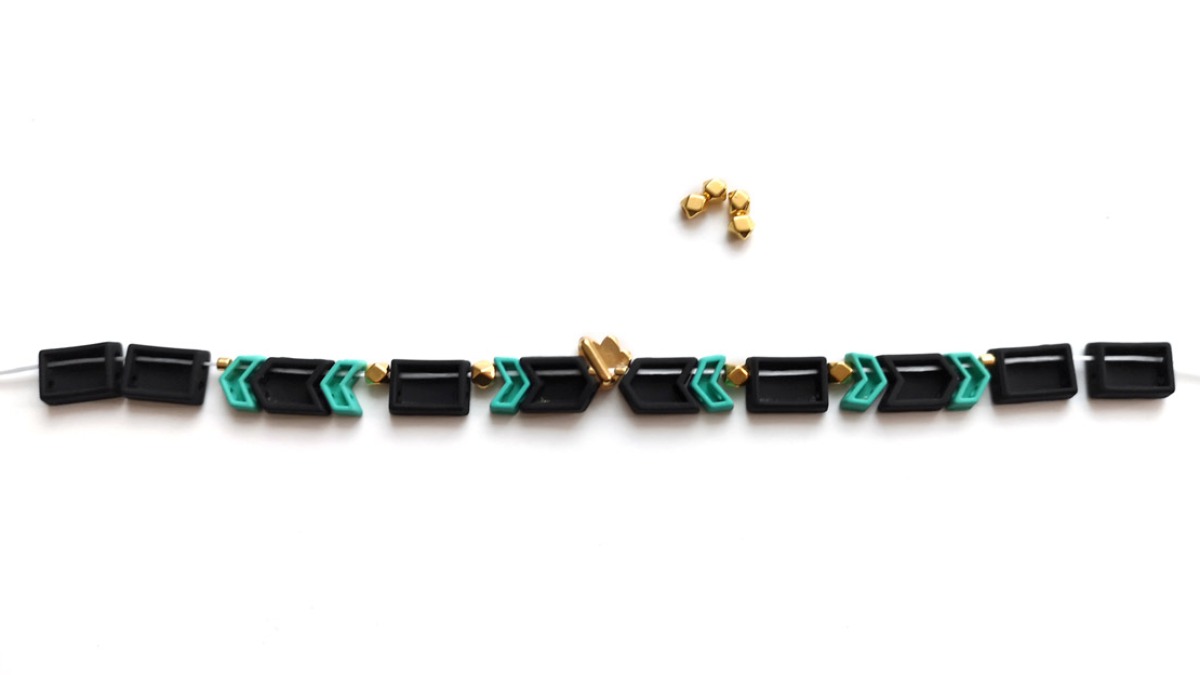
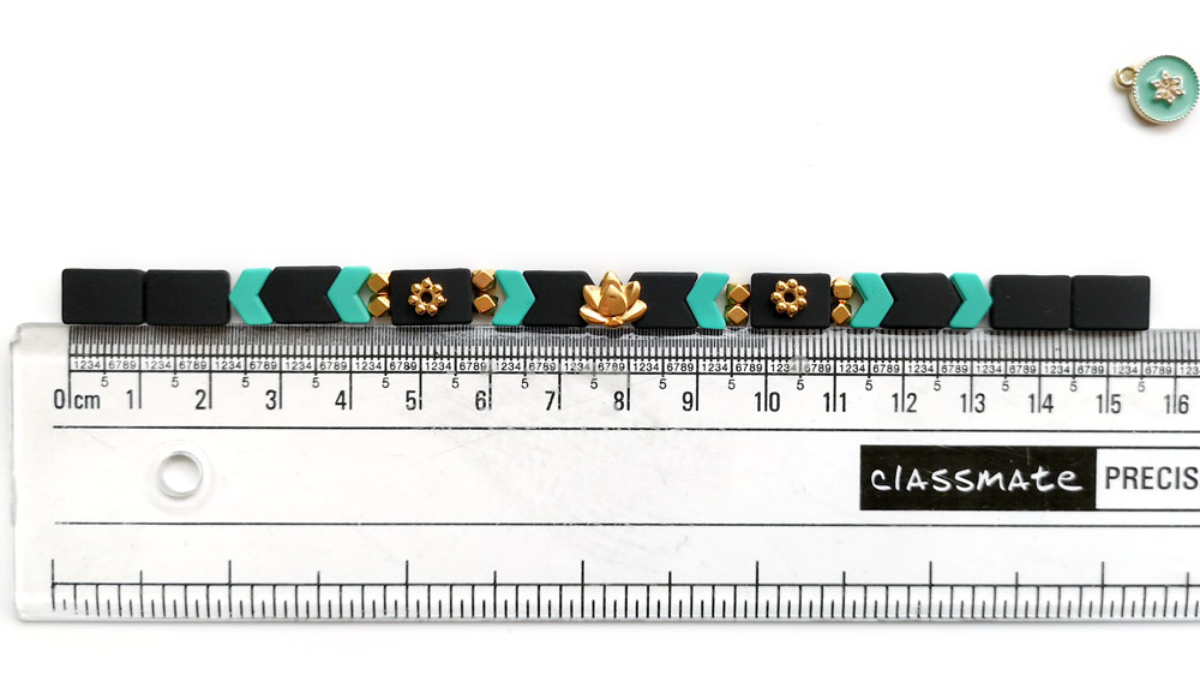
Place your beads on the table and check the length of your string of beads. You must make a bracelet that is at least 1.5 cm longer than your wrist. Adjust the number of black rectangles to get the correct measurement. A rectangle measures 11 mm.

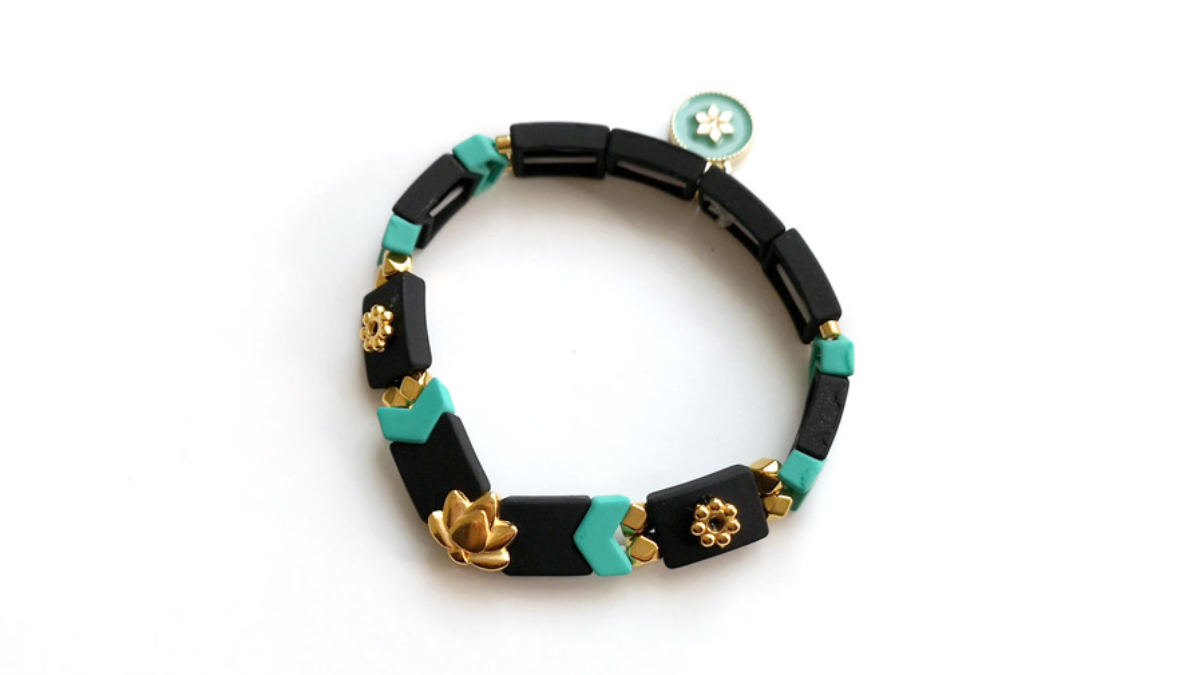
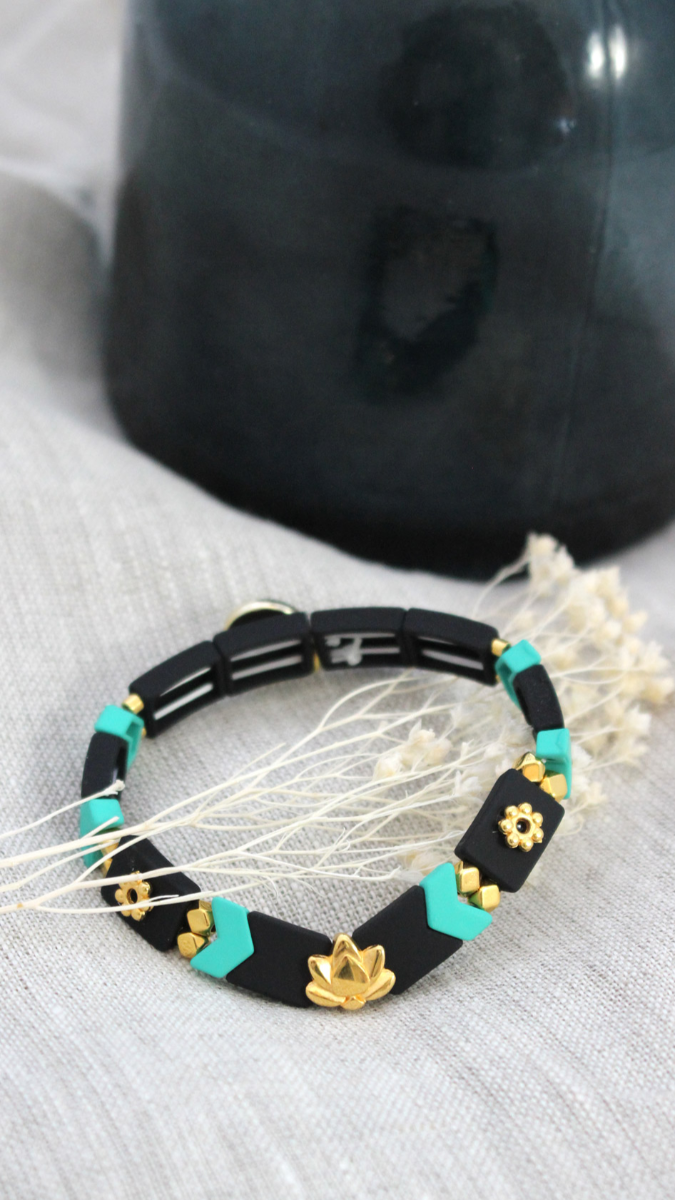
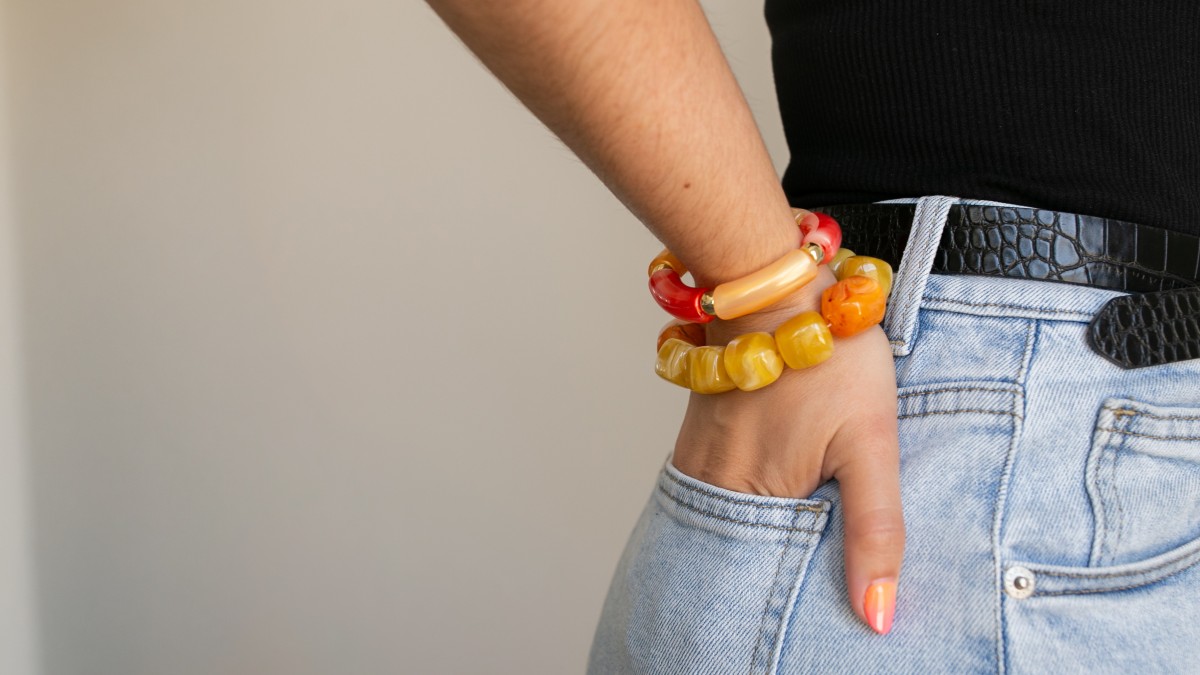
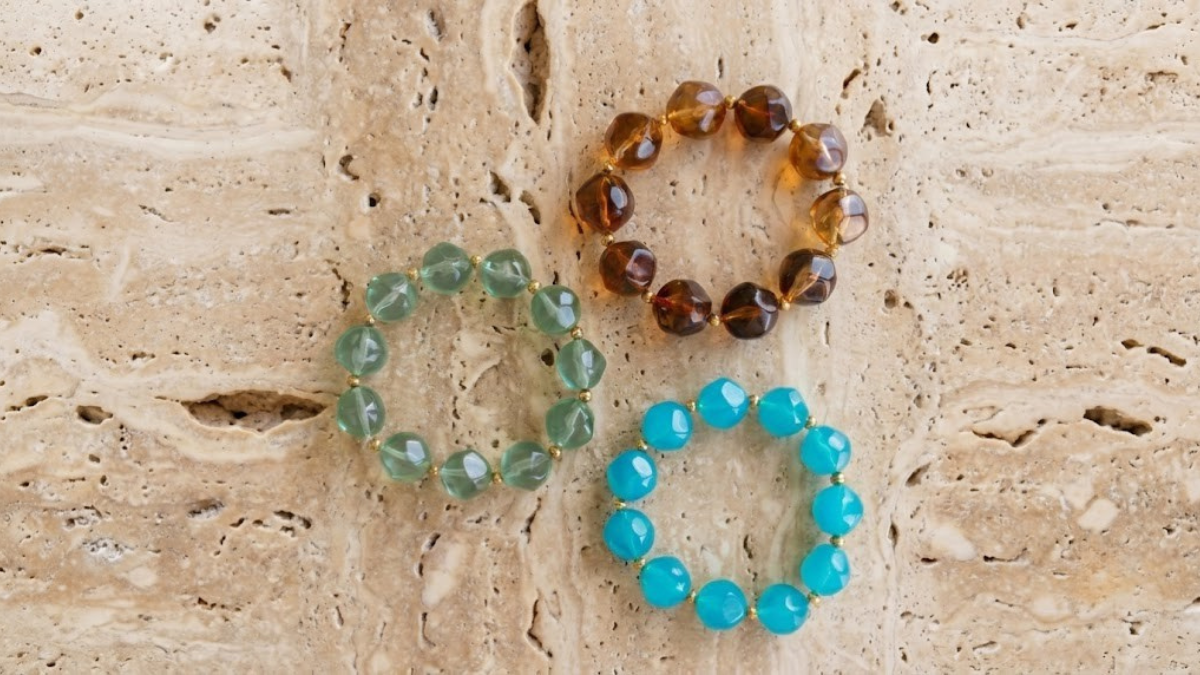
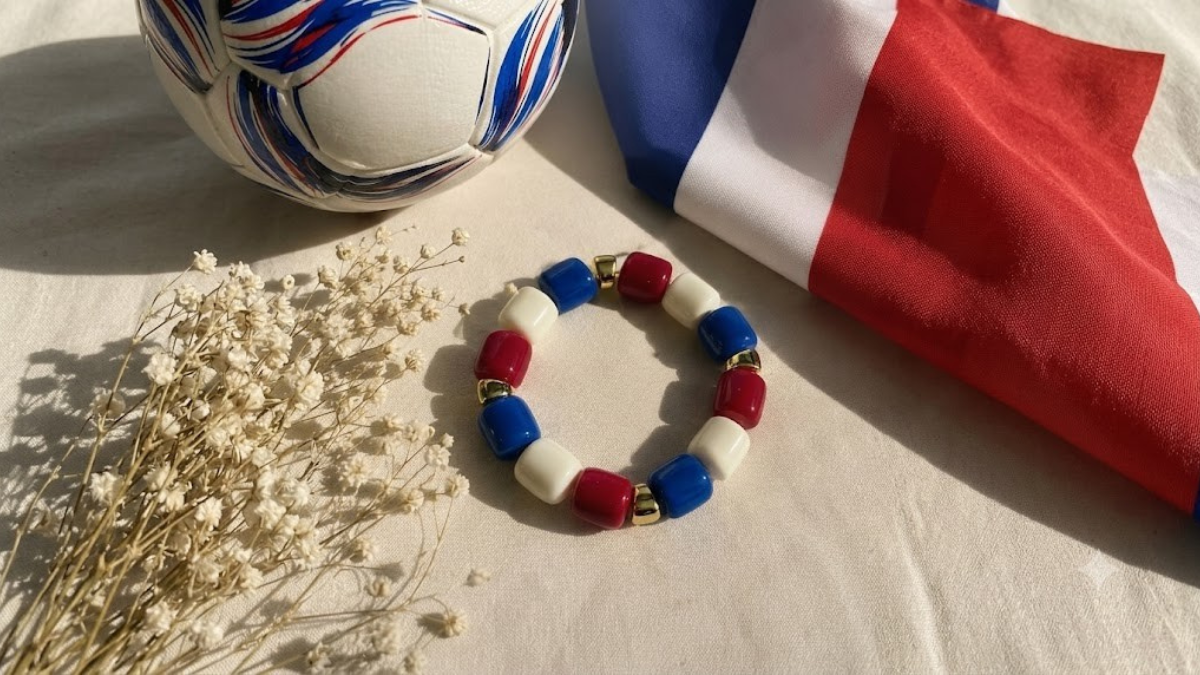
Do you know the gum effect metal beads? These geometrically shaped be ads have a soft, highly pigmented coating. They are very resistant over time which makes them a perfect jewel for next summer! We couldn't wait to show them to you, that's why we decided to offer you several tutorials that will match your winter outfits. Previously we had published a tutorial of bracelet in white and yellow tones with rectangle shaped beads and adjustable macramé clasp. Today here is its cousin: The elastic bracelet with herringbone and rectangle shaped beads.
The elastic bracelet is a must for beginners in costume jewellery creation. Indeed, it does not require much investment in material. Here you will still need 2 jewelry pliers to open the ring of the round charm but you can also choose not to put it on. In this case you don't need pliers or any specific tool!
These beads come in 7 different colours: white, black, grey, yellow, turquoise green, pink, blue and mustard. So you can make lots of different combinations! Moreover, if you have already bought the material of the previous white and mustard bracelet, you won't need to buy the 5 mm gold washers again because they are the same ones used in this tutorial!
Adjust the number of rectangle beads in your basket to adapt the length of the bracelet to your wrist. Rectangle beads are 11 mm. In the example, there are 6 rectangle beads and the bracelet is 15.5 cm. Your bracelet should be longer than the length of your wrist + 1.5 cm.


Place your beads on the table and check the length of your string of beads. You must make a bracelet that is at least 1.5 cm longer than your wrist. Adjust the number of black rectangles to get the correct measurement. A rectangle measures 11 mm.

Cut 2 pieces of 30 cm of elastic thread and pre-stretch it by pulling on it. This step will prevent the bracelet from deforming only a few hours after making it. Thread the beads one by one on the first thread, paying attention to the direction. Put them back on the table each time to prevent them from slipping off the thread. Add 1 delicas 10/0 bead on each side of the lotus and before the chevrons at the end to balance the bracelet. Then thread the second wire.

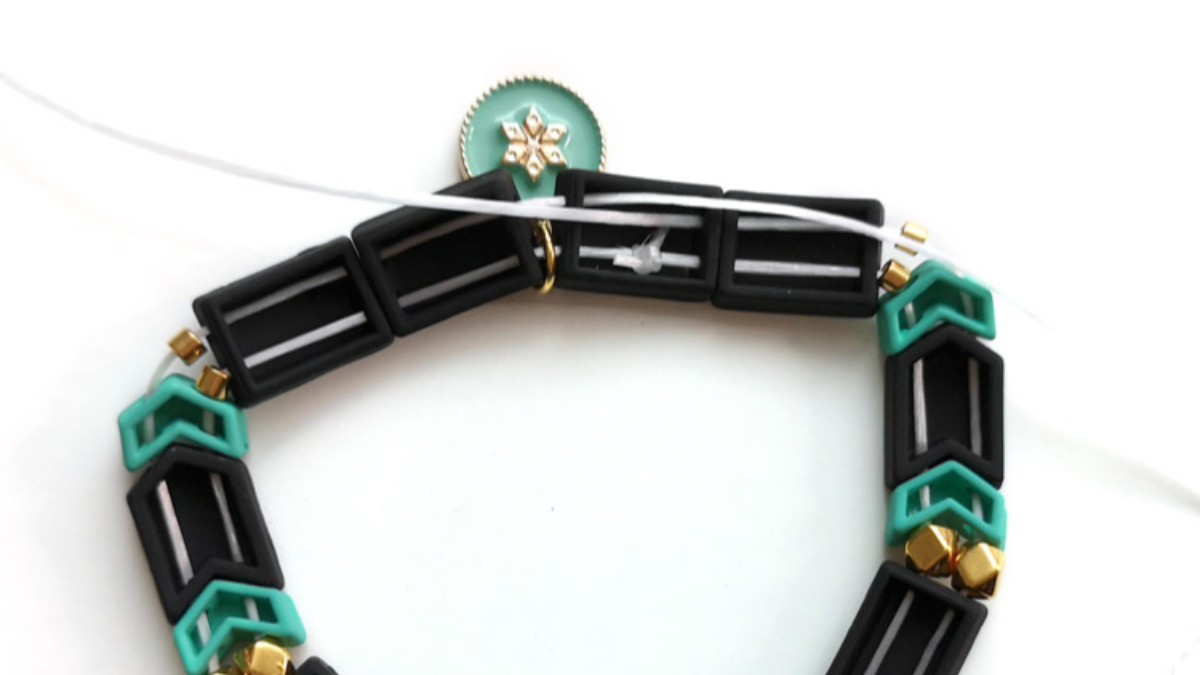
Attach the charm to the bracelet with an open ring, paying attention to the direction in relation to the lotus. You can put a point of glue on the opening of the ring to prevent it from slipping off the wire.
Pass the ends of the thread through one of the rectangular beads so that the knot is hidden when you wear the bracelet. Tie a surgeon's knot with the thread ends on each side. The surgeon's knot is just like a normal knot except that instead of wrapping the thread around the other one once, you wrap it twice. Repeat the surgical knot 3 times to be sure.

Glue the washers on the 2 rectangles in front and leave to dry for 24 hours.


You have a question about this tutorial? Ask it to our team and the people who have already tested it. The Perles & Co community is here to help you!
Credits
Perles & Co, Internet & E-Commerce company [15/01/2021] Any reproduction, representation, adaptation, in any form whatsoever, even partial, is prohibited, except for reproduction for private use not intended for collective use, representation in the family circle (art. L 122-5 CPI) and online publishing on condition that the source is mentioned and a link is included to the corresponding page of our site www.perlesandco.com.