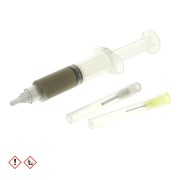
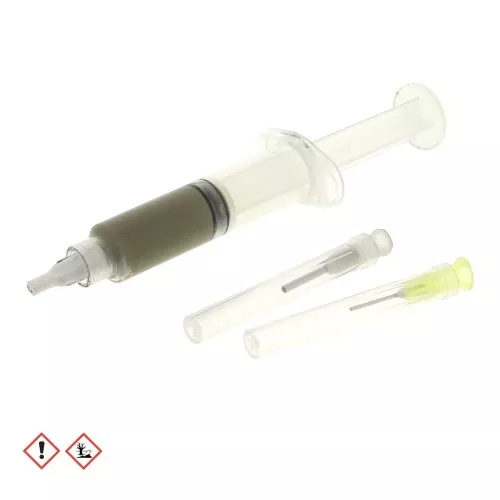


This silver paste solder is ideal for soldering work in the manufacture and repair of silver, copper or brass jewelry .
For professional use only, thisproduct in syringe form is not suitable for beginners, as it requires a certain technique and training to use.
Many customers believe that this solder is defective due to its texture. However, as mentioned above, this brazing alloy requires a certain amount of skill for optimum use.
No returns will be accepted without a favorable opinion from our customer service department.
There are three types of brazing alloys: hard, medium and easy. These types of solder are used when there are several elements to be soldered on the same piece of jewelry. To make the first brazes, we use the strong, then the medium and finally the weak. The strong one is the one that will melt at the highest temperature.
To save time, the paste is ready-to-use, as it already contains the flux that prepares the surfaces to be soldered.
Two application needles are supplied: one 0.5 mm and one 1 mm, to adapt the paste flow to the size of the solder joint. Note that to use the 0.5 mm needle, you'll need to apply slightly more pressure than for the 1 mm needle.
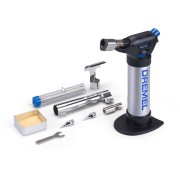
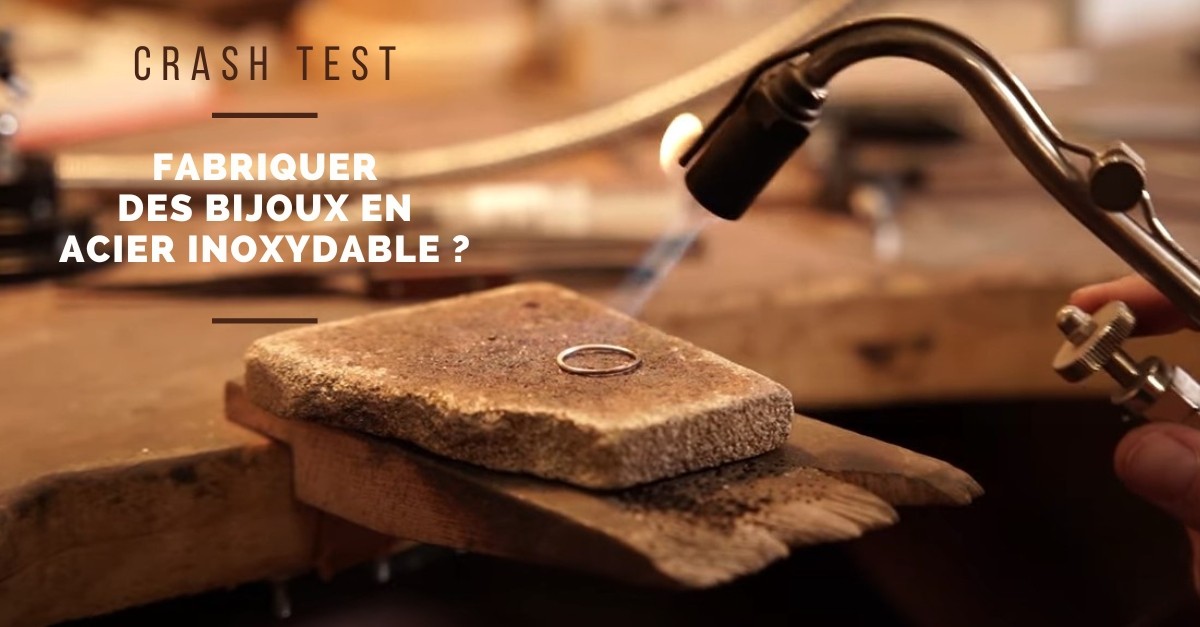
To heat up the parts to be soldered, we recommend our flashlight.
The melting range is between 745° and 782°. The composition of the solder determines the melting point.
How do I use brazing alloys?
- Protect the surface on which you'll be working (table or workbench) with refractory bricks or cellular concrete (siporex); lightweight and a good insulator.
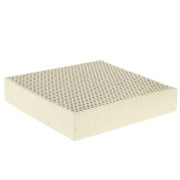
- Place the support on which you'll be soldering (charcoal, vermiculite slab, etc.) on top of your insulation, and we recommend honeycomb ceramic brick.
This ceramic brick, with its many holes, allows the heat from the flame to flow around the parts to be joined, ensuring that the solder flows evenly.
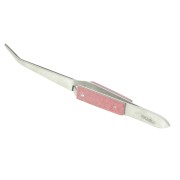
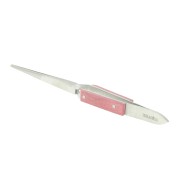
If necessary, you can hold the parts to be joined with soldering pliers. These are insulated and will prevent burns when handling the parts.
The parts to be joined must be clean and tight-fitting, as the solder will not fill holes or gaps where metal is missing. - Protect yourself with a cotton smock and, if possible, a mask.
If you don't have an extractor hood where you weld, carry out your welding work in a well-ventilated room. - Avoid breathing steam fumes as you begin to apply the flashlight to the solder paste.
- Apply the paste so that it is in contact with the two parts to be joined, and use the flashlight to raise the temperature gradually and evenly in a circular motion.
- At this point, the flux evaporates (be careful not to breathe in the fumes!!) until it becomes shiny and silver in color. Remove the flame and your parts are soldered.
- Bear in mind that the solder will go where there's the most heat, so at the end of the operation, you'll be able to take it with the flashlight wherever you want. You'll understand and master this with practice.
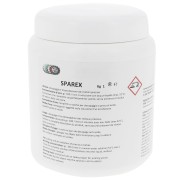
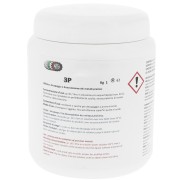
- Finishing: dip your part in a pickling powder (with hot water to be more effective) to pickle it (leave it to soak until the oxidation disappears).
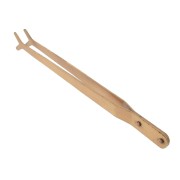
To soak and recover your part in the brazing powder, we recommend you use copper tweezers. - Finally, emerge and polish your jewelry to give it a shiny appearance.
Specifications:
Contents: 8 gr
Melting time: 745 - 782°
Composition: B010 -- 5-20 %, Silver approx. 65%, Copper 10-50 %, Zinc 3-35 %, Tin 0-15 %
Sold in packs of 2 needles and 1 silver paste.