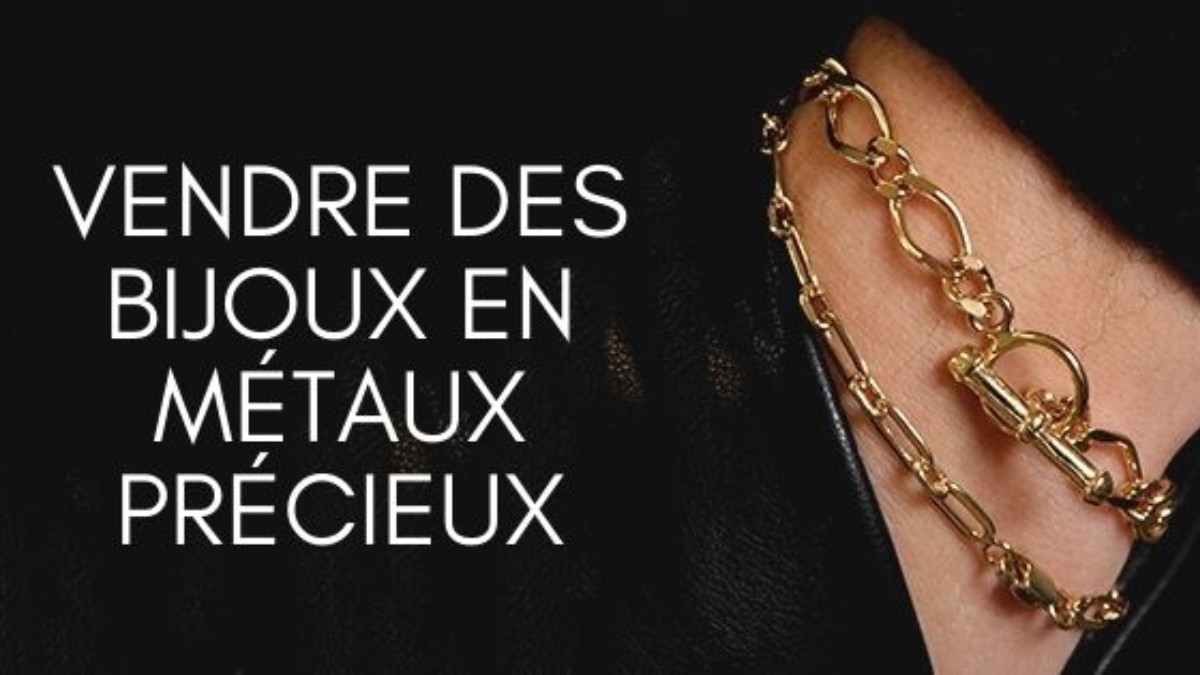
Is selling your precious metal creations one of your resolutions for 2023? Congratulations!
But be aware that creating DIY costume jewelry may be subject to legal obligations.
In France, this professional activity is reserved for craftsmen. That's why it's subject to very precise legislation. These legal obligations apply to both new and used products.
Even if you only intend to use 925 Silver primers, i.e. to do onlyassembly, you must follow these regulations. The same applies to Gold Plating, Platinum Plating, Silver Plating, Vermeil creations and Gold Filled (except for hallmarks).
So, to be sure that your project is covered by all this, it's best to check with the customs guarantee office near your workshop. You'll find all the information you need on the precious metals file compiled by the Customs Department.
To help you, we've summarized the various legal obligations you'll have to meet in the course of your new professional activity.
CAUTION: THIS ARTICLE IS FOR INFORMATION PURPOSES ONLY. FOR MORE DETAILED INFORMATION, PLEASE CONTACT YOUR LOCAL CUSTOMS OFFICE, TAX OFFICE, CHAMBER OF TRADE AND CRAFTS OR CHAMBER OF COMMERCE.
Declaration of existence
This is simply the declaration that states that you are starting a business involving the holding of precious metals such as gold, silver or platinum.
This is done before you even start trading, at the customs guarantee office responsible for the department in which your business is located.
When you make your declaration, you will be asked to provide a number of supporting documents:
Your identity and status.
Your company identity card.
If you're a craftsman, you'll need to obtain your company's registration certificate from the Chambre des Métiers et de l'Artisanat.
For commercial companies, you'll need a K extract (for individuals) or Kbis extract (for legal entities). This extract, issued by the Commercial Court, certifies the registration of a commercial company with the Trade and Companies Register (RCS).
Finally, it's best to have your own business premises, either leased or owned. In these premises, you must hold all precious metals, stocks, work in progress and entrusted work. All documents (declaration of existence, police book, purchase invoice, etc.) must be available for immediate consultation in the event of a Customs inspection.
However, in some regions, it is permitted to set up your workshop in a part of your house, such as a garage or a room with an independent entrance.
Contact the warranty office closest to your workshop to find out all the formalities.
Finally, you may be exempt from business property tax if you meet certain criteria. To find out if you qualify, contact your local tax office.
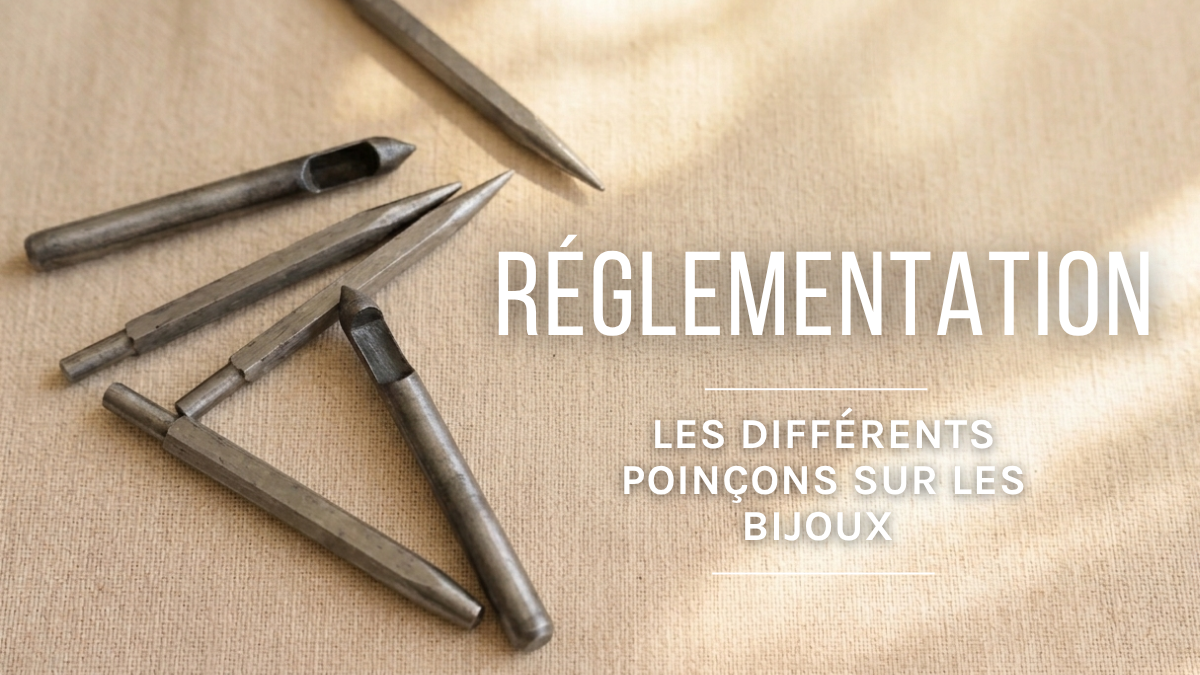
Hallmarks
Each creation, whether in gold, silver or platinum, can have two hallmarks:
The diamond-shaped master hallmark (maker's hallmark) or the oval-shaped responsibility hallmark (importer's hallmark). Each hallmark is unique and identifies its owner. It features the owner's initials and his or her own identifiable symbol.
How do I obtain a master hallmark? To obtain a hallmark, the professional must be known to the guarantee office and have filed a declaration of existence.
The work title hallmark, also known as the title or guarantee hallmark. It is generally affixed by warranty offices, as craftsmen rarely have the authorization to do so.
According to regulations, certain items are exempt from the warranty hallmark. This is the case for jewelry that is too thin or fragile to bear the hallmark, jewelry made before 1838 and later jewellery that has an old French hallmark of guarantee.
This is also the case for jewelry from the European Economic Area or Turkey, already bearing a registered maker's hallmark or responsibility hallmark, and a registered title hallmark.
This is also the case for gold or platinum jewelry weighing less than 3 g, and silver jewelry weighing less than 30 g. Please note: in some regions, the total weight of the jewel is taken into account; in others, only the weight of the precious metal is taken into account.
Certain items that are too delicate or fragile may also be exempt from the hallmark. The customs guarantee office must authorize this exemption.
What are the hallmarks in force in France for precious metals? Find out in our practical information sheet.
Keeping a police book
What is a police book? The livre de police is a mandatory register for anyone working with precious metals. It ensures the traceability of precious metal items, listing purchases, sales, receipts and deliveries of gold, silver and platinum, whether processed or not.
The manufacturer must also mention the name and address of the supplier or persons having entrusted a work, the nature, the number, the weight, the title (i.e. the percentage of Gold or Silver in the metal), the origin of the products, their dates of entry and exit.
This can be done on paper, in an accounting book or electronically. Contact your local guarantee office to find out which is most suitable.
The register must be marked and signed by the police station or town hall where your workshop is located, even before you write the first line. It must then be kept for a period of six years from the last operation recorded, either at the place where you work or at the place where your products are stored.
Please note: Weighing cannot be done with just any scales. You must use an approved scale. This scale must be checked every year by an approved organization.
Please note: if you need to change any information in the police book, the correction must be visible. It is therefore forbidden to use a blanco or liquid corrector. If you make a mistake during entry, cross out the line and enter a new one, justifying the change.
HBJOAT tax
This tax is payable by anyone who manufactures or retails watchmaking, jewelry, goldsmithing and tableware products. So, if you sell your DIY jewelry creations containing precious metals, you may be subject to this tax.
This tax amounts to 0.19% of pre-tax sales, and must be declared and paid to Francéclat, the Comité professionnel de développement de l'horlogerie, de la bijouterie, de la joaillerie, de l'orfèvrerie et des arts de la table. Depending on the amount, the HBJOAT tax is paid monthly, quarterly or once a year.
Please note: companies whose HBJOAT amounts to €20 or less are exempt from payment. However, they must declare the amount of HBJOAT online.
To find out more about the HBJOAT tax, visit the Francéclat website.
Are you new to jewelry design and want to develop your expertise in this creative field? Discover opportunities in costume jewelry assembly to gain experience, perfect your know-how and move forward in the artisan jewelry sector.





---Preparing-your-craft-market.jpg "Tips from the pro (episode #10) - Preparing your craft market")
---The-Balance-Sheet.png "Pro Tips (episode #9) - The Balance Sheet")
--Organize-your-communication-and-sales.jpg "Pro Tips (episode #8): Organize your communication and sales")