Average Grades
Free shipping on orders over 50€ up to 500g
French Online shop for beads and accessories for the creation of DIY jewellery and other creative hobbies
Log-in
0
Shopping cart
Shopping cart
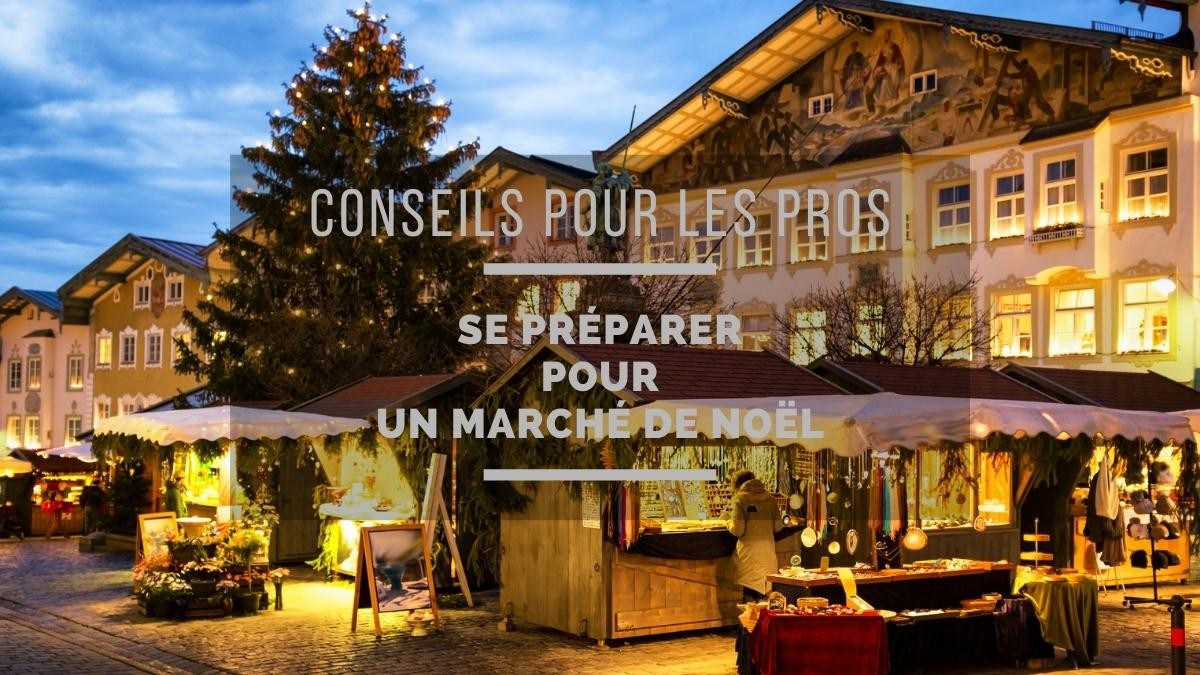
To make a success of your participation in a craft market, start by finding out about local events and registering in advance. Organize yourself with a timetable, create products adapted to the theme of the market, take care of the presentation of your stand and communicate effectively to attract customers. Finally, take stock after the event to evaluate your experience and adjust your future participation.
Welcome to a new episode of our Pro Tips series produced in partnership with Melanie Jung, creator of the blog Les Pies Bavardes. She gives you her precious advice to make your business grow and move forward on the road to success.
With spring comes the season of artisan markets! In this new video, Mélanie gives us tips and tricks to prepare for the big day. And you will see, it requires a little bit of organization and anticipation...
Before you even embark on this adventure, you need to find out about the markets around you: When is it held? What is the theme? What is the period? What type of public is there? How many people attend? Is it consistent with my offer? etc. There is no need to do all the markets, it is better to target geographically and according to your target customers. If you don't target well, you risk not selling.
Where to get information? At the tourist office near you, at your town hall, in Facebook groups, among your network of designers (word of mouth works pretty well)...
Once you've spotted an interesting market, don't forget to register. It's silly to say, but sometimes you have to anticipate. Be aware of the deadline for applications. Indeed, for some events, you have to register several weeks or even months in advance. Ask the organizer for details.
Registration done? Now it's time to get organized:
At this stage, you have everything you need to create with complete peace of mind: anticipate your needs so that you can make enough products in time. You must make the creations you plan to sell to at least cover your costs and stock (about double your creations).
Don't forget that your creations must be in adequacy with the theme of the market. For example, if you make children's clothes and you participate in a market on the world of babies, only plan to sell baby clothes.
Think about the design of your booth, making sure that it is attractive and reflects your brand image. Your stand must be readable and must express your universe. Try to create volumes and different levels to create dynamism, but avoid overloading it. Ideally, you should test your stand in real life situations at home or in your workshop.
Plan your exhibition furniture and decoration:
Select different ranges ofpackaging according to the size and fragility of your creations, the brand image, the season (Christmas gift, flowery packaging for spring, etc.)... To save time, prepare them in advance with a business card, a flyer, a small goodie, a card to explain your reason or with practical information, samples, a discount card on a next purchase...
Plan your means of payment: have a cash register with enough cash to give change, use Sumup for payment by credit card. Contact your bank if you need change and to find out which solution is best suited to your needs.
It's all very well to make a deal, but it's important that people know about it. So let's establish a communication plan! Announce your presence on the market by email and on your social networks with an attractive newsletter, a feedback account... Publish little by little, then more and more often.
Provide business cards and flyers with distinctive communication elements: your company name, your activity, your contact information, the address of your online store or website and your social networks. If you don't have enough, check the printing deadlines.
On site, you'll need to set up your booth the way you imagined it at home. To help you reproduce it, consider taking a picture with your phone.
Bring with you a calculator so that you don't make mistakes when calculating prices, a small notebook to keep track of your sales, a chair to sit on, food and drinks... Make a checklist so that you don't forget anything!
Also make sure you have plenty of stock available throughout the show. But don't unpack everything, it might overload your stand.
Finally, don't hesitate to communicate on your payment methods by clearly displaying on your stand if your customers can pay by credit card.
To attract customers, try to stand out, to catch their attention through animations, contests, workshops... But it can also be with a specific outfit that will not go unnoticed.
After the market, it is important to take stock of this experience: Did I spend a lot of time preparing it? What were the sales? What were the expenses? What is the state of the inventory when I get home? Did I enjoy doing this market? All of these elements put together will help you know if it's worth participating in this event again next year.

---The-Balance-Sheet.png "Pro Tips (episode #9) - The Balance Sheet")
--Organize-your-communication-and-sales.jpg "Pro Tips (episode #8): Organize your communication and sales")
--Branding-and-set-design.jpg "Pro Tips (episode #6): Branding and set design")
--The-emotional-signature.png "Pro tips (episode #5): The emotional signature")
--The-Emotional-Price.png "Pro tips (episode #4): The Emotional Price")

Credits
Perles & Co, Internet & E-Commerce company [29/03/2023] Any reproduction, representation, adaptation, in any form whatsoever, even partial, is prohibited, except for reproduction for private use not intended for collective use, representation in the family circle (art. L 122-5 CPI) and online publishing on condition that the source is mentioned and a link is included to the corresponding page of our site www.perlesandco.com.

