Average Grades
ma sphère moyenne de shungite a fendu à plusieurs endroits est0ce une fausse pierre?
1 Answer
Show answers

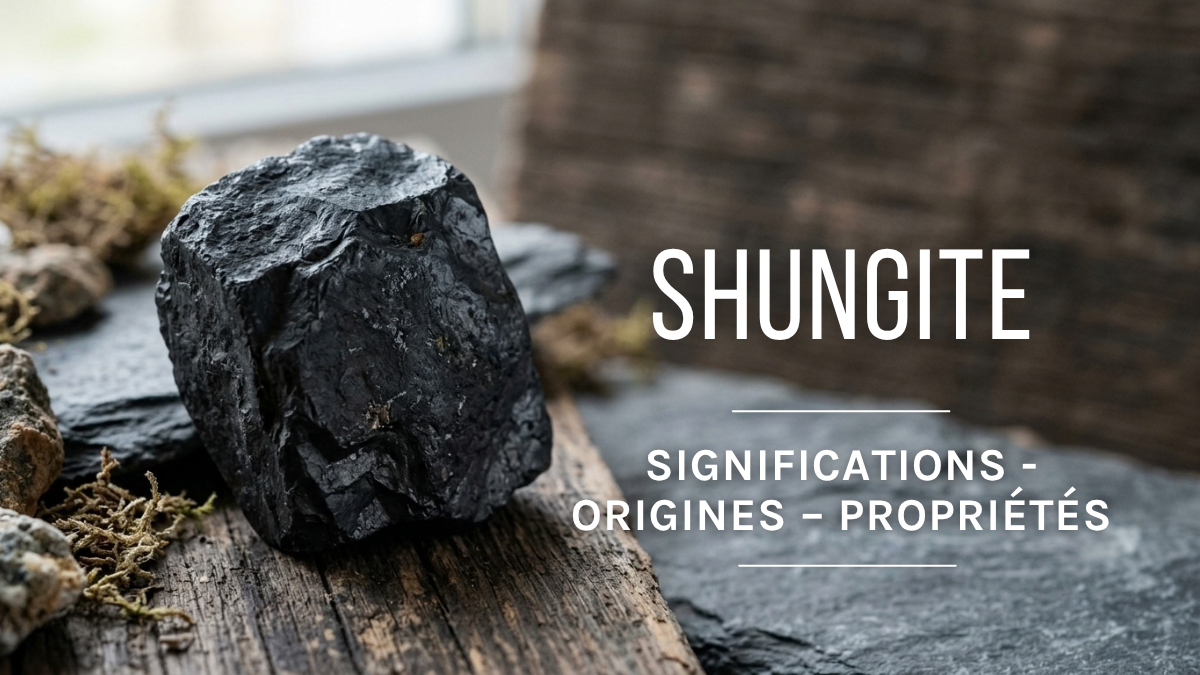
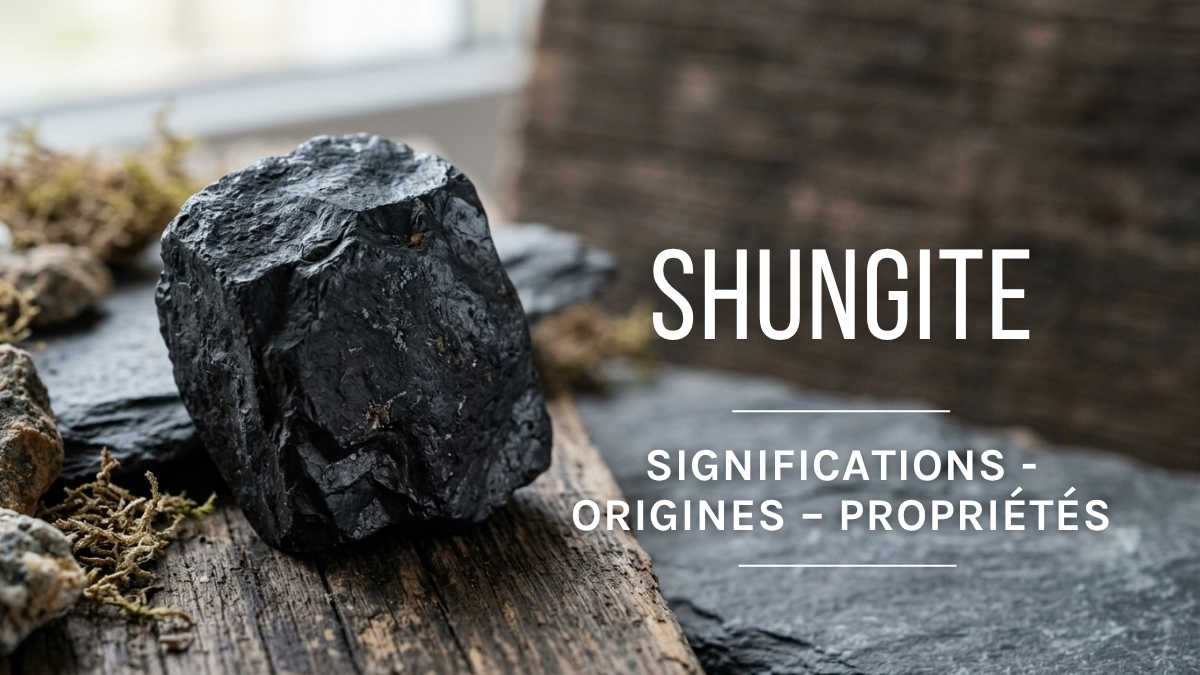
Shungite, with its deep black color, comes mainly from Russia, particularly the Karelia region. This stone is prized not only for its aesthetic appeal in jewelry making, but also for its symbolism of protection and purification.
Shungite, with its deep black luster, stands out for its mysterious yet elegant appearance, lending a unique charm to any piece of jewelry. This fine stone (formerly classified as a semiprecious stone), beyond its captivating aesthetic appeal, is highly sought after for its properties in crystal healing, symbolizing protection and purification.
Discover our selection of shungite jewelry components and get started on making your own DIY jewelry. Our natural stone jewelry tutorials will guide you in creating unique pieces that are sure to be full of character.
The name “shungite” comes from the town of Shunga, near Lake Onega in northwestern Russia, where this stone was first discovered.
It is sometimes called Chingite or Schingite.
The origin of shungite is a subject of debate, giving rise to the wildest hypotheses. One of them suggests that it formed several billion years ago from marine deposits composed of ancient microorganisms. Another theory posits that it could be the remnant of a meteorite, carrying with it a fragment of the hypothetical planet Phaeton, which, upon its destruction, is believed to have contributed to the formation of our solar system’s asteroid belt. Finally, some researchers point out that the composition of shungite shares similarities with that of volcanic rocks.
According to a Russian legend, it was Peter the Great who inaugurated the first thermal bath establishments in Russia, built over a shungite deposit. The spa, named Martsialnye Vody, served for more than three centuries to treat and alleviate people’s ailments. Recent analyses have revealed the presence of fullerenes—molecules partially composed of carbon—in these thermal waters.
The tsar even went so far as to advise his troops to take a shungite-based preparation to effectively combat dysentery. These remedies were later named “Waters of Mars.” It is said that, during the last ten years of his life, he retired to this wellness center that he had founded, seeking relief from various ailments.
In 1996, the Royal Swedish Academy of Sciences awarded the Nobel Prize in Chemistry to Robert Curl, Richard Smalley, and Harold Kroto for their work on fullerenes and the elucidation of their structure. Studies conducted by doctors at the Military Medical Academy in Saint Petersburg concluded that the use of these thermal waters could be beneficial in treating many diseases.


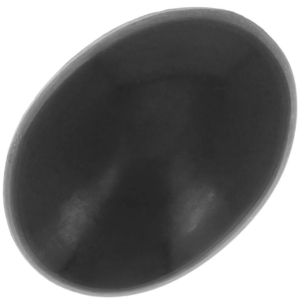
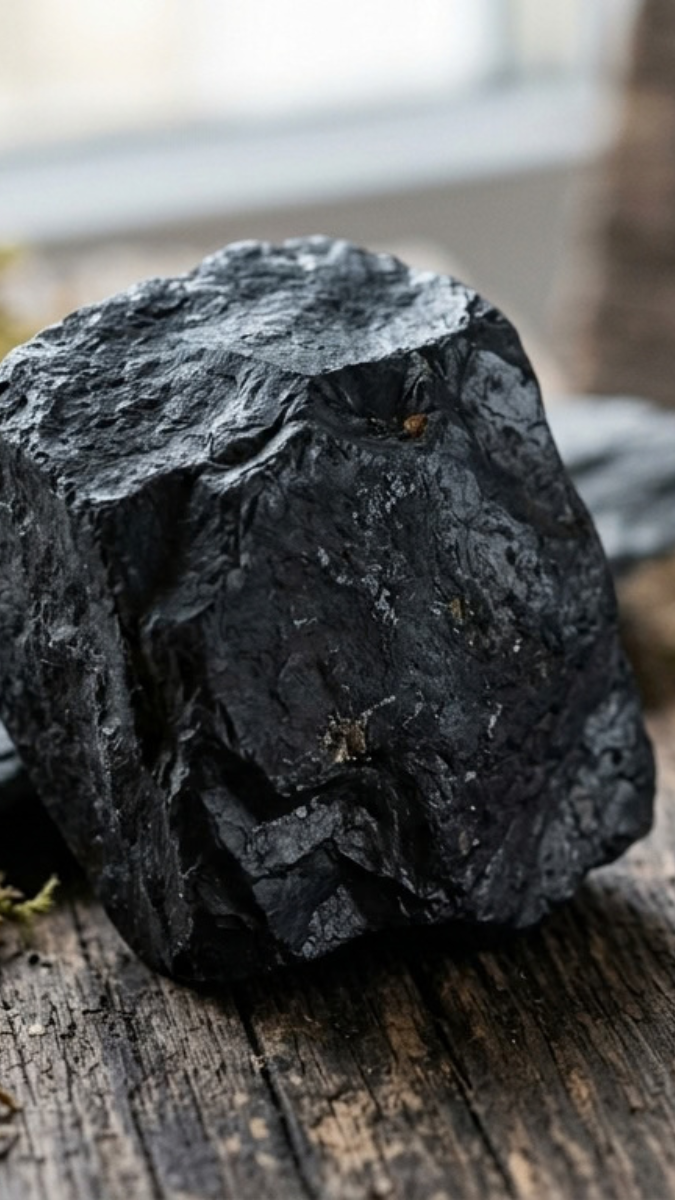
Shungite is a natural stone primarily known for its deep, matte black color, although it can range in shade from anthracite gray to charcoal black. It may also featurefaint veins or brighter flecks on its surface, due to the presence of various minerals.
Because of its dark color, it is sometimes confused with other black stones such asblack obsidian,black onyx, or black tourmaline.
It is composed primarily of carbon. Its hardness onthe Mohs scale generally ranges from 3.5 to 4, which means it is relatively soft. Its density ranges from 1.8 to 2.0 g/cm³.
The main deposits of this gemstone are found in Russia, particularly in the Karelia region.
According to some beliefs, this black stone is particularly valued for its ability to absorb and neutralize negative energies. In crystal healing, it is said to be a grounding stone. It is believed to promote detoxification and purification and to offer energetic protection. This stone is also associated with mental clarity, emotional stability, and enhanced overall well-being.
Which chakra is associated with shungite? It is often linked to the root chakra, promoting grounding and strengthening earth energies.
It is the stone of choice for the zodiac signs Scorpio, Capricorn, and Cancer.
Please note: Our gemstones are not sold for use in crystal healing. Natural stones are in no way a substitute for medical expertise or medical treatment.
To maintain its protective properties, crystal healers recommend regularly cleansing and recharging shungite.
To purify it, submerge it in a container filled with water for a few minutes, then dry it. You can also use sage smudging.
To recharge it, expose it to sunlight or moonlight for a few hours. To enhance this ritual, you can place your stone on a cluster of quartz.
This natural stone pairs perfectly with 925 Sterling Silver or stainless steel findings, highlighting its natural elegance. For a bolder contrast, pair it with gold-tone settings—whether Gold Filled or gold-plated—to highlight its deep black hue. The combination of gold and black is always very chic.
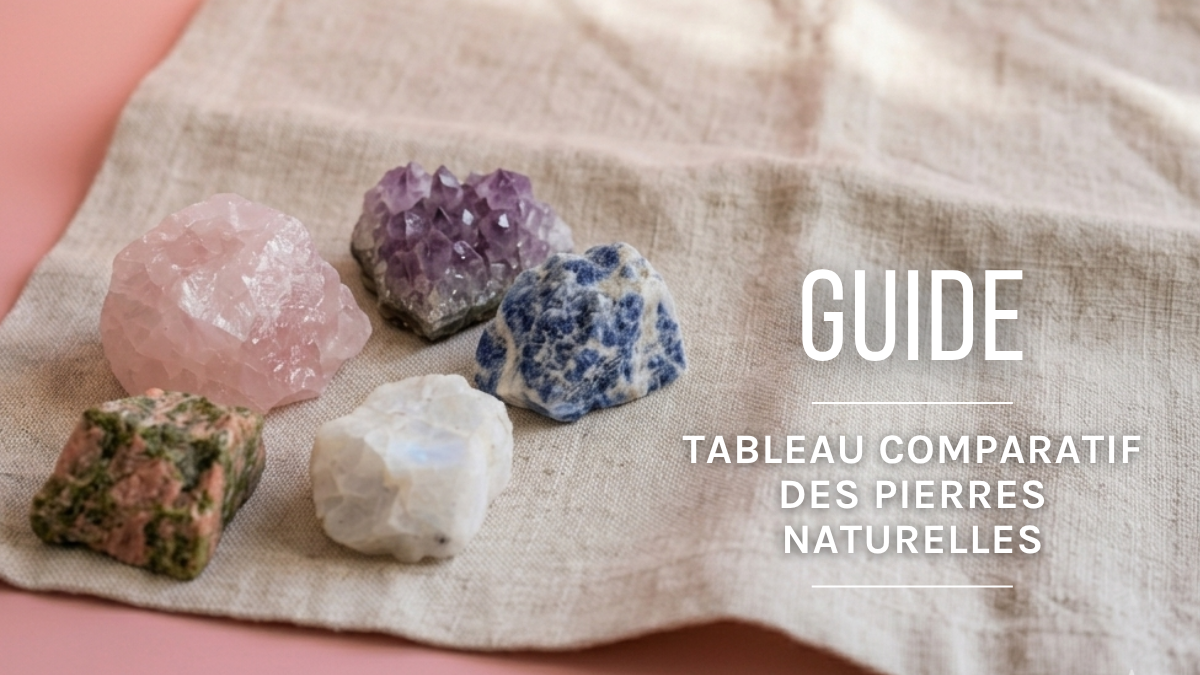
Which stones pair well with shungite?In crystal healing, it is recommended to combine it withamethyst or rose quartz to amplify its purifying and protective properties. It can also be paired with other grounding stones, such asblack obsidian,black onyx, labradorite, or black tourmaline.
However, avoid pairing it with stones that have overly intense energies, such as carnelian or citrine, or with stones that have specific energies, such as lapis lazuli or turquoise. It could potentially clash with these stones, which might diminish its virtues and properties.

Credits
Perles & Co, Internet & E-Commerce company [09/03/2024] Any reproduction, representation, adaptation, in any form whatsoever, even partial, is prohibited, except for reproduction for private use not intended for collective use, representation in the family circle (art. L 122-5 CPI) and online publishing on condition that the source is mentioned and a link is included to the corresponding page of our site www.perlesandco.com.