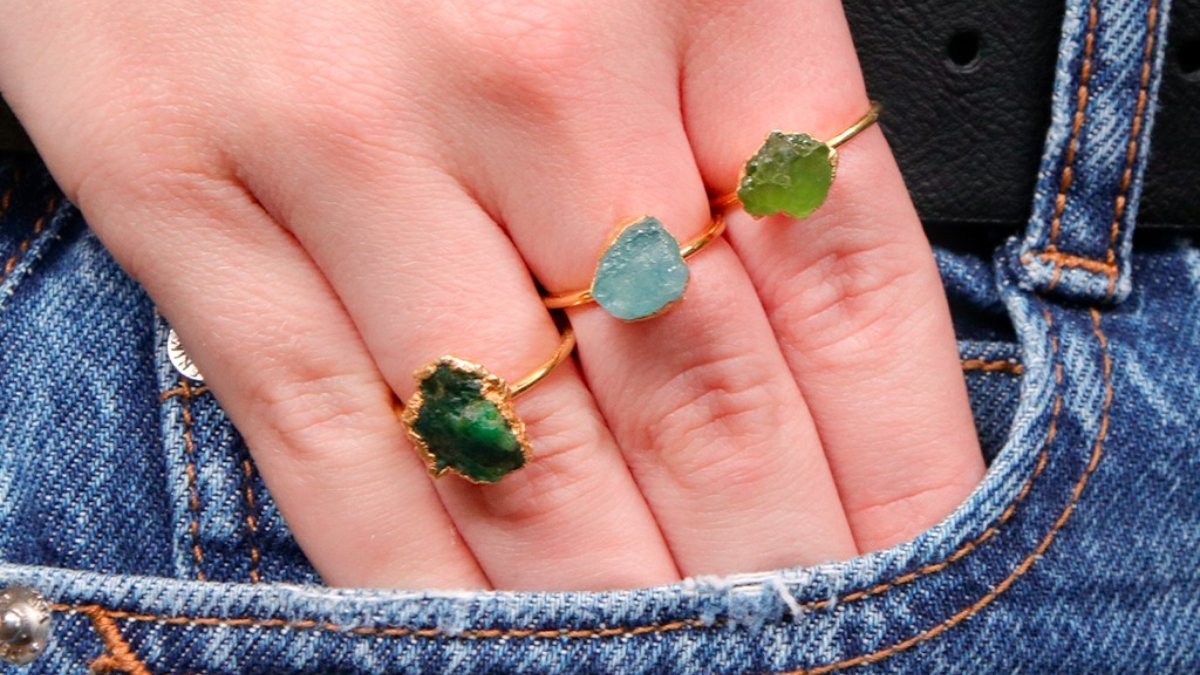
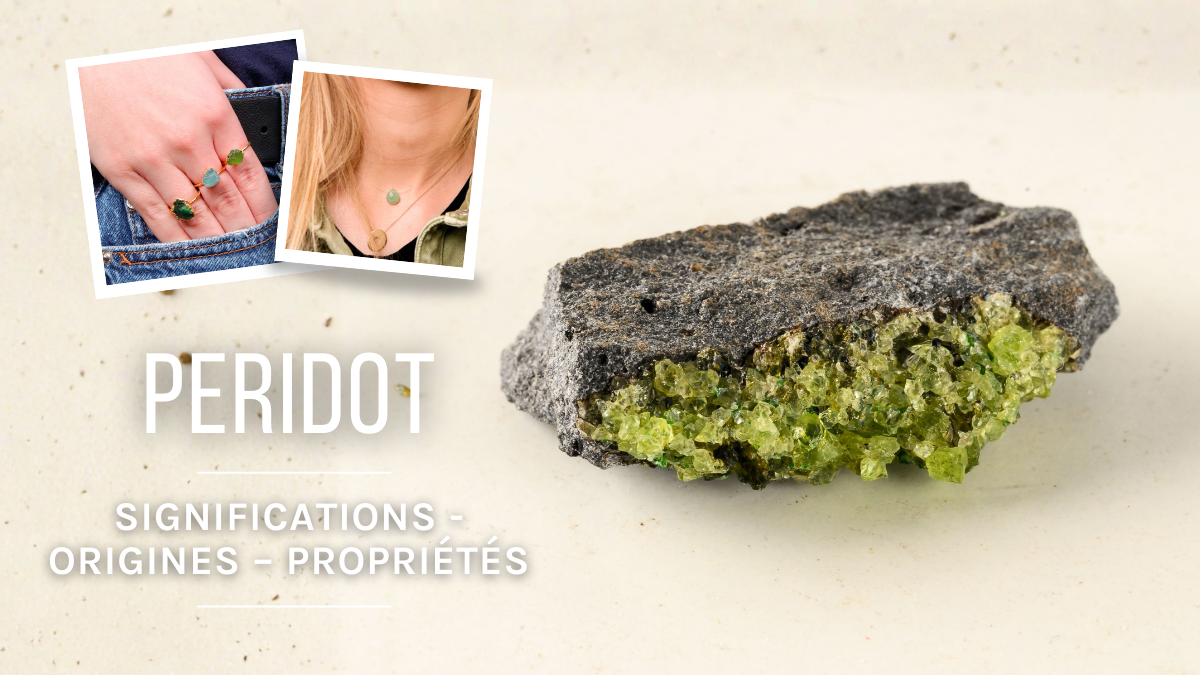
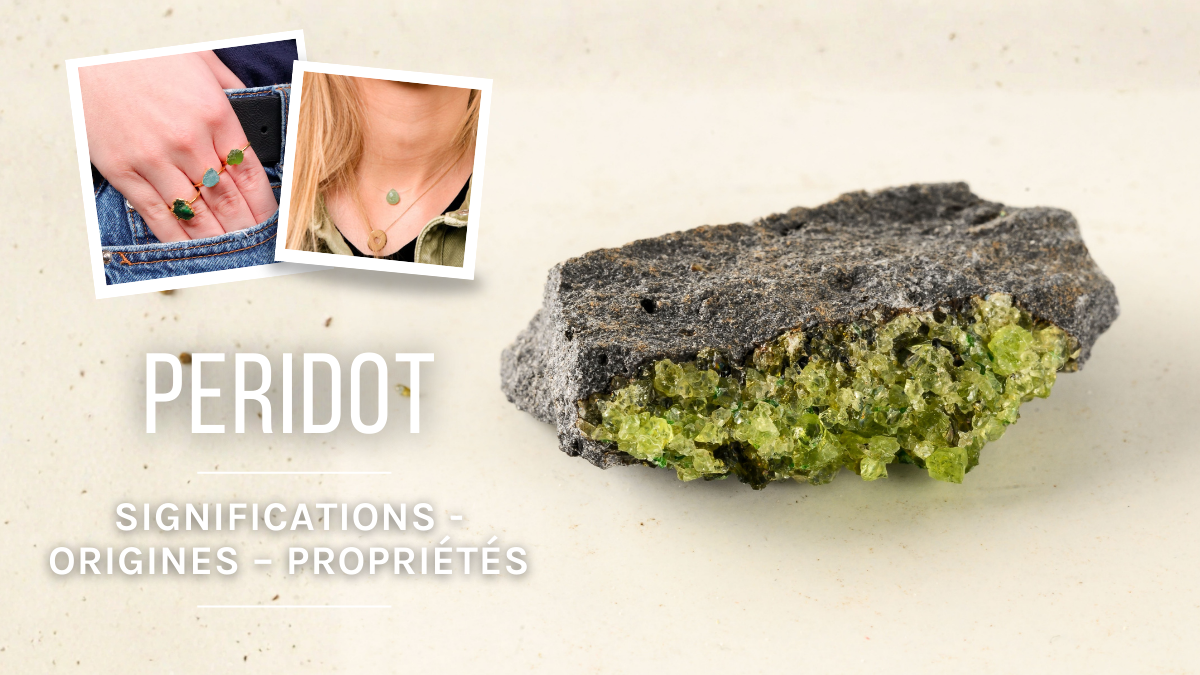
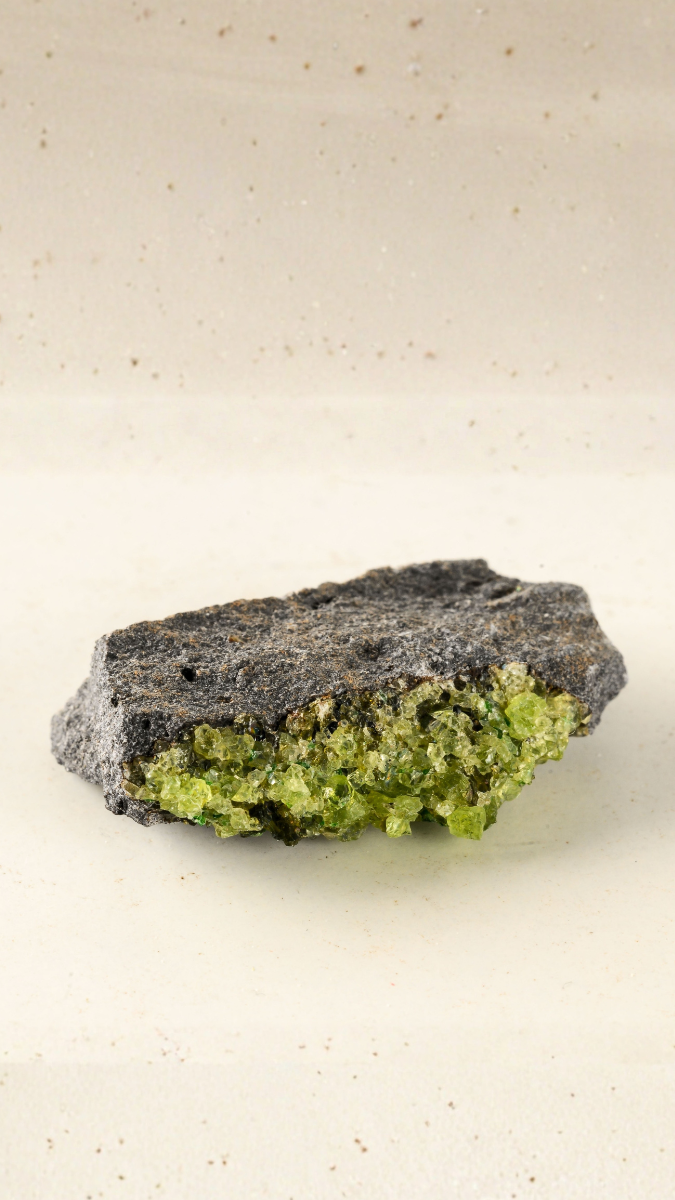
Peridot is distinguished by its splendid green color, a symbol of renewal and clarity. Prized for its internal luster and shades ranging from olive green to yellow-green, its timeless charm, brilliance, and beauty make it a highly sought-after gemstone, while in crystal healing, it is valued for its soothing and protective properties.
Why not incorporate its invigorating freshness into your DIY costume jewelry? Discover our selection of peridot beads and jewelry components, and draw inspiration from our free tutorials to create your own natural stone jewelry.
Meaning of Peridot
Several theories have been proposed to explain the origin of the name “peridot.” Some believe the name comes from the Old French word “peritot,” evoking its unparalleled green color. Some sources link the origin of the name “peridot” to the Arabic word “faridat,” which means “precious stone.” Others claim that the name “peridot” comes from the Latin word “paedoros.”
Peridot is also known by various nicknames:
- the poor man’s emerald, because its green color resembles that of an emerald but is more affordable,
- the “evening diamond, ” because its green color seems to shine intensely even in the dimmer light of evening, creating an almost luminous appearance similar to that of a diamond.
Interesting facts about peridot
The origins of this green stone date back to ancient times. Highly prized since antiquity, it was discovered on the island of Topazios (now Zabargad), located in the heart of the Red Sea, off the coast of Egypt. Peridot mining on this island dates back more than 3,500 years, making these mines among the oldest in the world known for gemstone extraction.
In ancient Egypt, it was called “the sunstone” because of its luminous brilliance, which did not fade under the intense sunlight. Peridot was associated with the goddess Isis, the goddess of nature and magic. The Egyptians believed it protected its wearer from the terrors of the night, evil spirits, and curses.
Legend has it that some of the famous “emeralds” worn by Cleopatra were actually peridots. This confusion between peridot and emerald persisted for centuries due to their similar green color.
The Greeks used peridot in jewelry and for ornaments. The Roman naturalist Pliny the Elder mentions it in his work *Natural History*.
The Ottoman sultans prized it for its beauty and regarded it as a symbol of wealth, power, and prestige. Set into jewelry, daggers, and religious objects, it attested to the refined taste and wealth of the Ottoman rulers. They attributed protective properties against negative energies to this stone.
For Hawaiians, this natural stone symbolizes the tears of the goddess Pele, the deity of fire, lightning, dance, volcanoes, and violence. The sand on Papakolea Beach in Hawaii is covered with fragments of peridot, hence its nickname “Green Sand Beach.”
After the Crusades, this gemstone was also used for decorative purposes in churches, such as in the Shrine of the Three Wise Men at Cologne Cathedral.
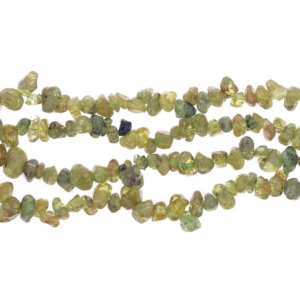
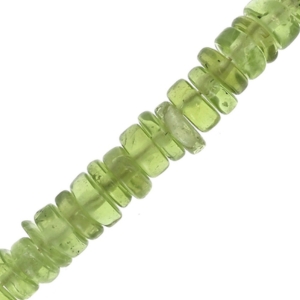
What color is peridot?
This natural gemstone is unique for its green color, ranging from light green to deep olive green, with shades of brownish green in between. This vibrant hue is particularly sought after for its ability to complement both summer and fall outfits, adding a touch of freshness and radiance.
Because of its color, it has often been mistaken for an emerald. Hence its nicknames, “evening emerald” or “poor man’s emerald.”
What is peridot?
Peridot is a gemstone from the olivine family, characterized by a hardness ranging from 6.5 to 7 on the Mohs scale. Its clarity and brilliance make it ideal for all kinds of jewelry, from necklaces to rings, bracelets, and earrings.
Just like the diamond, it originates from the depths of the Earth’s mantle. It rises into the Earth’s crust due to movements caused by tectonic plates and volcanoes.
Where is peridot found?
The most famous deposits are found in geological areas rich in igneous rocks, particularly in Myanmar, China, Pakistan, Vietnam, and certain parts of the United States.
What are the properties of peridot?
In crystal healing, this green stone is considered a powerful protective stone. It is said to boost self-confidence and reduce stress, promoting peace of mind. It is believed to ward off negative feelings and foster a more positive and open attitude. It is also said to promote harmony and communication.
Which chakra is associated with peridot? It is often associated with the heart chakra, encouraging openness, compassion, and regeneration.
It is the ideal natural stone for those born under the astrological signs of Leo, Virgo, Scorpio, and Sagittarius.
Please note: Our gemstones are not sold for the purpose of lithotherapy. The effects of gemstones have not been scientifically proven. Natural gemstones are in no way a substitute for medical expertise or treatment.
How do you recharge a peridot?
As with all gemstones, it is recommended to clean, purify, and recharge your peridot to rid it of accumulated negative energies and restore its full properties.
There are several techniques for cleaning and purifying it:
- Soak it in distilled salt water or spring water for a few hours. Dry your stone thoroughly by rubbing it with a soft cloth.
- Bury it in the ground in a quiet spot for several days.
- Try smudging it with incense or white sage.
To recharge it, you can place it in direct sunlight for a few hours. To enhance this method, place your stone on a pile of quartz or amethyst.
How should you wear peridot?
The golden huesof Gold Filled or gold-platedsettings perfectly complement the freshness of peridot, accentuating its natural luminosity. On the other hand, the silvery tonesof 925 Sterling Silver or stainless steelsettings create a striking contrast with the green color of peridot, resulting in jewelry that is both modern and refined.
Which gemstones pair well with peridot? Pair it with amethyst, rose quartz, citrine, lapis lazuli, or moonstone. Together, these gemstones amplify or complement each other’s energetic properties.
Which stones should not be paired with peridot? Avoid stones with overly intense energies, such as carnelian, and those with opposing properties.