Average Grades
Es necesario traerla con Migo siempre para que me proteja de todos la envidia prosperar y ser mejor persona saludable y emocionalmente equilibrado no sé si abundancia
0 Answer

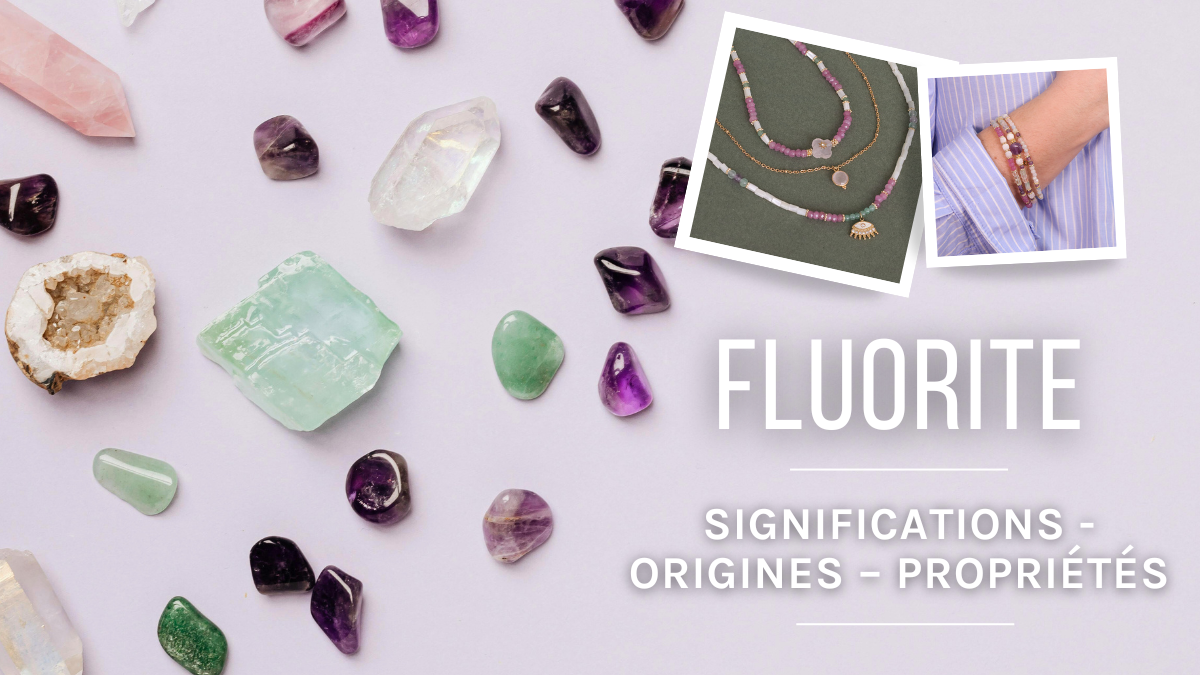
Fluorite is a fine stone much appreciated for its brilliance and wide range of colors, from blue and violet to green and yellow. It is found in numerous deposits around the world, notably in China and South Africa. For unique creations, opt for our fluorite beads and give free rein to your creativity.
Known for many centuries, fluorite is prized for its luster and incredible range of colors. It has always been used in decoration, crystal healing, and jewelry making. Create your own DIY jewelry with our fluorite beads and components. Get inspired by our DIY gemstone jewelry tutorials!
The name of this gemstone comes from the Latin “fluere,” which means “flow” or “stream.” It likely owes this name to its very low melting point.
It is also known as “fluorine.”
The history of fluorite dates back to the dawn of time. It has always been prized for its colors, which span the entire color spectrum.
Some ancient civilizations regarded it as the “third eye,” capable of bringing rationality and intuition.
In ancient Greece, it was used in decorative arts to create cups and vases known as “Murrhine vases” (today, they are highly valuable and much sought after by collectors).
Traces of fluorite have also been found in the city of Pompeii during archaeological excavations.
In the Middle Ages, it was called the “flower of ore.”
Although it has been known since time immemorial, it was the naturalist Carlo Antonio Galeani Napione who gave it its name in the 18th century. It is said that the French term “fluorescence” derives from this natural stone.


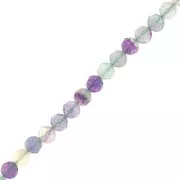
| Fluoritechip beads | Irregularnugget-shaped beads | Faceted round fluoritebeads |
Fluorite is a natural stone with a hardness of 4 on the Mohs scale (10 being the highest hardness, like that of a diamond), which makes it a fairly fragile stone. Its density ranges from approximately 3 to 3.3 g/cm³.
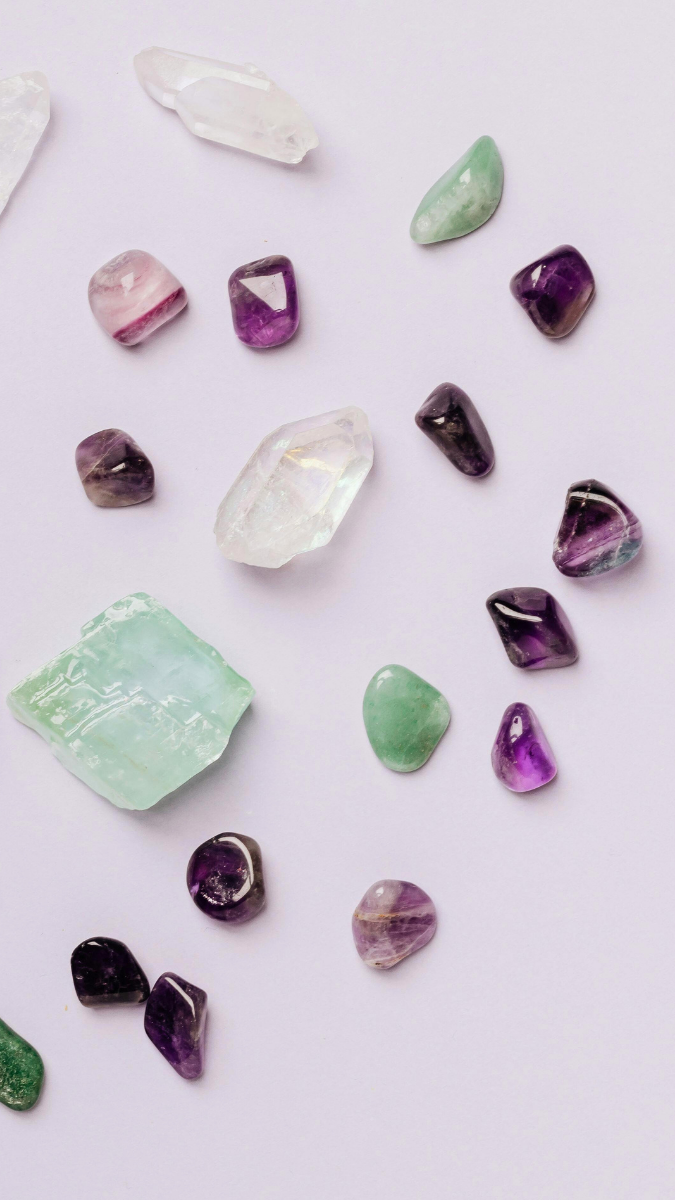
This gemstone comes in a wide range of colors: blue, yellow, pink, green, purple, transparent… Some varieties of fluorite have bicolored or multicolored bands; others change color depending on the light. It ranges from transparent to translucent and has a vitreous luster.
In general, fluorite is sometimes mistaken for tourmaline because of their varied colors.
When it is purple,it can visually resemble amethyst.
When it is transparent (colorless), it can be mistaken for certain varieties of calcite.
The blue variety is sometimes mistaken for blue topaz.
As for green fluorite, it is often mistaken for green quartzite.
Fluorite is a mineral found all over the world: South Africa, China, Mexico, Mongolia, Russia, South Africa, Spain, Namibia, France, Germany, the United Kingdom…
In crystal healing, fluorite is said to possess many virtues. It is believed to promote greater mental clarity and aid concentration.
As a stone of well-being, it is said toabsorb negative energies and bringharmony.
Each color has its own details:
Which chakra is associated with fluorite? Linked to the throat chakra and the third eye chakra, it is said to help you speak freely, especially in public or during a work meeting. It is also said to promote reflection.
It is the ideal stone for those born under the signs of Gemini, Virgo, Capricorn, and Aquarius.
Please note: Our gemstones are not sold for the purpose of crystal healing. The effects of gemstones have not been scientifically proven. Natural gemstones are in no way a substitute for medical expertise or medical treatment.
For crystal healers, it’s important to cleanse and recharge fluorite so that it regains all its healing properties.
Before recharging the stone, be sure to purify it. How do you purify fluorite? It’s very simple: just submerge your natural stone in a container filled with distilled water overnight. Then, dry it with a soft cloth. There are other methods, such as smudging with incense or sage.
Once the purification ritual is complete, recharge the stone by exposing it to sunlight or moonlight for a few hours. To enhance this ritual, you can place your fluorite stone inside an amethyst geode or a cluster of quartz.
Stainless steel or 925 Sterling Silver jewelry findings? Gold-plated or Gold Filled jewelry findings? This natural stone comes in such a wide range of colors that it will appeal to both gold and silver enthusiasts alike. With this natural stone, anything goes when it comes to jewelry design!
Which stones pair well with fluorite?Amethyst, rose quartz, or pyrite paired with fluorite make a perfect combination. However, crystal healers recommend not wearing it with stones that are too powerful, such as obsidian or black tourmaline, which could negate its benefits.

Credits
Perles & Co, Internet & E-Commerce company [11/12/2025] Any reproduction, representation, adaptation, in any form whatsoever, even partial, is prohibited, except for reproduction for private use not intended for collective use, representation in the family circle (art. L 122-5 CPI) and online publishing on condition that the source is mentioned and a link is included to the corresponding page of our site www.perlesandco.com.